Department of Psychology and Neuroscience, University of North Carolina, Chapel Hill, NC, 27599, USA.
Department of Psychology and Neuroscience, University of North Carolina, Chapel Hill, NC, 27599, USA.
Neurosci Lett. 2021 Apr 17;750:135717. doi: 10.1016/j.neulet.2021.135717. Epub 2021 Feb 12.
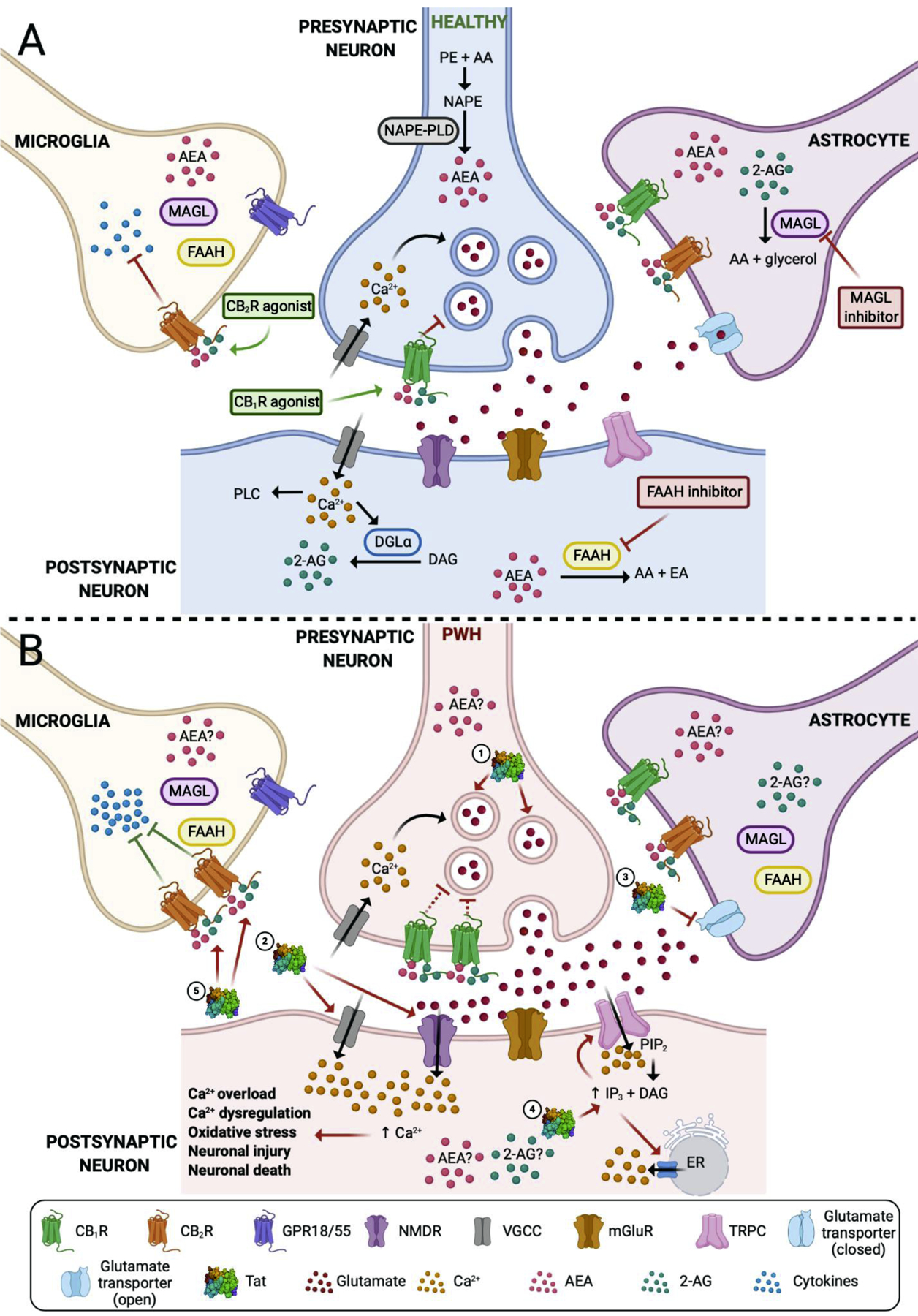
In the era of combined antiretroviral therapy (cART), human immunodeficiency virus type 1 (HIV-1) is considered a chronic disease with an inflammatory component that specifically targets the brain and causes a high prevalence of HIV-1-associated neurocognitive disorders (HAND). The endocannabinoid (eCB) system has attracted interest as a target for treatment of neurodegenerative disorders, due to the potential anti-inflammatory and neuroprotective properties of cannabinoids, including its potential therapeutic use in HIV-1 neuropathogenesis. In this review, we summarize what is currently known about the structural and functional changes of the eCB system under conditions of HAND. This will be followed by summarizing the current clinical and preclinical findings on the effects of cannabis use and cannabinoids in the context of HIV-1 infection, with specifically focusing on viral load, cognition, inflammation, and neuroprotection. Lastly, we present some potential future directions to better understand the involvement of the eCB system and the role that cannabis use and cannabinoids play in neuroHIV.
在联合抗逆转录病毒疗法 (cART) 的时代,人类免疫缺陷病毒 1 型 (HIV-1) 被认为是一种具有炎症成分的慢性疾病,该炎症成分专门针对大脑,导致 HIV-1 相关神经认知障碍 (HAND) 的高发。内源性大麻素 (eCB) 系统因其大麻素具有抗炎和神经保护特性而引起了人们的兴趣,包括其在 HIV-1 神经发病机制中的潜在治疗用途。在这篇综述中,我们总结了目前已知的 HAND 情况下 eCB 系统的结构和功能变化。接下来,我们将总结目前关于大麻使用和大麻素在 HIV-1 感染背景下的临床前和临床研究结果,特别关注病毒载量、认知、炎症和神经保护。最后,我们提出了一些潜在的未来方向,以更好地了解 eCB 系统的参与以及大麻使用和大麻素在神经 HIV 中的作用。