Department of Psychiatry, Amsterdam UMC, University of Amsterdam, Amsterdam Neuroscience, Amsterdam, the Netherlands; Amsterdam Brain and Cognition, University of Amsterdam, Amsterdam, the Netherlands.
Noninvasive Neuromodulation Unit, Experimental Therapeutics & Pathophysiology Branch, National Institute of Mental Health, United States.
Neuroimage Clin. 2021;30:102581. doi: 10.1016/j.nicl.2021.102581. Epub 2021 Feb 9.
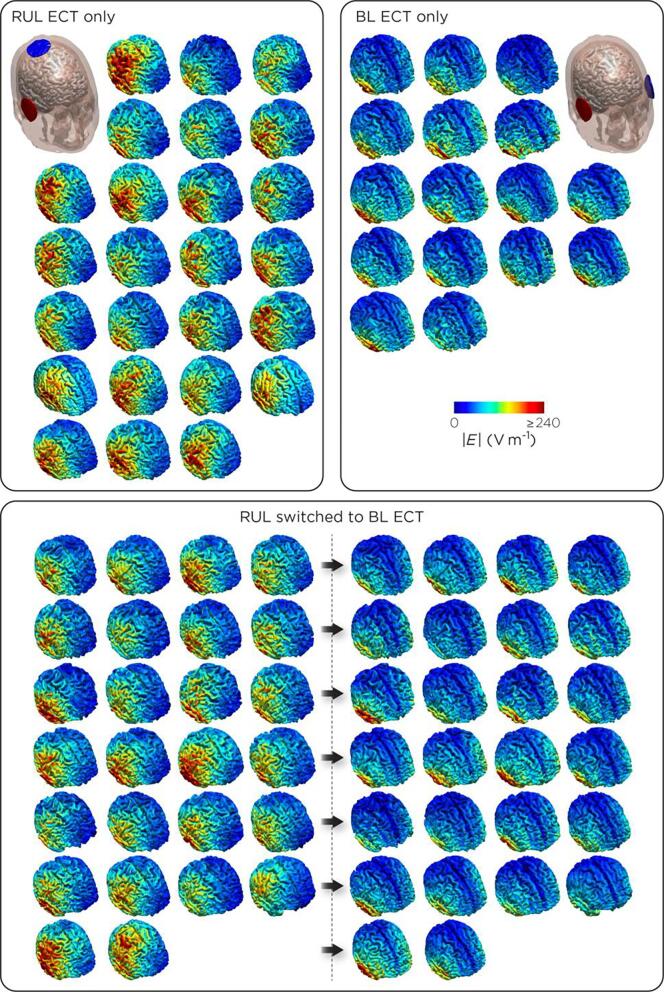
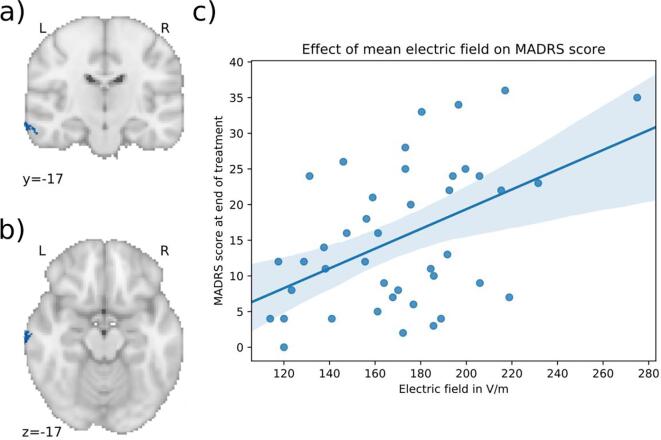
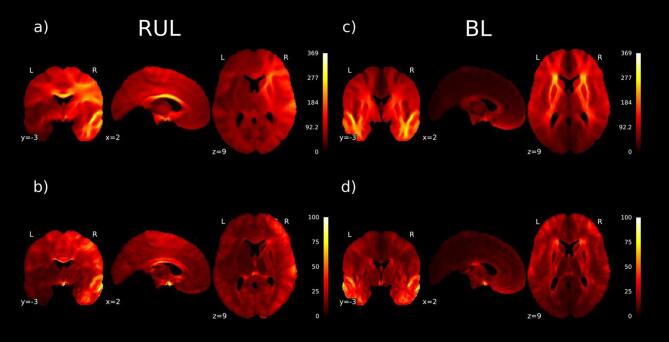
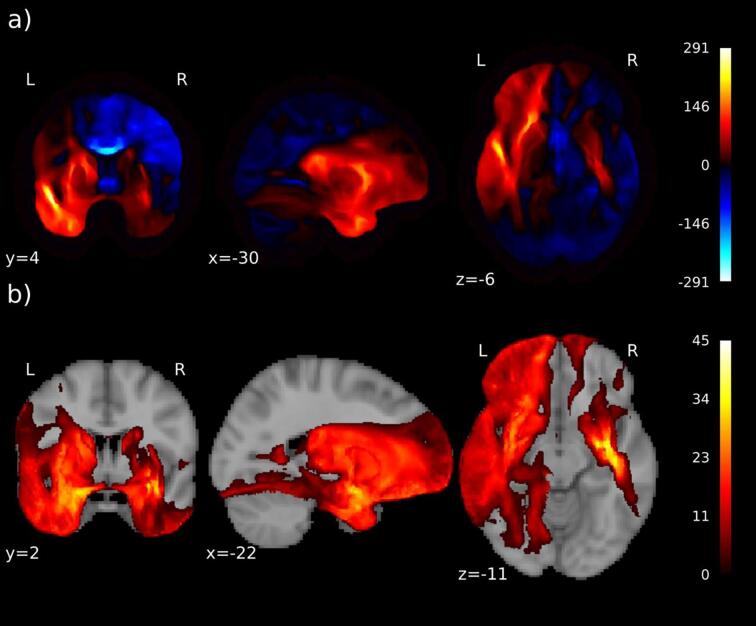
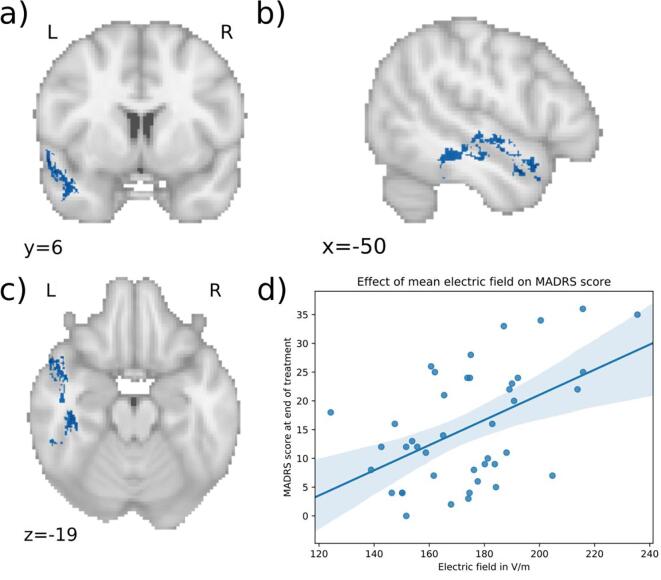
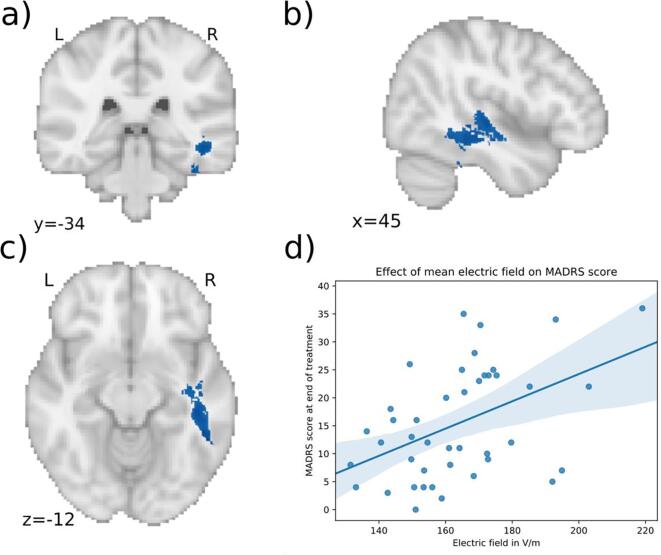
The clinical effect of electroconvulsive therapy (ECT) is mediated by eliciting a generalized seizure, which is achieved by applying electrical current to the head via scalp electrodes. The anatomy of the head influences the distribution of current flow in each brain region. Here, we investigated whether individual differences in simulated local electrical field strength are associated with ECT efficacy. We modeled the electric field of 67 depressed patients receiving ECT. Patient's T1 magnetic resonance images were segmented, conductivities were assigned to each tissue and the finite element method was used to solve for the electric field induced by the electrodes. We investigated the correlation between modelled electric field and ECT outcome using voxel-wise general linear models. The difference between bilateral (BL) and right unilateral (RUL) electrode placement was striking. Even within electrode configuration, there was substantial variability between patients. For the modeled BL placement, stronger electric field strengths appeared in the left hemisphere and part of the right temporal lobe. Importantly, a stronger electric field in the temporal lobes was associated with less optimal ECT response in patients treated with BL-ECT. No significant differences in electric field distributions were found between responders and non-responders to RUL-ECT. These results suggest that overstimulation of the temporal lobes during BL stimulation has negative consequences on treatment outcome. If replicated, individualized pre-ECT computer-modelled electric field distributions may inform the development of patient-specific ECT protocols.
电抽搐治疗(ECT)的临床效果是通过在头部通过头皮电极施加电流来引发全身性癫痫来实现的。头部的解剖结构会影响电流在每个脑区的分布。在这里,我们研究了个体差异对模拟局部电场强度是否与 ECT 疗效相关。我们对 67 名接受 ECT 的抑郁患者的电场进行了建模。患者的 T1 磁共振图像被分割,将电导率分配给每个组织,并使用有限元方法求解电极引起的电场。我们使用体素水平的一般线性模型研究了模型电场与 ECT 结果之间的相关性。双侧(BL)和右侧单侧(RUL)电极放置之间的差异非常明显。即使在电极配置中,患者之间也存在很大的差异。对于模型化的 BL 放置,左侧半球和右侧颞叶的部分区域出现了更强的电场强度。重要的是,颞叶中更强的电场与接受 BL-ECT 治疗的患者的 ECT 反应不太理想有关。在对 RUL-ECT 有反应和无反应的患者之间,没有发现电场分布的显著差异。这些结果表明,在 BL 刺激期间过度刺激颞叶会对治疗结果产生负面影响。如果得到复制,个性化的预 ECT 计算机模拟电场分布可能会为患者特定的 ECT 方案的开发提供信息。