Department of Neurology, Medical Faculty, Otto Von Guericke University, Leipziger Str. 44, 39120, Magdeburg, Germany.
Research Group Neuroprotection, German Center for Neurodegenerative Diseases (DZNE), Leipziger Str. 44, 39120, Magdeburg, Germany.
BMC Neurosci. 2021 Feb 15;22(1):10. doi: 10.1186/s12868-021-00615-6.
There is growing evidence for a positive correlation between measures of muscular strength and cognitive abilities. However, the neurophysiological correlates of this relationship are not well understood so far. The aim of this study was to investigate cortical hemodynamics [i.e., changes in concentrations of oxygenated (oxyHb) and deoxygenated hemoglobin (deoxyHb)] as a possible link between measures of muscular strength and cognitive performance.
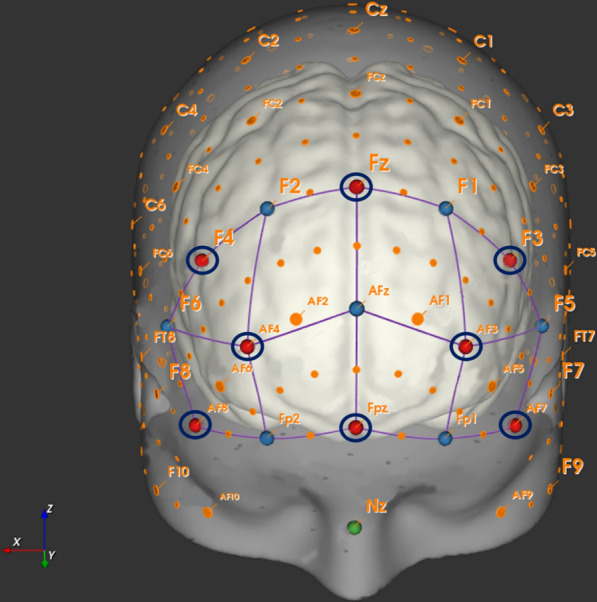
In a cohort of younger adults (n = 39, 18-30 years), we assessed (i) handgrip strength by a handhold dynamometer, (ii) short-term working memory performance by using error rates and reaction times in the Sternberg task, and (iii) cortical hemodynamics of the prefrontal cortex (PFC) via functional near-infrared spectroscopy (fNIRS).
We observed low to moderate negative correlations (r = ~ - 0.38 to - 0.51; p < 0.05) between reaction time and levels of oxyHb in specific parts of the PFC. Furthermore, we noticed low to moderate positive correlations (r = ~ 0.34 to 0.45; p < 0.05) between reaction times and levels of deoxyHb in distinct parts of the PFC. Additionally, higher levels of oxyHb (r (35) = 0.401; p = 0.014) and lower levels of deoxyHb (r (34) = - 0.338; p = 0.043) in specific parts of the PFC were linked to higher percentage of correct answers. We also found low to moderate correlations (p < 0.05) between measures of handgrip strength and levels of oxyHb (r = ~ 0.35; p < 0.05) and levels of deoxyHb (r = ~ - 0.25 to - 0.49; p < 0.05) in specific parts of the PFC. However, there was neither a correlation between cognitive performance and handgrip strength nor did cortical hemodynamics in the PFC mediate the relationship between handgrip strength and cognitive performance (p > 0.05).
The present study provides evidence for a positive neurobehavioral relationship between cortical hemodynamics and cognitive performance. Our findings further imply that in younger adults higher levels of handgrip strength positively influence cortical hemodynamics although the latter did not necessarily culminate in better cognitive performance. Future research should examine whether the present findings can be generalized to other cohorts (e.g., older adults).
越来越多的证据表明肌肉力量与认知能力之间存在正相关关系。然而,目前对这种关系的神经生理学相关性还了解甚少。本研究旨在通过功能近红外光谱(fNIRS)研究前额皮质(PFC)的皮质血流动力学[即含氧血红蛋白(oxyHb)和去氧血红蛋白(deoxyHb)浓度的变化]作为肌肉力量与认知表现之间的可能联系。
在年轻成年人队列中(n=39,18-30 岁),我们评估了(i)通过手持测力计评估握力,(ii)使用 Sternberg 任务中的错误率和反应时间评估短期工作记忆表现,以及(iii)通过功能近红外光谱(fNIRS)评估前额皮质(PFC)的皮质血流动力学。
我们观察到反应时间与 PFC 特定部位的 oxyHb 水平之间存在低至中度的负相关(r=-0.38 至-0.51;p<0.05)。此外,我们注意到反应时间与 PFC 不同部位的 deoxyHb 水平之间存在低至中度的正相关(r=0.34 至 0.45;p<0.05)。此外,PFC 特定部位的 oxyHb 水平较高(r(35)=0.401;p=0.014)和 deoxyHb 水平较低(r(34)=-0.338;p=0.043)与较高的正确答案百分比相关。我们还发现握力测量值与 oxyHb 水平(r=0.35;p<0.05)和 deoxyHb 水平(r=-0.25 至-0.49;p<0.05)之间存在低至中度相关性(p<0.05)在 PFC 的特定部位。然而,认知表现与握力之间既没有相关性,PFC 中的皮质血流动力学也没有介导握力与认知表现之间的关系(p>0.05)。
本研究提供了皮质血流动力学与认知表现之间存在正神经行为关系的证据。我们的研究结果进一步表明,在年轻成年人中,较高的握力水平会积极影响皮质血流动力学,尽管后者不一定会导致更好的认知表现。未来的研究应该检验本研究结果是否可以推广到其他队列(例如,老年人)。