Center for Synaptic Neuroscience and Technology, Istituto Italiano di Tecnologia, Largo Rosanna Benzi 10, 16132, Genova, Italy.
Department of Experimental Medicine, University of Genova, Viale Benedetto XV, 3, 16132, Genova, Italy.
Cell Death Dis. 2021 Feb 15;12(2):180. doi: 10.1038/s41419-021-03465-6.
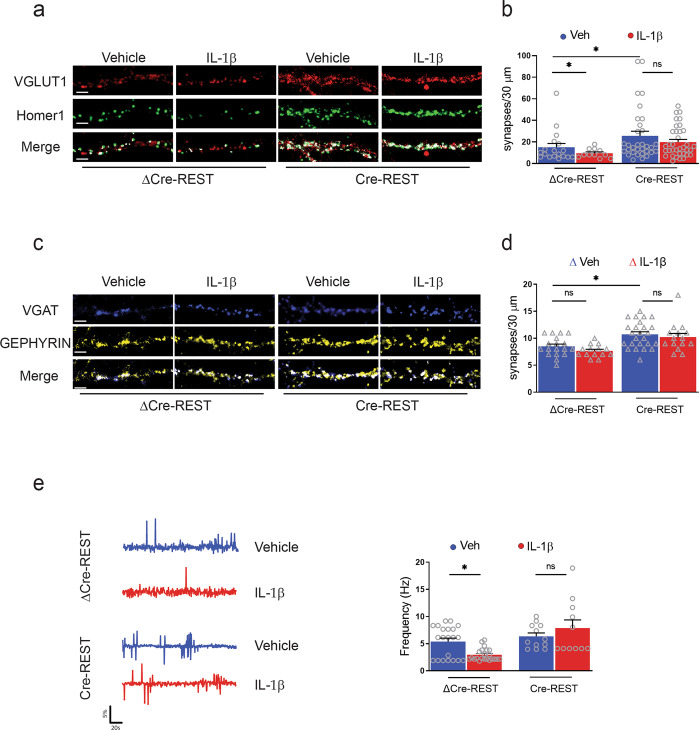
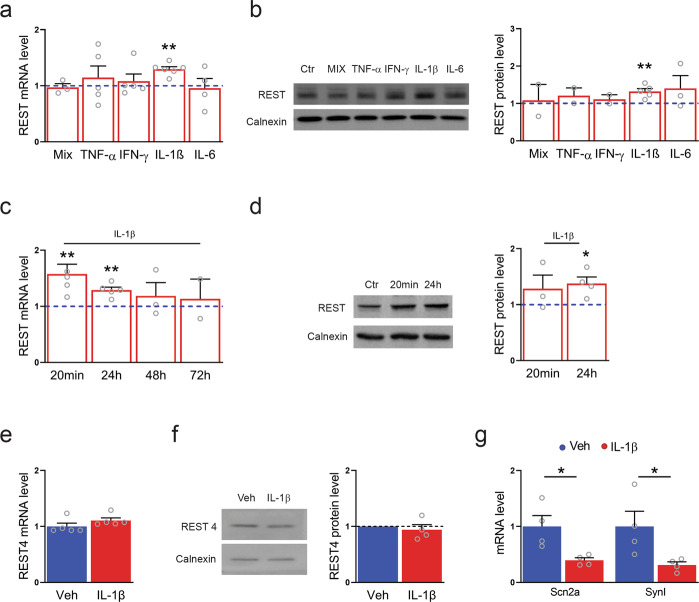
Neuroinflammation is associated with synapse dysfunction and cognitive decline in patients and animal models. One candidate for translating the inflammatory stress into structural and functional changes in neural networks is the transcriptional repressor RE1-silencing transcription factor (REST) that regulates the expression of a wide cluster of neuron-specific genes during neurogenesis and in mature neurons. To study the cellular and molecular pathways activated under inflammatory conditions mimicking the experimental autoimmune encephalomyelitis (EAE) environment, we analyzed REST activity in neuroblastoma cells and mouse cortical neurons treated with activated T cell or microglia supernatant and distinct pro-inflammatory cytokines. We found that REST is activated by a variety of neuroinflammatory stimuli in both neuroblastoma cells and primary neurons, indicating that a vast transcriptional change is triggered during neuroinflammation. While a dual activation of REST and its dominant-negative splicing isoform REST4 was observed in N2a neuroblastoma cells, primary neurons responded with a pure full-length REST upregulation in the absence of changes in REST4 expression. In both cases, REST upregulation was associated with activation of Wnt signaling and increased nuclear translocation of β-catenin, a well-known intracellular transduction pathway in neuroinflammation. Among single cytokines, IL-1β caused a potent and prompt increase in REST transcription and translation in neurons, which promoted a delayed and strong synaptic downscaling specific for excitatory synapses, with decreased frequency and amplitude of spontaneous synaptic currents, decreased density of excitatory synaptic connections, and decreased frequency of action potential-evoked Ca transients. Most important, the IL-1β effects on excitatory transmission were strictly REST dependent, as conditional deletion of REST completely occluded the effects of IL-1β activation on synaptic transmission and network excitability. Our results demonstrate that REST upregulation represents a new pathogenic mechanism for the synaptic dysfunctions observed under neuroinflammatory conditions and identify the REST pathway as therapeutic target for EAE and, potentially, for multiple sclerosis.
神经炎症与患者和动物模型中的突触功能障碍和认知能力下降有关。转录抑制因子 RE1-沉默转录因子(REST)是将炎症应激转化为神经网络结构和功能变化的候选因子之一,它在神经发生和成熟神经元中调节广泛的神经元特异性基因表达。为了研究模拟实验性自身免疫性脑脊髓炎(EAE)环境下的炎症条件下激活的细胞和分子途径,我们分析了用激活的 T 细胞或小胶质细胞上清液和不同促炎细胞因子处理的神经母细胞瘤细胞和小鼠皮质神经元中的 REST 活性。我们发现,REST 在神经母细胞瘤细胞和原代神经元中被多种神经炎症刺激激活,表明在神经炎症过程中触发了广泛的转录变化。虽然在 N2a 神经母细胞瘤细胞中观察到 REST 和其显性负性剪接异构体 REST4 的双重激活,但在没有 REST4 表达变化的情况下,原代神经元对纯全长 REST 的上调做出反应。在这两种情况下,REST 的上调与 Wnt 信号的激活和β-连环蛋白的核转位有关,β-连环蛋白是神经炎症中的一种众所周知的细胞内转导途径。在单一细胞因子中,IL-1β 在神经元中引起 REST 转录和翻译的强烈和迅速增加,这促进了兴奋性突触的延迟和强烈的突触缩小,表现为自发性突触电流的频率和幅度降低、兴奋性突触连接密度降低以及动作电位诱发的 Ca 瞬变频率降低。最重要的是,IL-1β 对兴奋性传递的影响严格依赖于 REST,因为 REST 的条件性缺失完全阻断了 IL-1β 激活对突触传递和网络兴奋性的影响。我们的结果表明,REST 的上调代表了神经炎症条件下观察到的突触功能障碍的新发病机制,并将 REST 途径确定为 EAE 以及潜在的多发性硬化症的治疗靶点。