Department of Urology, The Third Xiangya Hospital, Central South University, Changsha, 410013, Hunan Province, P.R. China.
Cell Death Dis. 2021 Feb 15;12(2):188. doi: 10.1038/s41419-021-03455-8.
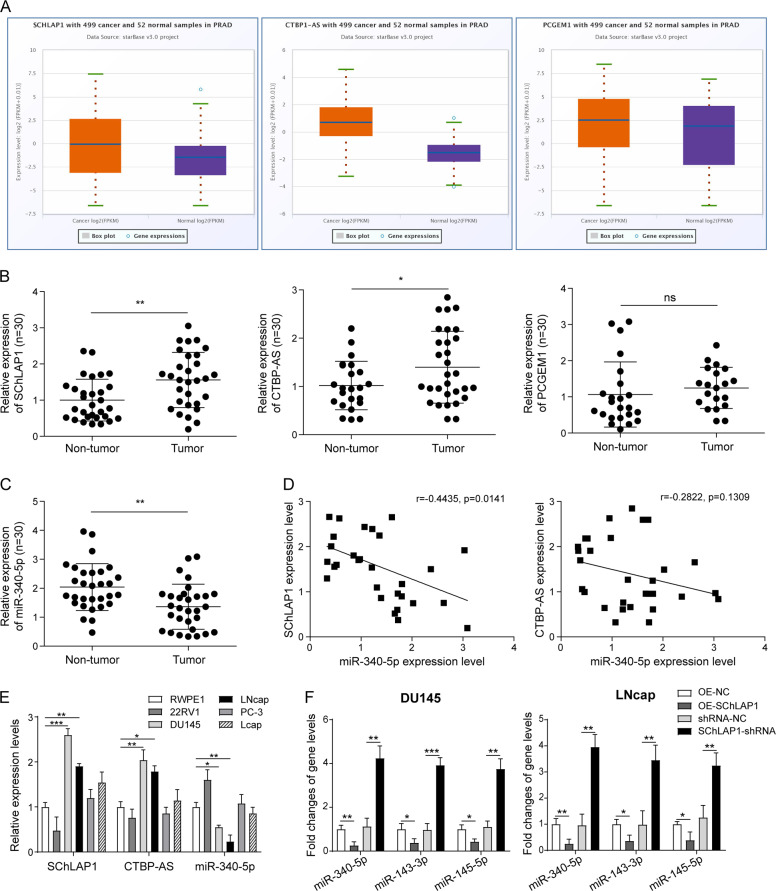
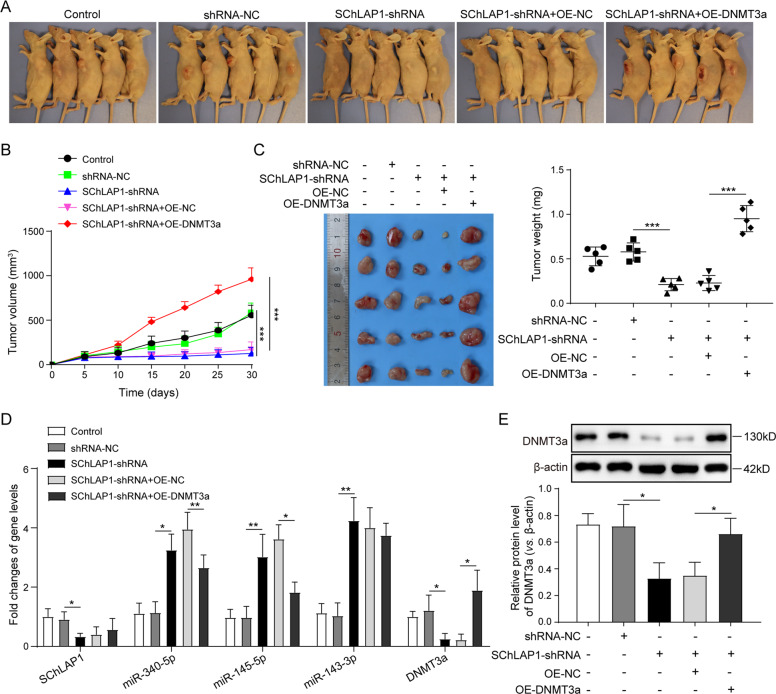
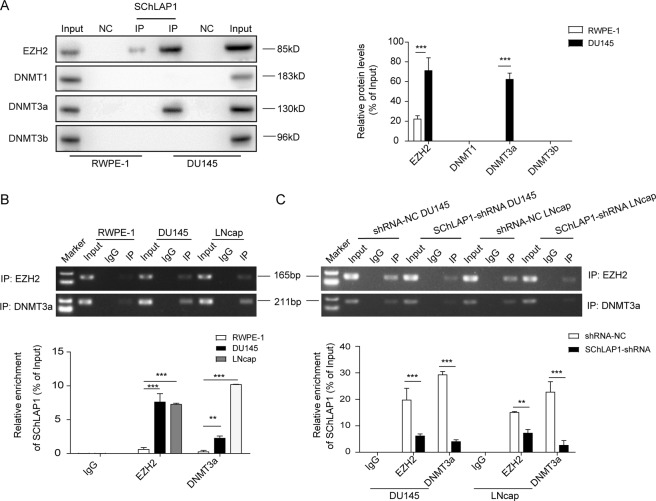
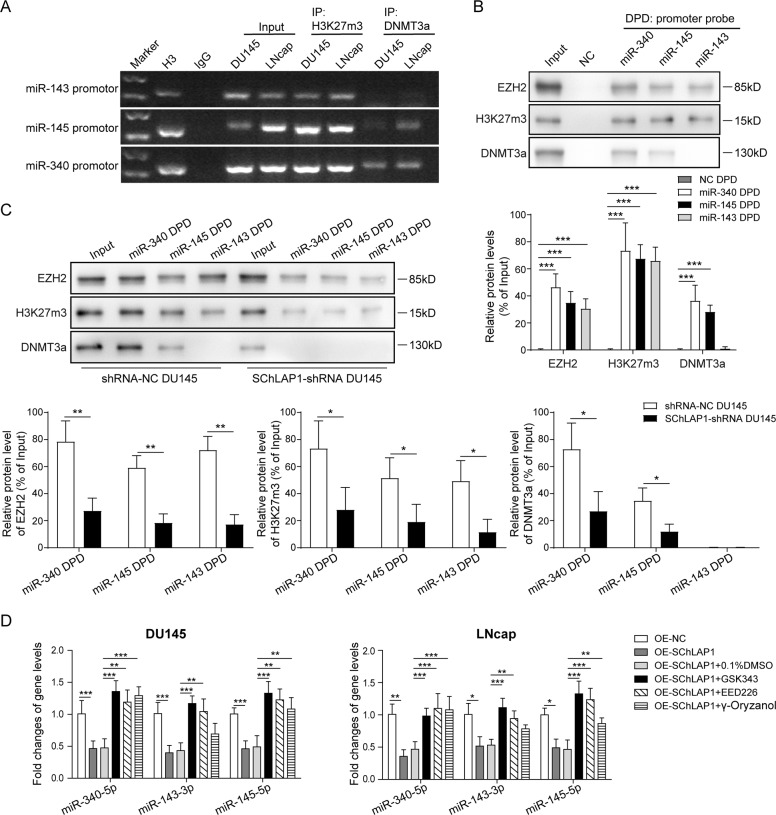
This study aimed to investigate the mechanism of SChLAP1 (second chromosome locus associated with prostate-1) on microRNA expression in prostate cancer. Differential expression of lncRNAs and microRNA prostate cancer cells were predicted by informatics and confirmed by qRT-PCR. SChLAP1-interacting proteins were characterized by RNA pull-down combined with western blotting, which was verified using RIP and qPCR analysis. Then ChIP assay and DNA pull-down were used to validate the binding of DNMT3a and HEK27me3 with miRNA gene promoters. Target genes of miRNAs were bioinformatically predicted and validated by dual-luciferase reporter assays. The tumorigenicity of prostate cancer cells was assessed using the cancer cell line-based xenograft (CDX) model. We found that SChLAP1 expression was significantly elevated in prostate cancer tissues and cell lines, which was negatively correlated with miR-340 expression. SChLAP1 directly binds with EZH2 and repressed multiple miRNA expression on chromosome 5 including the miR-340-3p in prostate cancer cells through recruiting H3K27me3 to mediate promoter methylation modification of miR-340-5p/miR-143-3p/miR-145-5p to suppress gene transcription. Moreover, DNMT3a was one of the common target genes of miR-340-5p/miR-143-3p/miR-145-5p in prostate cancer cells. And SChLAP1/EZH2 could also promote prostate cancer tumor development via the interaction of microRNA-DNMT3a signaling pathways in xenograft nude mice. Altogether, our results suggest that SChLAP1 enhanced the proliferation, migration, and tumorigenicity of prostate cancer cells through interacting with EZH2 to recruit H2K27me3 and mediate promoter methylation modification of miR-340-5p/miR-143-3p/miR-145-5p with a DNMT3a-feedback loop.
本研究旨在探讨 SChLAP1(与前列腺 1 相关的第二染色体位点)对前列腺癌 microRNA 表达的作用机制。通过计算预测前列腺癌细胞中 lncRNA 和 microRNA 的差异表达,并通过 qRT-PCR 进行验证。通过 RNA 下拉结合 Western blot 鉴定 SChLAP1 相互作用蛋白,并用 RIP 和 qPCR 分析进行验证。然后使用 ChIP 测定和 DNA 下拉验证 DNMT3a 和 HEK27me3 与 miRNA 基因启动子的结合。通过双荧光素酶报告基因检测等方法预测和验证 miRNA 的靶基因。使用基于癌细胞系的异种移植(CDX)模型评估前列腺癌细胞的致瘤性。结果发现,SChLAP1 在前列腺癌组织和细胞系中表达显著升高,与 miR-340 表达呈负相关。SChLAP1 通过募集 H3K27me3 来介导 miR-340-5p/miR-143-3p/miR-145-5p 启动子甲基化修饰,从而直接与 EZH2 结合并抑制包括染色体 5 上的 miR-340-3p 在内的多个 miRNA 在前列腺癌细胞中的表达,抑制基因转录。此外,DNMT3a 是 miR-340-5p/miR-143-3p/miR-145-5p 在前列腺癌细胞中的共同靶基因之一。并且 SChLAP1/EZH2 还可以通过在异种移植裸鼠中微 RNA-DNMT3a 信号通路的相互作用促进前列腺癌肿瘤的发展。综上所述,我们的研究结果表明,SChLAP1 通过与 EZH2 相互作用,募集 H2K27me3,并介导 miR-340-5p/miR-143-3p/miR-145-5p 启动子甲基化修饰,形成一个带有 DNMT3a 反馈回路的 miR-340-5p/miR-143-3p/miR-145-5p,从而增强前列腺癌细胞的增殖、迁移和致瘤性。