Centre for Radiation, Chemicals and Environmental Hazards, Public Health England, Chilton, Didcot, Oxfordshire, UK.
Photochem Photobiol. 2021 May;97(3):542-548. doi: 10.1111/php.13401. Epub 2021 Mar 5.
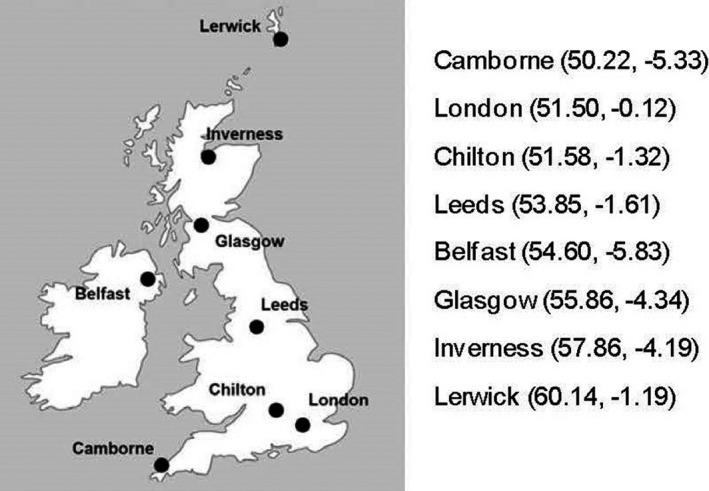
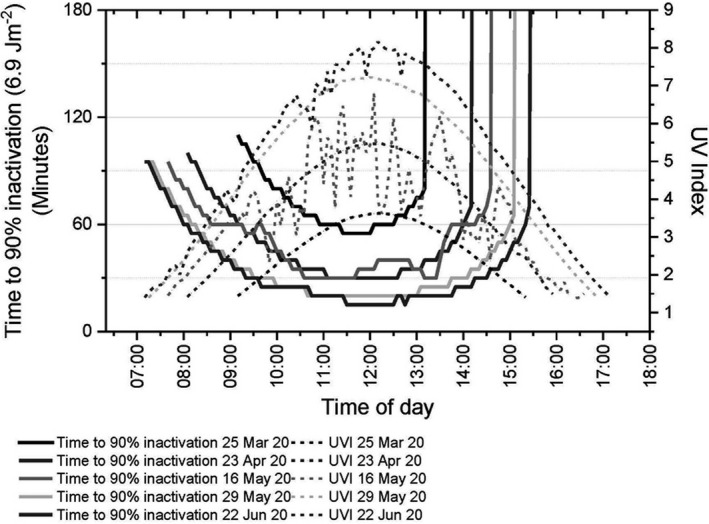
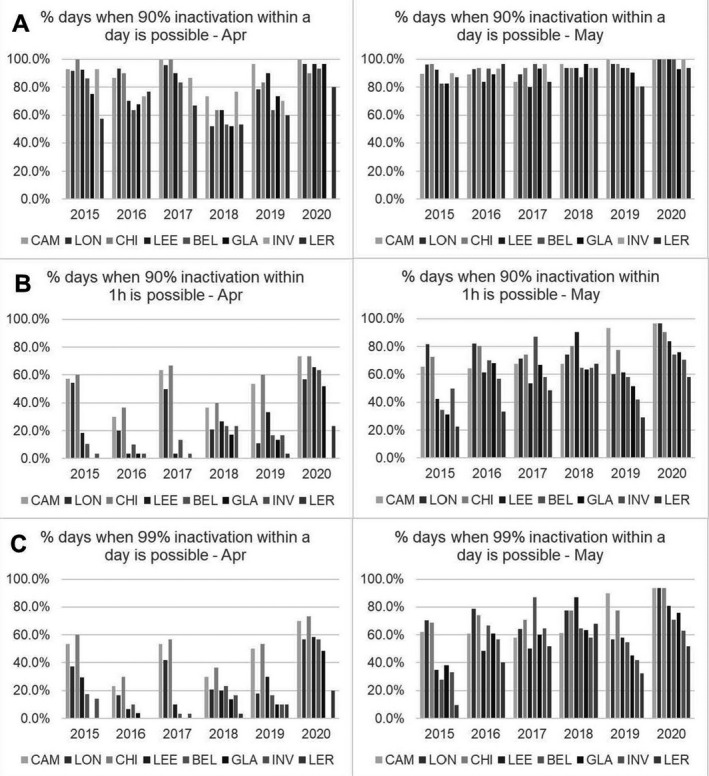
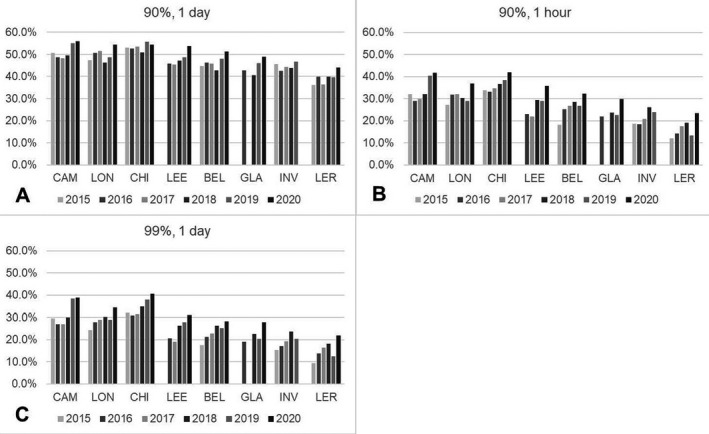
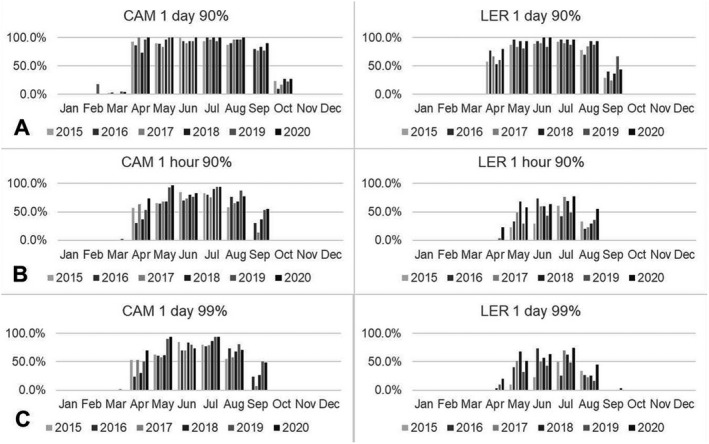
Potential for SARS-CoV-2 viral inactivation by solar UV radiation in outdoor spaces in the UK has been assessed. Average erythema effective and UV-A daily radiant exposures per month were higher (statistically significant, P < 0.05) in spring 2020 in comparison with spring 2015-2019 across most of the UK, while irradiance generally appeared to be in the normal expected range of 2015-2019. It was found that these higher radiant exposures may have increased the potential for SARS-CoV-2 viral inactivation outdoors in April and May 2020. Assessment of the 6-year period 2015-2020 in the UK found that for 50-60% of the year, that is most of October to March, solar UV is unlikely to have a significant (at least 90% inactivation) impact on viral inactivation outdoors. Minimum times to reach 90% and 99% inactivation in the UK are of the order of tens of minutes and of the order of hours, respectively. However, these times are best case scenarios and should be treated with caution.
已经评估了英国户外空间中太阳紫外线辐射对 SARS-CoV-2 病毒失活的潜力。与 2015-2019 年春季相比,2020 年春季英国大部分地区的平均红斑有效暴露量和每月 UV-A 日辐射暴露量更高(统计学上显著,P<0.05),而辐照度总体上似乎处于 2015-2019 年的正常预期范围内。结果发现,这些更高的辐射暴露可能增加了 2020 年 4 月和 5 月户外 SARS-CoV-2 病毒失活的潜力。对英国 2015-2020 年 6 年期间的评估发现,对于 50-60%的时间,即 10 月至 3 月的大部分时间,太阳紫外线不太可能对户外病毒失活产生重大影响(至少 90%失活)。在英国达到 90%和 99%失活所需的最短时间分别约为数十分钟和数小时。然而,这些时间是最佳情况,应谨慎对待。