School of Medicine, Institutes of Molecular Immunology and Experimental Oncology, Technical University of Munich, Munich, Germany.
Department of Surgery, Klinikum rechts der Isar, School of Medicine, Technical University of Munich, Munich, Germany.
J Cachexia Sarcopenia Muscle. 2021 Apr;12(2):378-392. doi: 10.1002/jcsm.12680. Epub 2021 Feb 16.
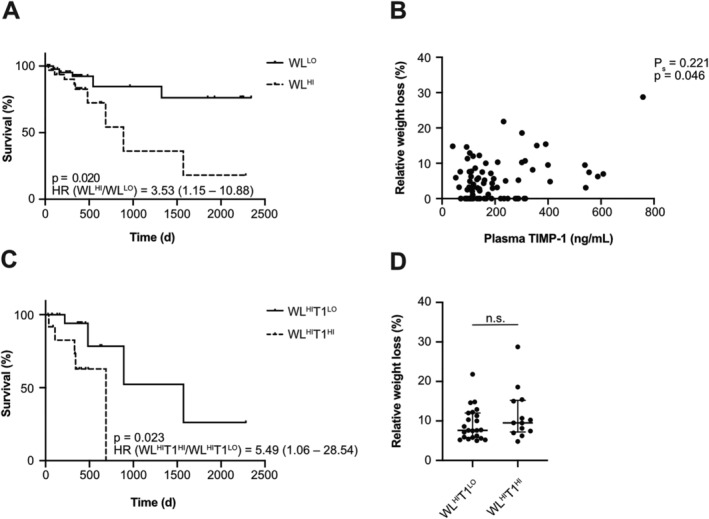
Cachexia, a devastating syndrome in cancer patients, critically determines survival and life quality. It is characterized by impaired homeostasis of multiple organs including the liver, involves tissue wasting, and is conventionally diagnosed and classified by weight loss (WL). However, recent studies pointed at the problem that WL is not sufficient for precise classification of cancer patients according to disease severity (i.e. prognosis). Tissue inhibitor of metalloproteinases-1 (TIMP-1) is an easily accessible cachexia-associated biomarker in the blood, known to alter liver homeostasis. Here, we investigated the value of combining blood levels of TIMP-1 with parameters of liver functionality towards establishment of a cachexia-associated clinical score, which predicts survival of cancer patients, reflects the clinical manifestation of cachexia, and is easily accessible in the clinic.
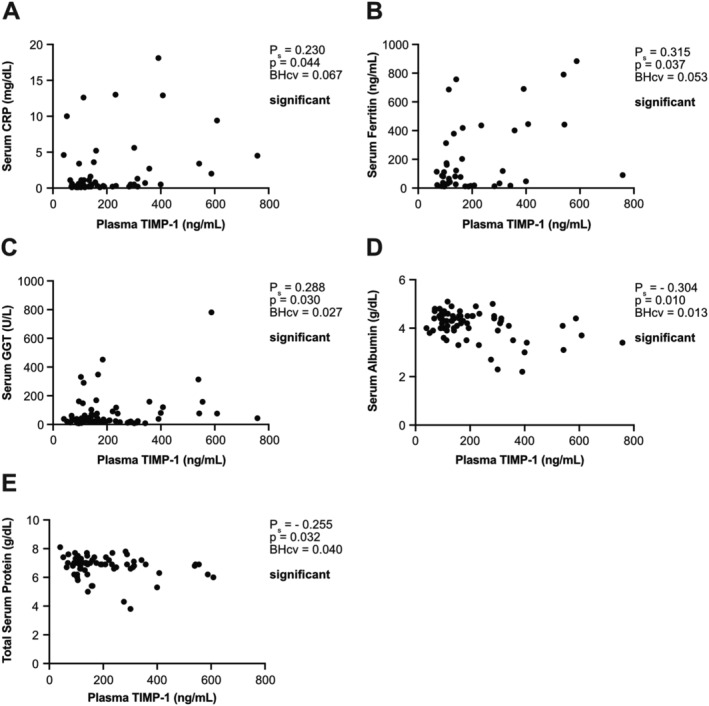
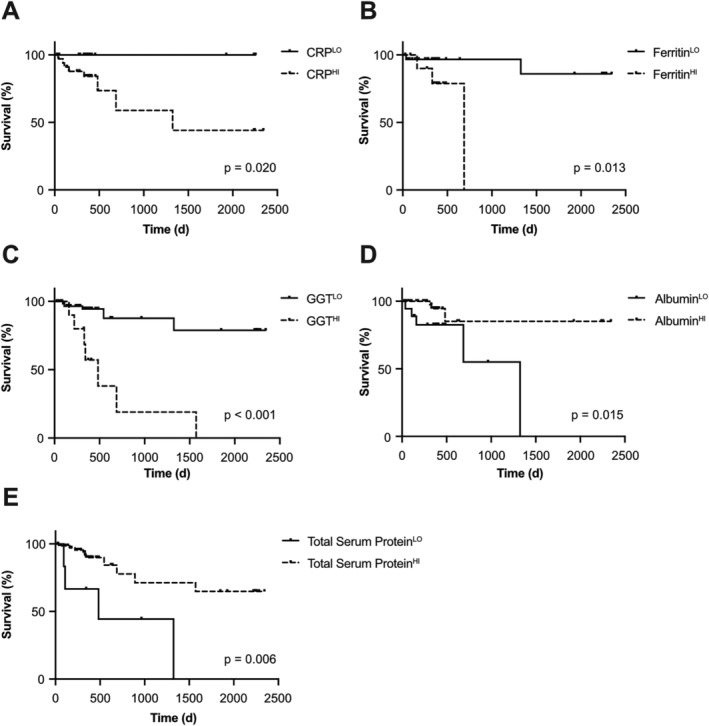
The TIMP-1/liver cachexia (TLC) score, expressed as numerical value ranging from 0 to 1, was calculated by categorizing the blood levels of TIMP-1 and parameters of liver functionality (C-reactive protein, ferritin, gamma-glutamyl transferase, albumin, and total protein) for each patient as below/above a certain risk threshold. The TLC score was tested in a cohort of colorectal cancer (CRC) patients (n = 82, 35.4% women, 64.6% men, median age: 70 years) and validated in a cohort of pancreatic cancer (PC) patients (n = 84, 54.8% women, 45.2% men, median age: 69 years).
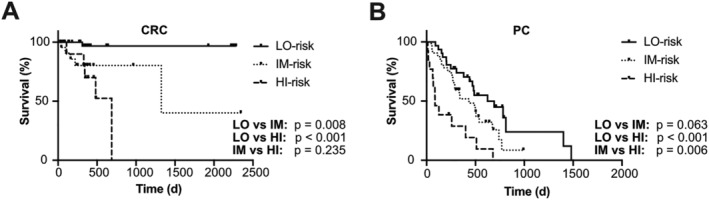
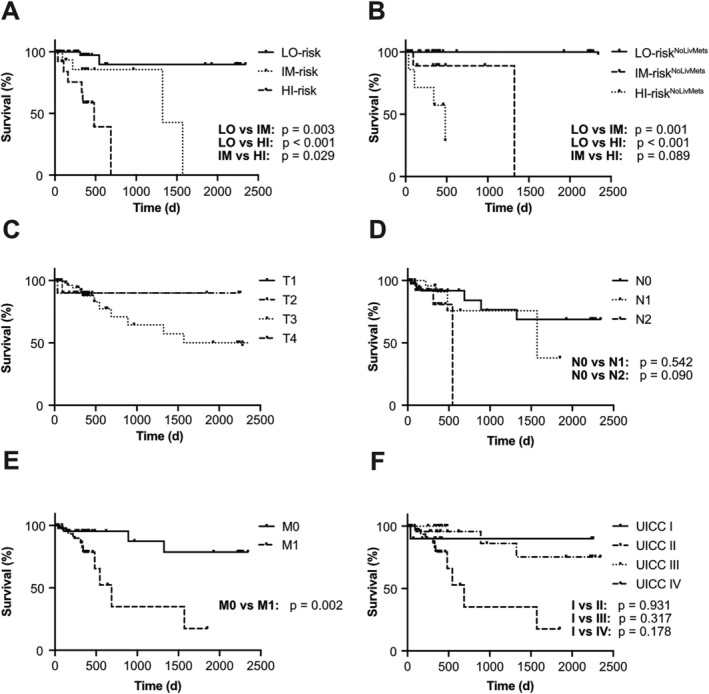
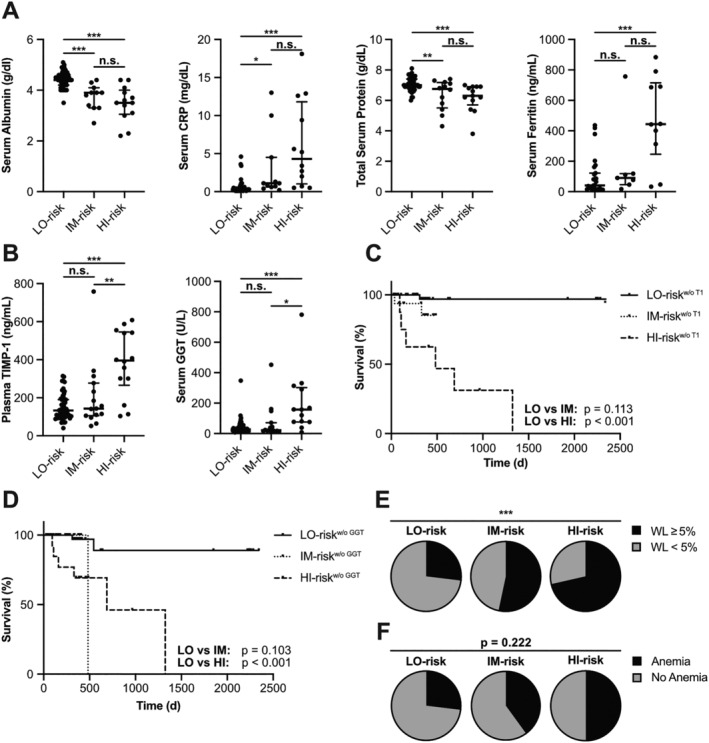
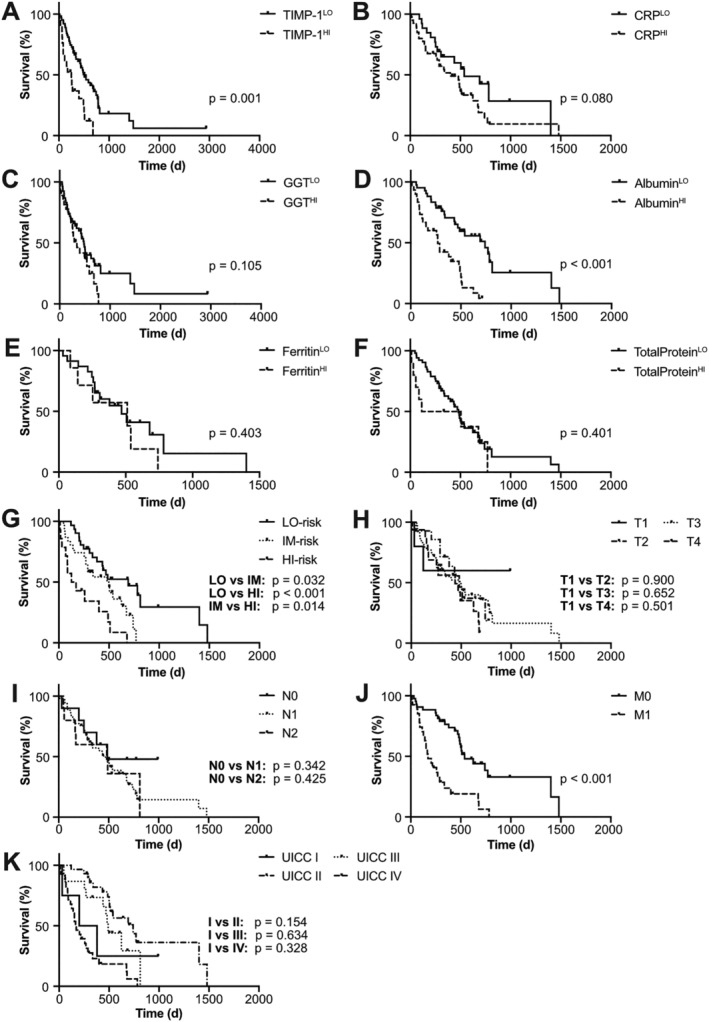
In CRC patients, the TLC score positively correlated with presence of cachexia-related symptoms (WL, impaired liver function), predicted survival [P < 0.001, hazard ratio (HR): 96.91 (9.85-953.90)], and allowed classification of three prognostically distinct patient subpopulations [low (LO)-risk, intermediate (IM)-risk, and high (HI)-risk groups; LO vs. IM: P = 0.003, LO vs. HI: P < 0.001, IM vs. HI: P = 0.029]. The prognostic power of the cachexia-associated TLC score [P < 0.001, HR: 7.37 (2.80-19.49)] and its application to define risk groups (LO vs. IM: P = 0.032, LO vs. HI: P < 0.001, IM vs. HI: P = 0.014) was confirmed in a cohort of PC patients. The prognostic power of the TLC score was independent of presence of liver metastases in CRC or PC patients and was superior to clinically established staging classifications.
The TLC score, a result of straightforward determination of blood parameters, is an objective cachexia-associated clinical tool for precise survival prediction of gastrointestinal cancer patients.
恶病质是癌症患者的一种严重综合征,严重影响患者的生存和生活质量。它的特征是多个器官(包括肝脏)的稳态受损,涉及组织消耗,传统上通过体重减轻(WL)来诊断和分类。然而,最近的研究指出,WL 不足以根据疾病严重程度(即预后)对癌症患者进行精确分类。组织金属蛋白酶抑制剂-1(TIMP-1)是血液中一种易于获得的恶病质相关生物标志物,已知会改变肝脏稳态。在这里,我们研究了将 TIMP-1 血液水平与肝功能参数结合起来建立一种恶病质相关临床评分的价值,该评分可预测癌症患者的生存,反映恶病质的临床表现,并且在临床上易于获得。
TIMP-1/肝恶病质(TLC)评分,以数值表示,范围为 0 至 1,通过对每位患者的 TIMP-1 血液水平和肝功能参数(C 反应蛋白、铁蛋白、γ-谷氨酰转移酶、白蛋白和总蛋白)进行分类来计算。TLC 评分在结直肠癌(CRC)患者队列(n=82,女性占 35.4%,男性占 64.6%,中位年龄:70 岁)中进行了测试,并在胰腺癌(PC)患者队列(n=84,女性占 54.8%,男性占 45.2%,中位年龄:69 岁)中进行了验证。
在 CRC 患者中,TLC 评分与与恶病质相关症状(WL、肝功能受损)的存在呈正相关,可预测生存[P<0.001,风险比(HR):96.91(9.85-953.90)],并允许对三个具有不同预后的患者亚群进行分类[低(LO)-风险、中(IM)-风险和高(HI)-风险组;LO 与 IM:P=0.003,LO 与 HI:P<0.001,IM 与 HI:P=0.029]。恶病质相关 TLC 评分的预后能力[P<0.001,HR:7.37(2.80-19.49)]及其用于定义风险组的应用(LO 与 IM:P=0.032,LO 与 HI:P<0.001,IM 与 HI:P=0.014)在 PC 患者队列中得到了证实。TLC 评分的预后能力独立于 CRC 或 PC 患者的肝转移存在,并且优于临床既定的分期分类。
TLC 评分是一种基于血液参数的简单测定结果,是一种用于准确预测胃肠道癌症患者生存的客观恶病质相关临床工具。