Department of Medical Oncology, Tata Memorial Hospital, Mumbai, India.
Department of Radiodiagnosis, Tata Memorial Hospital, Mumbai, India.
Cancer Med. 2021 Mar;10(5):1525-1534. doi: 10.1002/cam4.3617. Epub 2021 Feb 16.
Checkpoint inhibitors (Nivolumab and Pembrolizumab) are approved for multiple indications in solid tumors. However access to these therapies is limited in low and middle income countries. Hence we performed an audit to identify accessibility, adverse event rates, compliance, progression free survival and overall survival in solid tumors.
This was a single center retrospective analysis of prospective data base of patients with non-melanoma solid tumors who were treated with immunotherapy from August 2015 to November 2018. Adverse events during immunotherapy were documented and graded using CTCAE (Common terminology criteria for adverse events), v. 4.02. The response rates to immunotherapy, toxicities and the time to onset and resolution of toxicities were also evaluated as secondary endpoints.
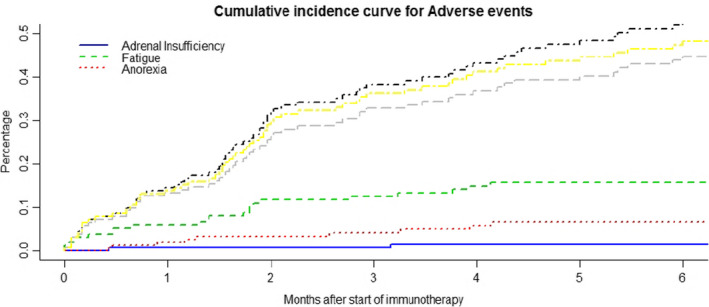
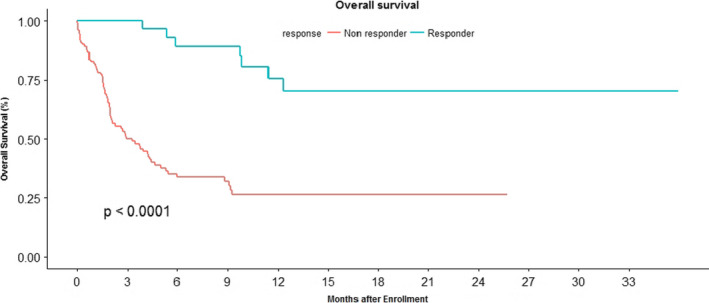
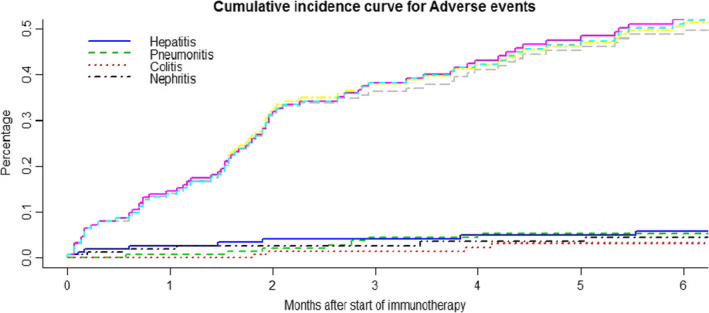
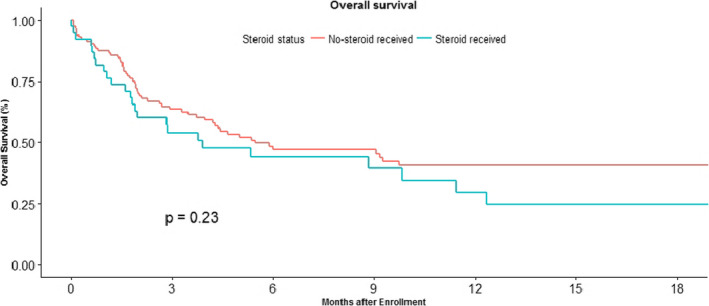
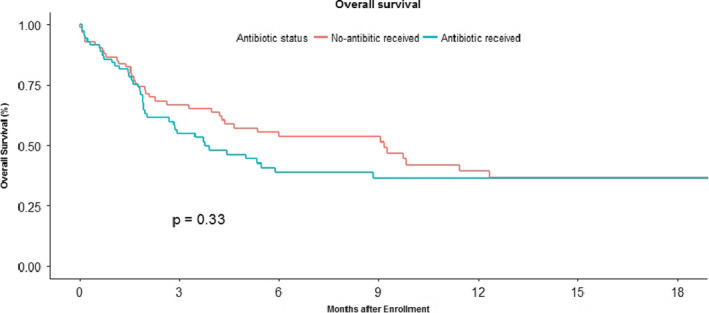
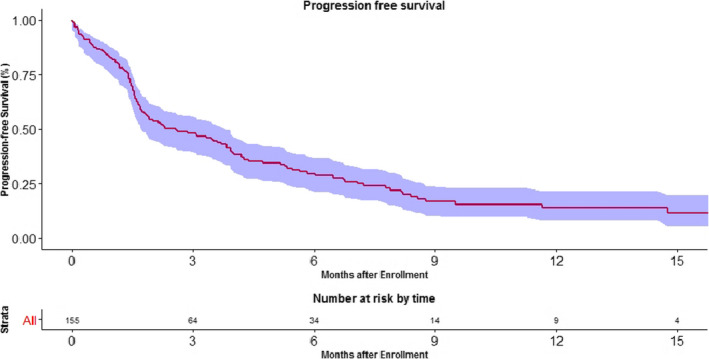
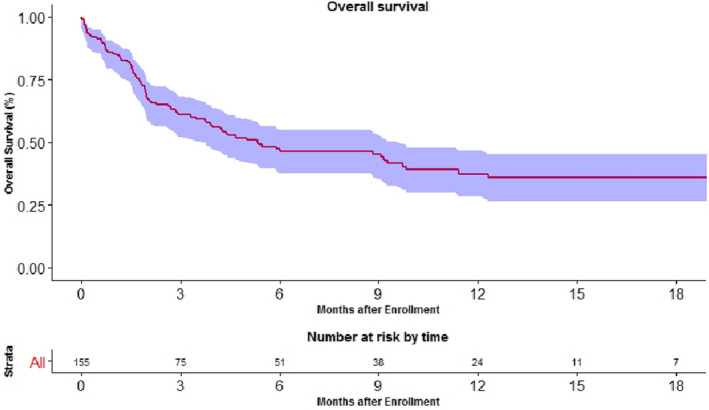
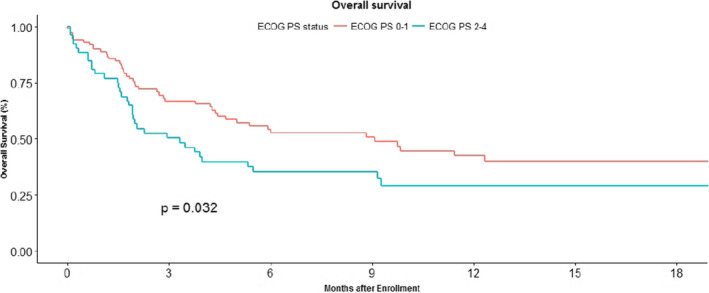
Out of 9610 patients, only 155 patients (1.61%) could receive immunotherapy. The most common malignancies included metastatic non-small cell lung cancer, metastatic renal cell carcinoma, metastatic urothelial carcinoma and relapsed/recurrent head and neck squamous cell carcinoma. Median overall survival in patients who received immunotherapy in non-melanoma solid malignancies was 5.37 months (95% CI, 3.73-9.73). Poor performance status at baseline was the only adverse prognostic factor. The median progression free survival was 2.57 months (95% CI, 1.73-3.83). Immunotherapy was well tolerated with most common side effects being fatigue 14.8% and anorexia 5.8%. The cumulative incidence of immune related adverse events like hepatitis, pneumonitis, colitis and nephritis was less than 10%.
Real-world data in Indian setting confirms the benefit of immunotherapy in patients with advanced non-melanoma solid tumors.
检查点抑制剂(Nivolumab 和 Pembrolizumab)已在实体瘤的多个适应证中获得批准。然而,在中低收入国家,这些疗法的可及性有限。因此,我们进行了一项审计,以确定实体瘤中这些疗法的可及性、不良反应发生率、依从性、无进展生存期和总生存期。
这是一项对 2015 年 8 月至 2018 年 11 月接受免疫治疗的非黑色素瘤实体瘤患者前瞻性数据库的单中心回顾性分析。记录免疫治疗期间的不良反应,并使用 CTCAE(不良事件通用术语标准),v.4.02 进行分级。还评估了免疫治疗的反应率、毒性以及毒性发生和解决的时间。
在 9610 名患者中,只有 155 名(1.61%)能够接受免疫治疗。最常见的恶性肿瘤包括转移性非小细胞肺癌、转移性肾细胞癌、转移性尿路上皮癌和复发性/转移性头颈部鳞状细胞癌。接受非黑色素瘤实体恶性肿瘤免疫治疗的患者的中位总生存期为 5.37 个月(95%CI,3.73-9.73)。基线时的一般表现状态较差是唯一的不良预后因素。中位无进展生存期为 2.57 个月(95%CI,1.73-3.83)。免疫治疗耐受性良好,最常见的副作用是疲劳 14.8%和厌食 5.8%。肝炎、肺炎、结肠炎和肾炎等免疫相关不良反应的累积发生率低于 10%。
印度真实世界数据证实了免疫疗法在晚期非黑色素瘤实体瘤患者中的获益。