Department of Neurosurgery, Faculty of Medicine, University of Thessaly, Larisa, Greece.
Division of Neurosurgery, Department of Clinical Neurosciences, Geneva University Hospitals, Geneva, Switzerland.
Acta Neurochir (Wien). 2021 Jun;163(6):1541-1552. doi: 10.1007/s00701-021-04722-5. Epub 2021 Feb 17.
Work-related musculoskeletal disorders (WMSDs) affect a significant percentage of the neurosurgical workforce. The aim of the current questionnaire-based study was to examine the prevalence of WMSDs amongst neurosurgeons, identify risk factors, and study the views of neurosurgeons regarding ergonomics.
From June to August 2020, members of the "European Association of Neurosurgical Societies," the "Neurosurgery Research Listserv," and the "Latin American Federation of Neurosurgical Societies" were asked to complete an electronic questionnaire on the topics of WMSDs and ergonomics.
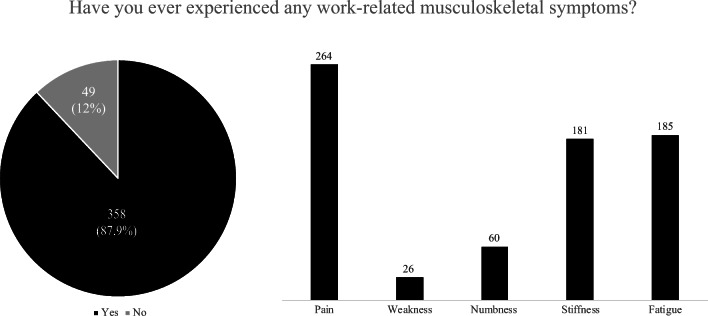
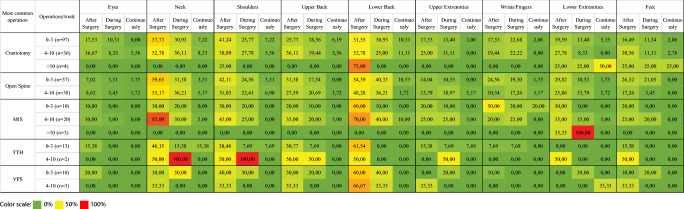
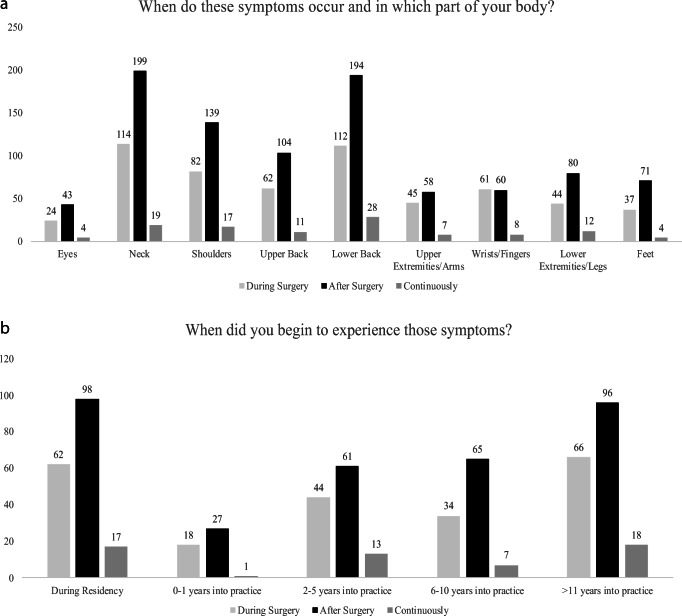
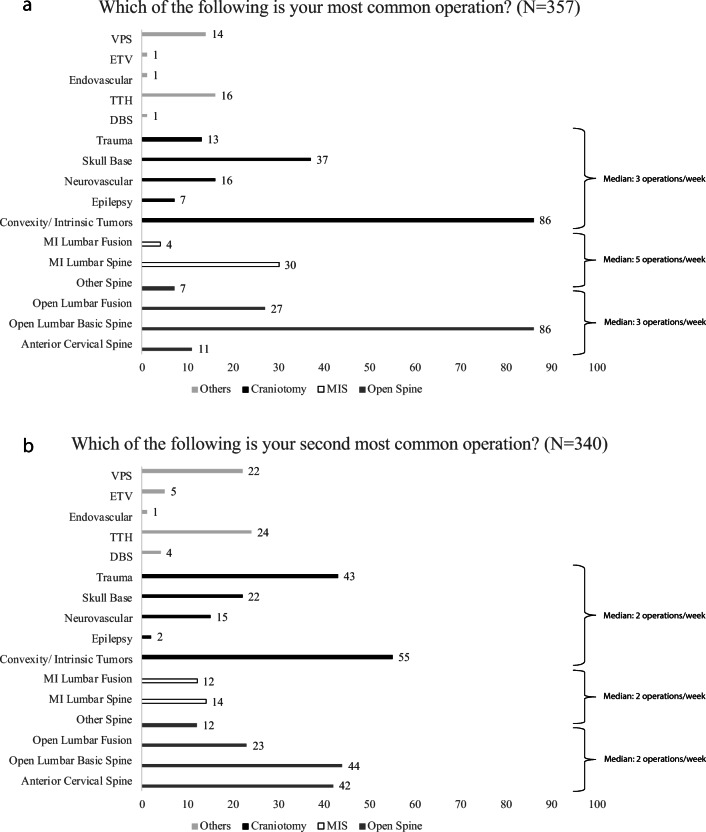
A total of 409 neurosurgeons responded to the survey, with a 4.7 male to female ratio. Most of the surgeons worked in Europe (76.9%) in academic public hospitals. The vast majority of the participants (87.9%) had experienced WMSDs, mainly affecting the shoulder, neck, and back muscles. The most common operations performed by the participants were "Craniotomy for convexity/intrinsic tumors" (24.1%) and "Open lumbar basic spine" (24.1%). Neurosurgeons agreed that ergonomics is an underexposed area in the neurosurgical field (84.8%) and that more resources should be spend (87.3%) and training curricula changes should be made (78.3%) in order to alleviate the burden of WMSDs on neurosurgeons. Univariate analysis did not reveal any associations between the development of WMSDs and age, gender, tenure, average duration of operation, operating time per week, type of operation, and surgical approach.
The problem of WMSDs ought to be more closely addressed and managed by the neurosurgical community. More studies ought to be designed to investigate specific ergonomic parameters in order to formulate practice recommendations.
与工作相关的肌肉骨骼疾病(WMSD)影响了相当大比例的神经外科劳动力。本基于问卷的研究旨在调查神经外科医生中 WMSD 的患病率,确定危险因素,并研究神经外科医生对人体工程学的看法。
2020 年 6 月至 8 月,“欧洲神经外科学会协会”、“神经外科研讨列表服务”和“拉丁美洲神经外科学会联合会”的成员被要求完成一份关于 WMSD 和人体工程学的电子问卷。
共有 409 名神经外科医生对调查做出了回应,男女比例为 4.7:1。大多数外科医生在学术公立医院的欧洲(76.9%)工作。绝大多数参与者(87.9%)经历过 WMSD,主要影响肩部、颈部和背部肌肉。参与者最常进行的手术是“凸面/内在肿瘤开颅术”(24.1%)和“开放性腰椎基础脊柱”(24.1%)。神经外科医生认为人体工程学是神经外科领域一个未充分暴露的领域(84.8%),应该投入更多资源(87.3%)并改变培训课程(78.3%),以减轻 WMSD 给神经外科医生带来的负担。单变量分析未发现 WMSD 的发展与年龄、性别、任期、手术平均持续时间、每周手术时间、手术类型和手术入路之间存在任何关联。
神经外科界应该更密切地关注和管理 WMSD 问题。应该设计更多的研究来调查特定的人体工程学参数,以便制定实践建议。