Hoang Peter, Whaley Colin, Thompson Karen, Ho Venus, Rehman Uzma, Boluk Karla, Grindrod Kelly A
Department of Medicine, Cumming School of Medicine, University of Calgary, Calgary, AB, Canada.
enTECH Computer Club, University of Waterloo, Waterloo, ON, Canada.
JMIR Res Protoc. 2021 Feb 17;10(2):e23767. doi: 10.2196/23767.
Social integration and mental health are vital aspects of healthy aging. However, close to half of Canadians older than 80 years report feeling socially isolated. Research has shown that social isolation leads to increased mortality and morbidity, and various interventions have been studied to alleviate loneliness among older adults. This proposal presents an evaluation of an intervention that provides one-on-one coaching, is intergenerational, provides both educational and socialization experiences, and increases technology literacy of older adults to overcome loneliness.
This paper describes the protocol of a randomized, mixed-methods study that will take place in Ontario, Canada. The purpose of this study is to evaluate if an intergenerational technology literacy program can reduce social isolation and depression in older adults via quantitative and qualitative outcome measures.
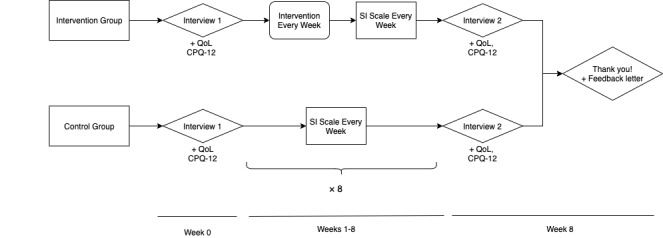
This study is a randomized, mixed-methods, feasibility trial with 2 conditions. Older adults in the intervention condition will receive 1 hour of weekly technological assistance to send an email to a family member, for 8 weeks, with the assistance of a volunteer. Participants in the control condition will not receive any intervention. The primary outcomes are loneliness, measured using the University of California, Los Angeles Loneliness Scale, and depression, measured using the Center for Epidemiologic Studies Depression scale, both of which are measured weekly. Secondary outcomes are quality of life, as assessed using the Older People's Quality of Life-Brief version, and technological literacy, evaluated using the Computer Proficiency Questionnaire-12, both of which will be administered before and after the intervention. Semistructured interviews will be completed before and after the intervention to assess participants' social connectedness, familiarity with technology, and their experience with the intervention. The study will be completed in a long-term care facility in Southwestern Ontario, Canada. Significance was set at P<.05.
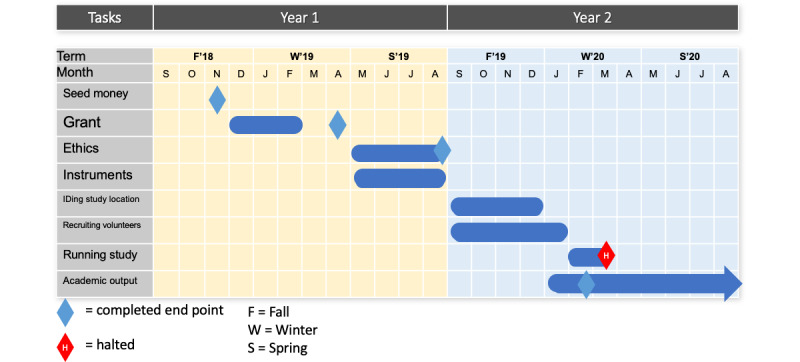
This study was funded in April 2019 and ethical approval was obtained in August 2019. Recruitment for the study started in November 2019. The intervention began in February 2020 but was halted due to the COVID-19 pandemic. The trial will be restarted when safe. As of March 2020, 8 participants were recruited.
Information and communication technology interventions have shown varying results in reducing loneliness and improving mental health among older adults. Few studies have examined the role of one-on-one coaching for older adults in addition to technology education in such interventions. Data from this study may have the potential to provide evidence for other groups to disseminate similar interventions in their respective communities.
INTERNATIONAL REGISTERED REPORT IDENTIFIER (IRRID): DERR1-10.2196/23767.
社会融合与心理健康是健康老龄化的重要方面。然而,近半数80岁以上的加拿大人表示感到社会孤立。研究表明,社会孤立会导致死亡率和发病率上升,并且已经对各种干预措施进行了研究,以减轻老年人的孤独感。本提案提出了一项对干预措施的评估,该干预措施提供一对一辅导,具有代际性,提供教育和社交体验,并提高老年人的技术素养以克服孤独感。
本文描述了一项将在加拿大安大略省进行的随机混合方法研究的方案。本研究的目的是通过定量和定性结果指标评估代际技术素养计划是否可以减少老年人的社会孤立和抑郁。
本研究是一项有两种条件的随机混合方法可行性试验。干预组的老年人将在志愿者的协助下,每周接受1小时的技术援助,用于给家庭成员发送电子邮件,为期8周。对照组的参与者将不接受任何干预。主要结局指标是使用加利福尼亚大学洛杉矶分校孤独量表测量的孤独感,以及使用流行病学研究中心抑郁量表测量的抑郁,两者均每周测量一次。次要结局指标是使用老年人生活质量简版评估的生活质量,以及使用计算机能力问卷-12评估的技术素养,两者均在干预前后进行测量。将在干预前后完成半结构化访谈,以评估参与者的社会联系、对技术的熟悉程度以及他们对干预的体验。该研究将在加拿大安大略省西南部的一家长期护理机构中完成。显著性设定为P<0.05。
本研究于2019年4月获得资助,并于2019年8月获得伦理批准。该研究于2019年11月开始招募。干预于2020年2月开始,但由于COVID-19大流行而暂停。试验将在安全时重新开始。截至2020年3月,已招募8名参与者。
信息和通信技术干预在减少老年人孤独感和改善心理健康方面显示出不同的结果。很少有研究除了在这种干预中进行技术教育外,还研究一对一辅导对老年人的作用。本研究的数据可能有潜力为其他群体在各自社区传播类似干预措施提供证据。
国际注册报告识别码(IRRID):DERR1-10.2196/23767。