CSIR Institute of Genomics and Integrative Biology (CSIR-IGIB), New Delhi, India.
Academy for Scientific and Innovative Research, Human Resource Development Centre Campus, Ghaziabad, Uttar Pradesh, India.
PLoS One. 2021 Feb 17;16(2):e0247115. doi: 10.1371/journal.pone.0247115. eCollection 2021.
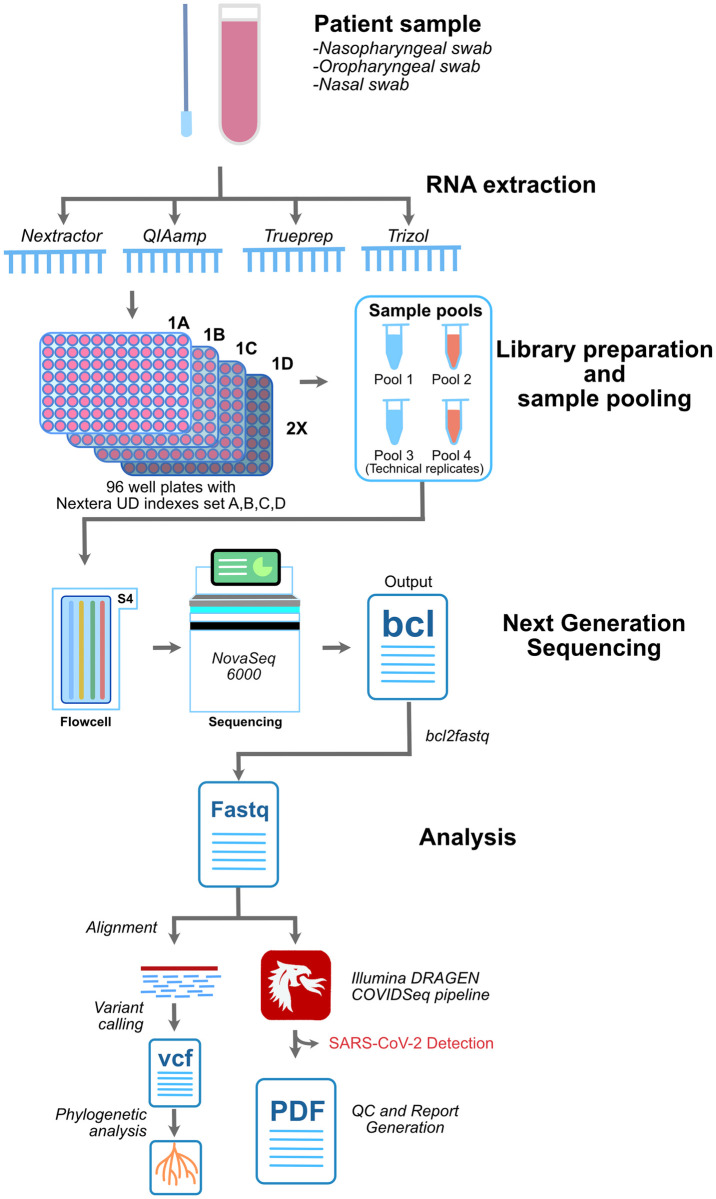
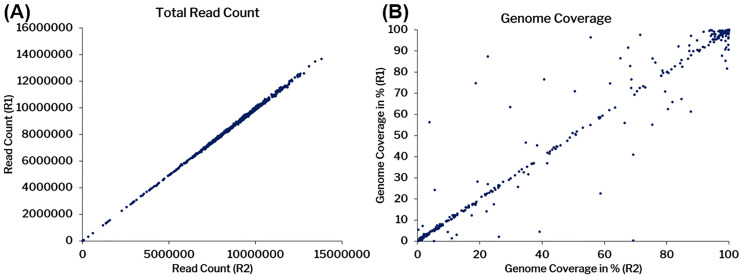
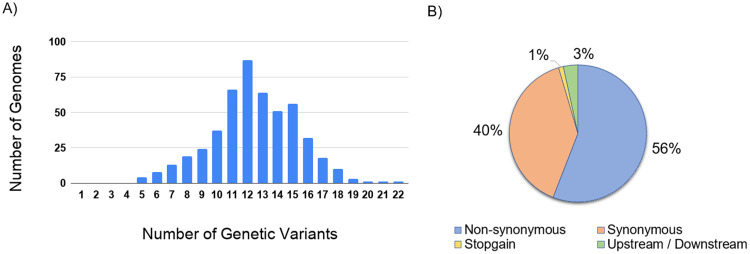
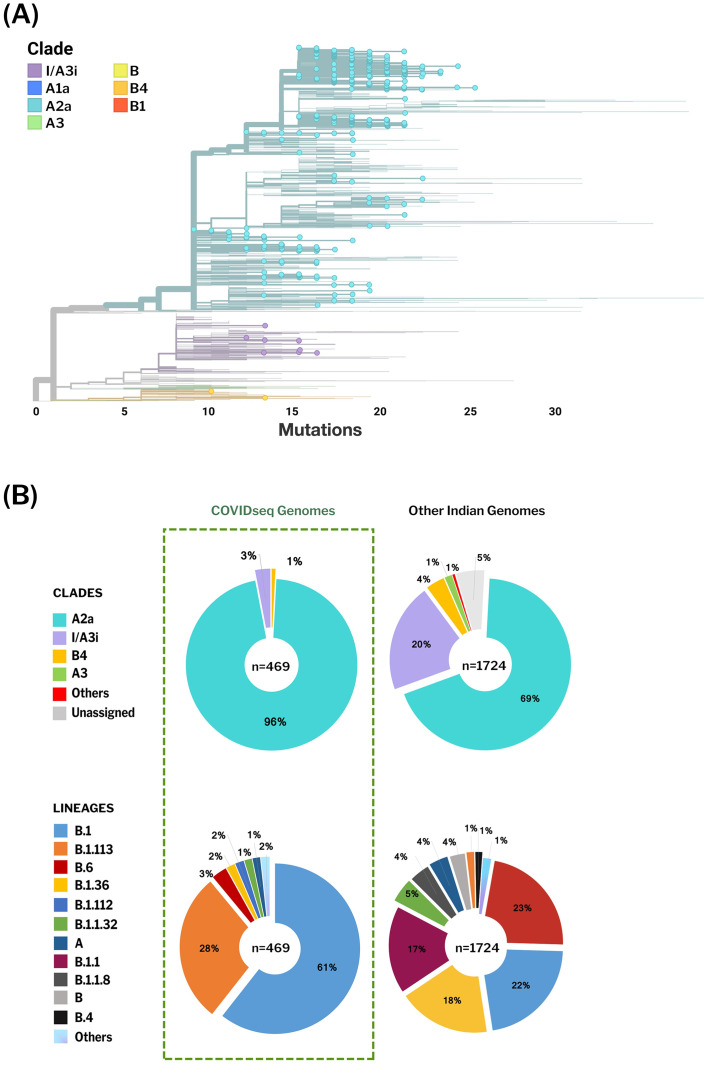
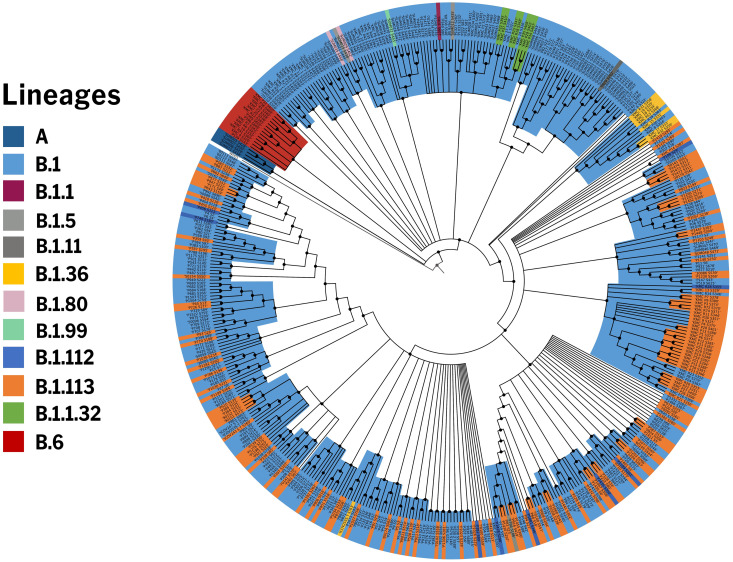
The rapid emergence of coronavirus disease 2019 (COVID-19) as a global pandemic affecting millions of individuals globally has necessitated sensitive and high-throughput approaches for the diagnosis, surveillance, and determining the genetic epidemiology of SARS-CoV-2. In the present study, we used the COVIDSeq protocol, which involves multiplex-PCR, barcoding, and sequencing of samples for high-throughput detection and deciphering the genetic epidemiology of SARS-CoV-2. We used the approach on 752 clinical samples in duplicates, amounting to a total of 1536 samples which could be sequenced on a single S4 sequencing flow cell on NovaSeq 6000. Our analysis suggests a high concordance between technical duplicates and a high concordance of detection of SARS-CoV-2 between the COVIDSeq as well as RT-PCR approaches. An in-depth analysis revealed a total of six samples in which COVIDSeq detected SARS-CoV-2 in high confidence which were negative in RT-PCR. Additionally, the assay could detect SARS-CoV-2 in 21 samples and 16 samples which were classified inconclusive and pan-sarbeco positive respectively suggesting that COVIDSeq could be used as a confirmatory test. The sequencing approach also enabled insights into the evolution and genetic epidemiology of the SARS-CoV-2 samples. The samples were classified into a total of 3 clades. This study reports two lineages B.1.112 and B.1.99 for the first time in India. This study also revealed 1,143 unique single nucleotide variants and added a total of 73 novel variants identified for the first time. To the best of our knowledge, this is the first report of the COVIDSeq approach for detection and genetic epidemiology of SARS-CoV-2. Our analysis suggests that COVIDSeq could be a potential high sensitivity assay for the detection of SARS-CoV-2, with an additional advantage of enabling the genetic epidemiology of SARS-CoV-2.
新型冠状病毒病 2019(COVID-19)作为一种影响全球数百万人的全球大流行病迅速出现,这就需要采用敏感且高通量的方法来诊断、监测和确定 SARS-CoV-2 的遗传流行病学。在本研究中,我们使用了 COVIDSeq 方案,该方案涉及多重 PCR、样品的条形码标记和测序,以进行高通量检测并破译 SARS-CoV-2 的遗传流行病学。我们在 752 份临床样本上重复使用了该方法,总共进行了 1536 次测序,这些样本可以在 NovaSeq 6000 上的单个 S4 测序流室上进行测序。我们的分析表明,技术重复之间具有高度一致性,并且 COVIDSeq 与 RT-PCR 方法之间 SARS-CoV-2 的检测也具有高度一致性。深入分析发现,共有 6 个样本中 COVIDSeq 以高置信度检测到 SARS-CoV-2,而 RT-PCR 为阴性。此外,该检测方法还可以检测到 21 个样本和 16 个样本中的 SARS-CoV-2,分别归类为不确定和 pan-sarbeco 阳性,这表明 COVIDSeq 可以用作确认测试。测序方法还可以深入了解 SARS-CoV-2 样本的进化和遗传流行病学。这些样本被分为总共 3 个分支。本研究首次在印度报告了两个谱系 B.1.112 和 B.1.99。本研究还揭示了 1143 个独特的单核苷酸变异体,并首次总共确定了 73 个新的变异体。据我们所知,这是首次报道 COVIDSeq 方法用于检测和 SARS-CoV-2 的遗传流行病学。我们的分析表明,COVIDSeq 可能是一种用于检测 SARS-CoV-2 的高灵敏度检测方法,其额外的优势是能够进行 SARS-CoV-2 的遗传流行病学研究。