Center for Radiological Research, Columbia University Irving Medical Center, 630 West 168th street, VC-11-234/5, New York, NY, 10032, USA.
Sci Rep. 2021 Feb 17;11(1):4022. doi: 10.1038/s41598-021-83575-5.
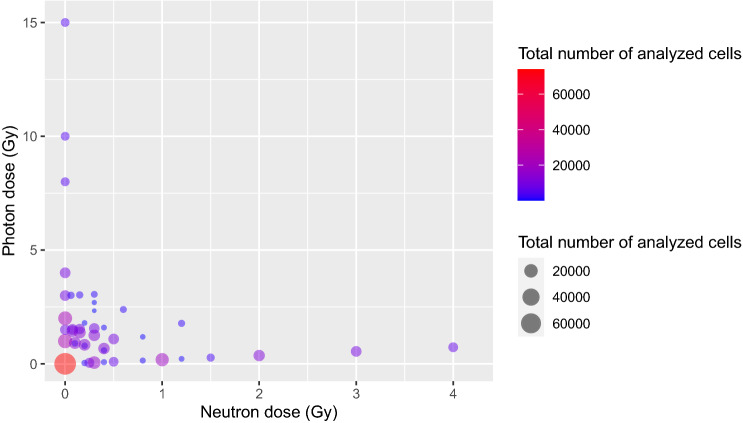
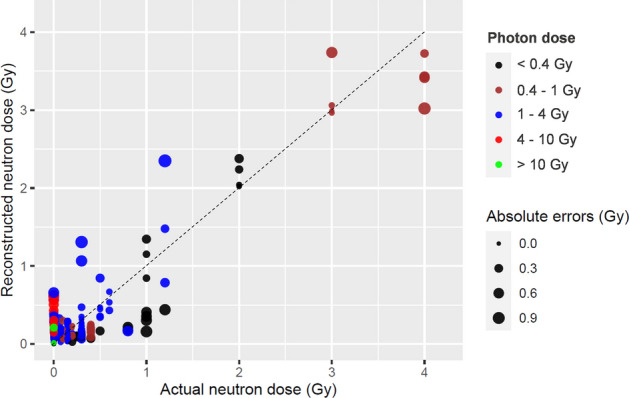
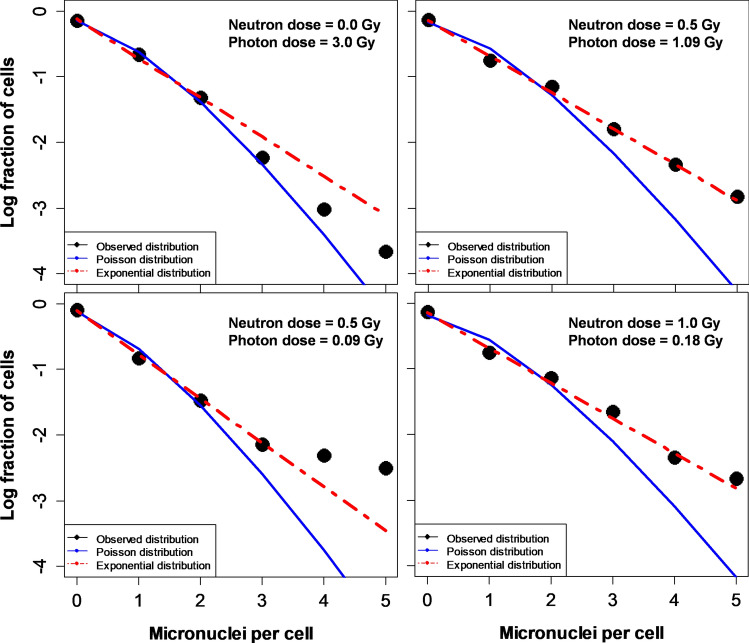
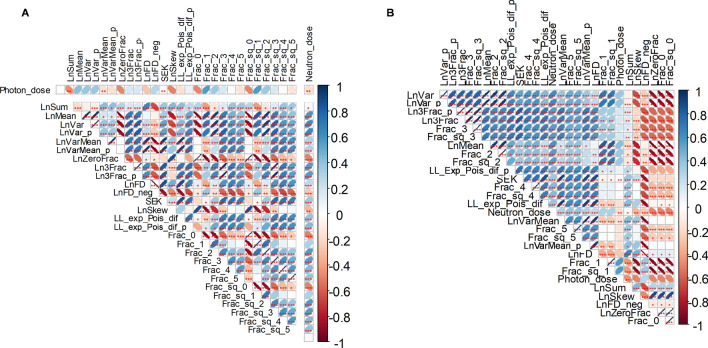
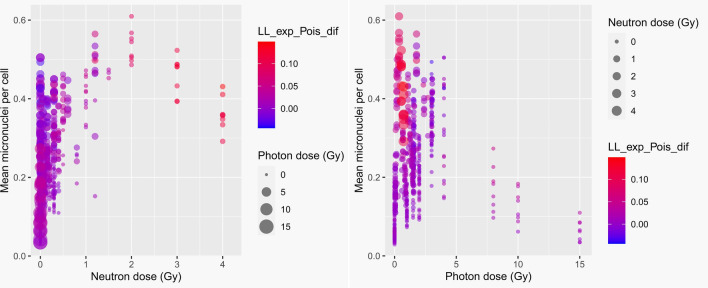
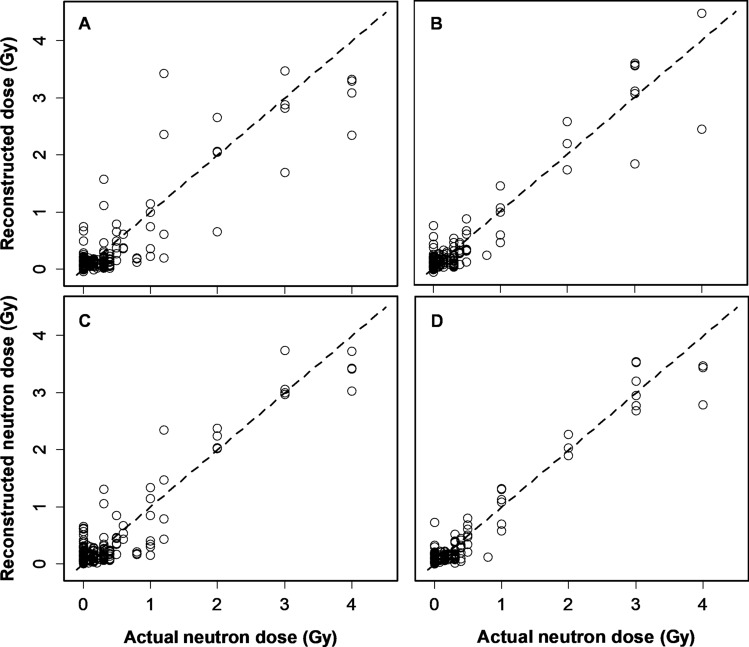
We implemented machine learning in the radiation biodosimetry field to quantitatively reconstruct neutron doses in mixed neutron + photon exposures, which are expected in improvised nuclear device detonations. Such individualized reconstructions are crucial for triage and treatment because neutrons are more biologically damaging than photons. We used a high-throughput micronucleus assay with automated scanning/imaging on lymphocytes from human blood ex-vivo irradiated with 44 different combinations of 0-4 Gy neutrons and 0-15 Gy photons (542 blood samples), which include reanalysis of past experiments. We developed several metrics that describe micronuclei/cell probability distributions in binucleated cells, and used them as predictors in random forest (RF) and XGboost machine learning analyses to reconstruct the neutron dose in each sample. The probability of "overfitting" was minimized by training both algorithms with repeated cross-validation on a randomly-selected subset of the data, and measuring performance on the rest. RF achieved the best performance. Mean R for actual vs. reconstructed neutron doses over 300 random training/testing splits was 0.869 (range 0.761 to 0.919) and root mean squared error was 0.239 (0.195 to 0.351) Gy. These results demonstrate the promising potential of machine learning to reconstruct the neutron dose component in clinically-relevant complex radiation exposure scenarios.
我们在辐射生物剂量学领域中应用机器学习,对混合中子+光子照射下的中子剂量进行定量重建,这些剂量预计会在简易核装置爆炸中出现。这种个体化重建对于分类和治疗至关重要,因为中子比光子具有更强的生物破坏性。我们使用高通量微核试验,对离体人类血液中的淋巴细胞进行自动扫描/成像,这些淋巴细胞接受了 44 种不同组合的 0-4 Gy 中子和 0-15 Gy 光子照射(共 542 个血液样本),其中包括对过去实验的重新分析。我们开发了几种描述双核细胞中微核/细胞概率分布的指标,并将其用作随机森林(RF)和 XGboost 机器学习分析中的预测因子,以重建每个样本中的中子剂量。通过在数据的随机子集中重复交叉验证来训练这两种算法,并在其余数据上测量性能,可以最小化“过拟合”的可能性。RF 实现了最佳性能。在 300 次随机训练/测试拆分中,实际与重建中子剂量的平均 R 值为 0.869(范围为 0.761 至 0.919),均方根误差为 0.239(范围为 0.195 至 0.351)Gy。这些结果表明,机器学习在重建临床相关复杂辐射暴露场景中的中子剂量分量方面具有很大的潜力。