Laboratoire d'Océanologie et de Géosciences, Univ. Lille, CNRS, Univ. Littoral Côte d'Opale, UMR 8187, LOG, 59000, Lille, France.
The Laboratory, Marine Biological Association, The CPR Survey, Citadel Hill, Plymouth, UK.
Sci Rep. 2021 Feb 17;11(1):4013. doi: 10.1038/s41598-021-83311-z.
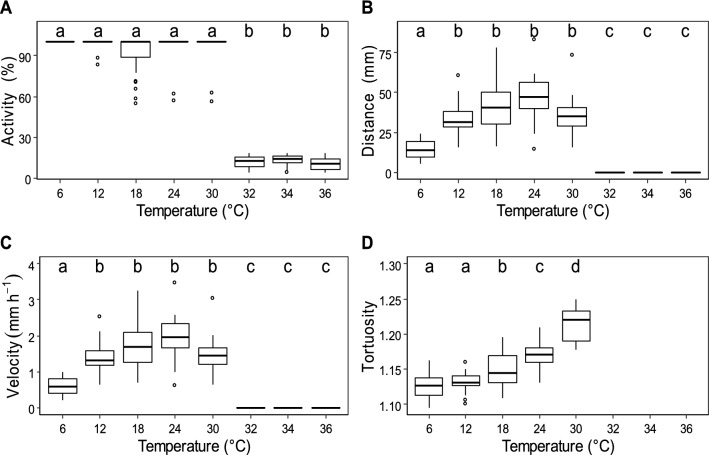
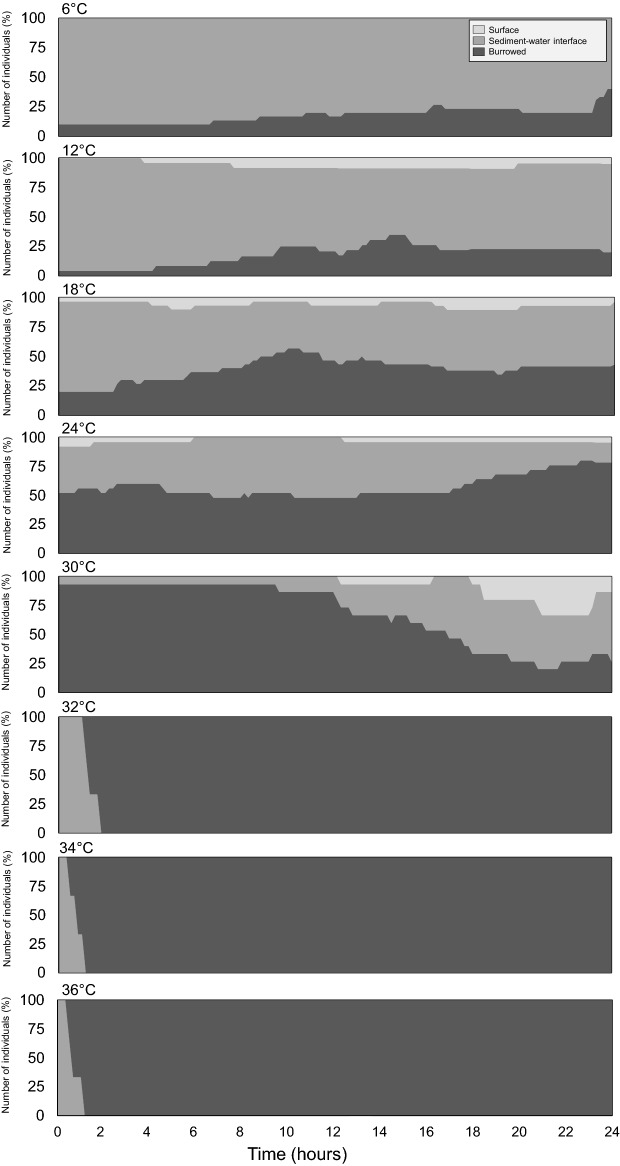
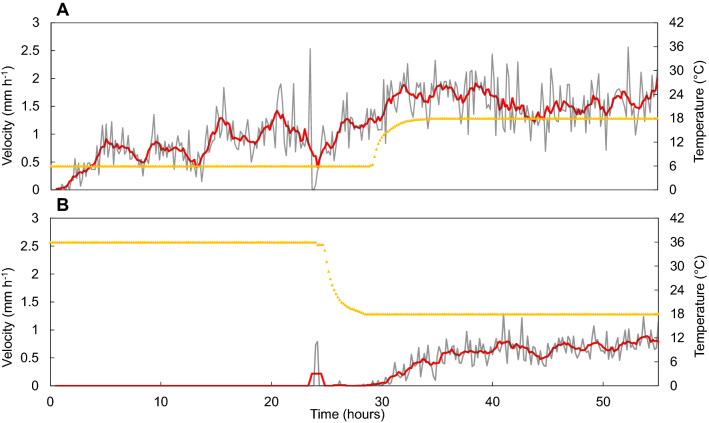
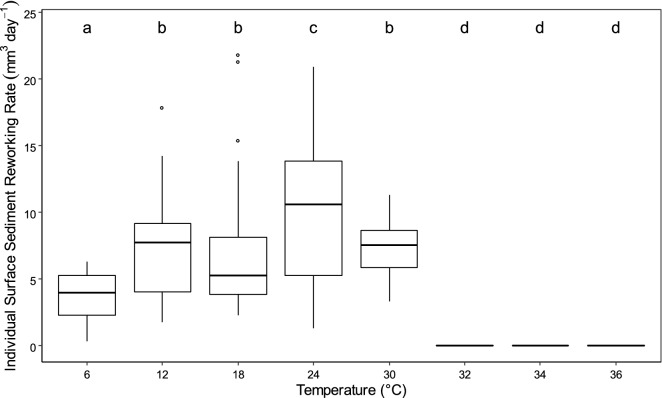
Heatwaves have increased in intensity, duration and frequency over the last decades due to climate change. Intertidal species, living in a highly variable environment, are likely to be exposed to such heatwaves since they can be emerged for more than 6 h during a tidal cycle. Little is known, however, on how temperature affects species traits (e.g. locomotion and behaviour) of slow-moving organisms such as benthic foraminifera (single-celled protists), which abound in marine sediments. Here, we examine how temperature influences motion-behaviour and metabolic traits of the dominant temperate foraminifera Haynesina germanica by exposing individuals to usual (6, 12, 18, 24, 30 °C) and extreme (high; i.e. 32, 34, 36 °C) temperature regimes. Our results show that individuals reduced their activity by up to 80% under high temperature regimes whereas they remained active under the temperatures they usually experience in the field. When exposed to a hyper-thermic stress (i.e. 36 °C), all individuals remained burrowed and the photosynthetic activity of their sequestered chloroplasts significantly decreased. Recovery experiments subsequently revealed that individuals initially exposed to a high thermal regime partially recovered when the hyper-thermic stress ceased. H. germanica contribution to surface sediment reworking substantially diminished from 10 mm indiv day (usual temperature) to 0 mm indiv day when individuals were exposed to high temperature regimes (i.e. above 32 °C). Given their role in sediment reworking and organic matter remineralisation, our results suggest that heatwaves may have profound long-lasting effects on the functioning of intertidal muddy ecosystems and some key biogeochemical cycles.
由于气候变化,过去几十年里热浪的强度、持续时间和频率都有所增加。生活在高度多变环境中的潮间带物种,在一个潮汐周期中可能有超过 6 个小时暴露在这种热浪下。然而,对于温度如何影响运动行为和代谢特征(例如运动和行为)等缓慢移动生物的物种特征,我们知之甚少,这些生物在海洋沉积物中大量存在。在这里,我们研究了温度如何影响占优势的温带有孔虫(单细胞原生动物)Haynesina germanica 的运动行为和代谢特征,方法是将个体暴露于通常的(6、12、18、24、30°C)和极端(高温;即 32、34、36°C)温度条件下。我们的研究结果表明,个体在高温条件下的活动减少了高达 80%,而在它们通常在野外经历的温度下仍然保持活跃。当暴露于过热应激(即 36°C)时,所有个体都保持在洞穴中,其隔离的叶绿体的光合作用活性显著下降。随后的恢复实验表明,最初暴露于高温条件下的个体在过热应激停止时部分恢复。当个体暴露于高温条件下(即高于 32°C)时,H. germanica 对表层沉积物再搅动的贡献从 10 mm indiv day(通常温度)减少到 0 mm indiv day。鉴于它们在沉积物再搅动和有机物质再矿化中的作用,我们的研究结果表明,热浪可能对潮间带泥泞生态系统的功能和一些关键的生物地球化学循环产生深远的持久影响。