Department of Physiology and Biophysics, University of California, Irvine, California 92697, United States.
Research Service, Veterans Affairs Long Beach Healthcare System, Long Beach, California 90822, United States.
ACS Chem Biol. 2021 Mar 19;16(3):480-490. doi: 10.1021/acschembio.0c00832. Epub 2021 Feb 18.
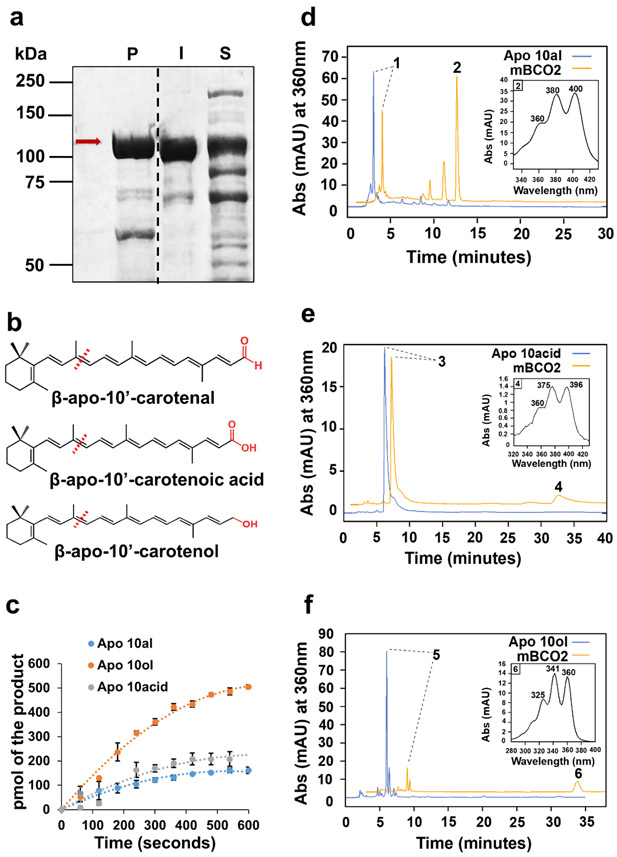
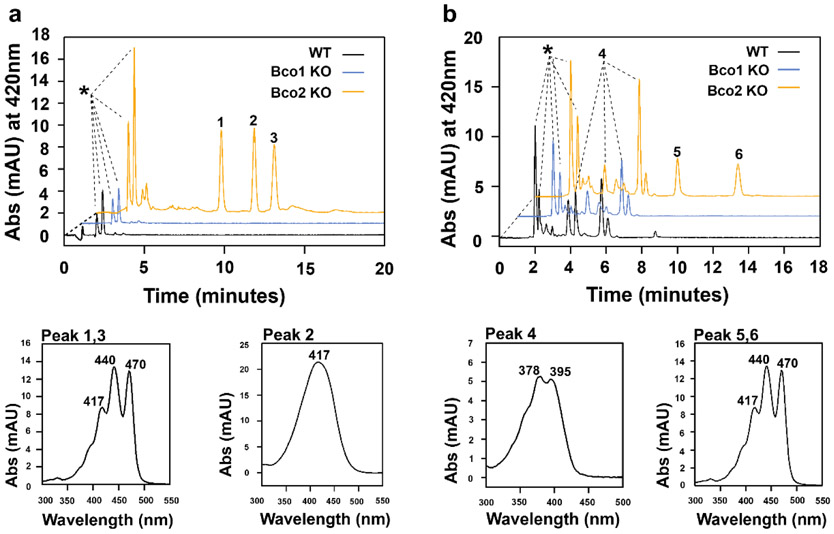
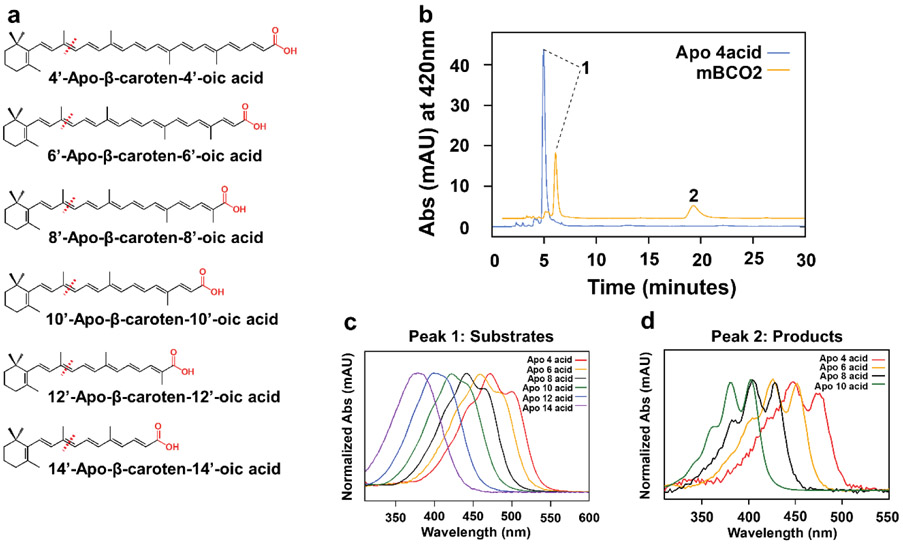
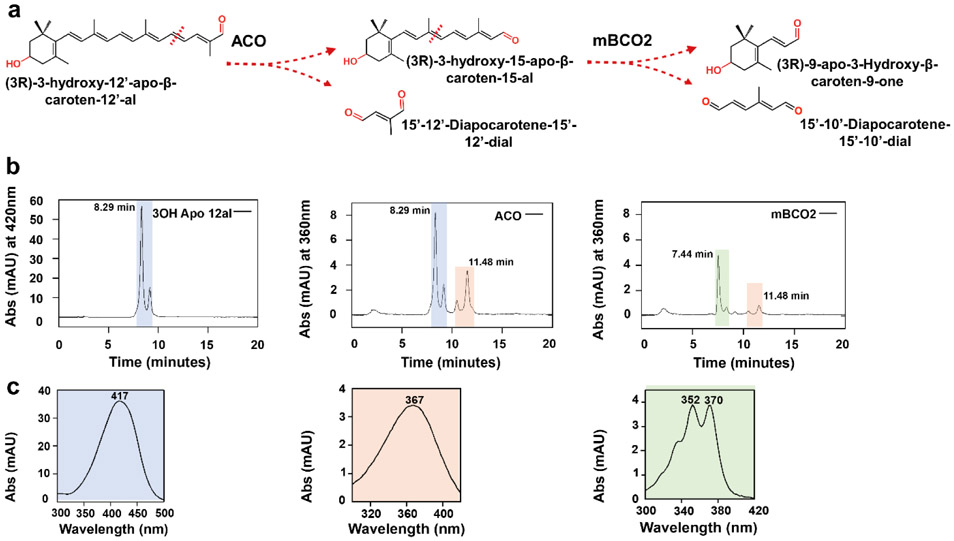
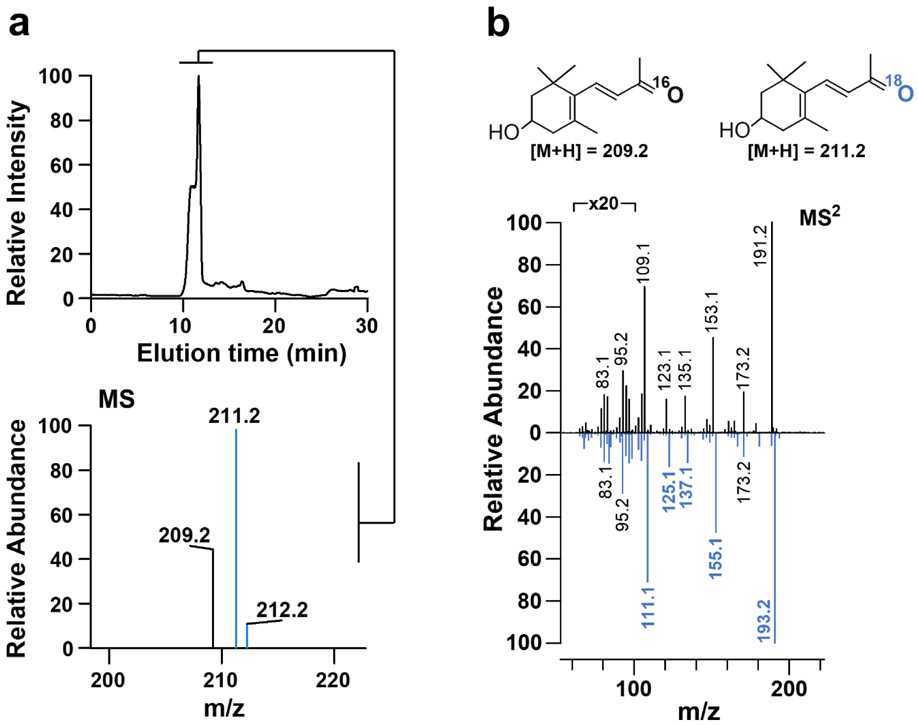
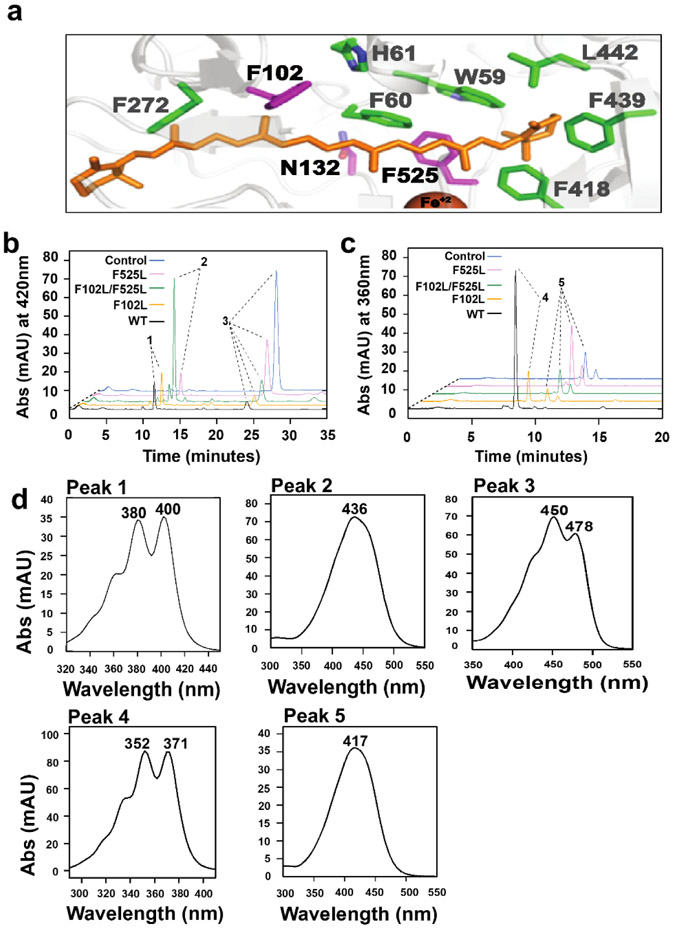
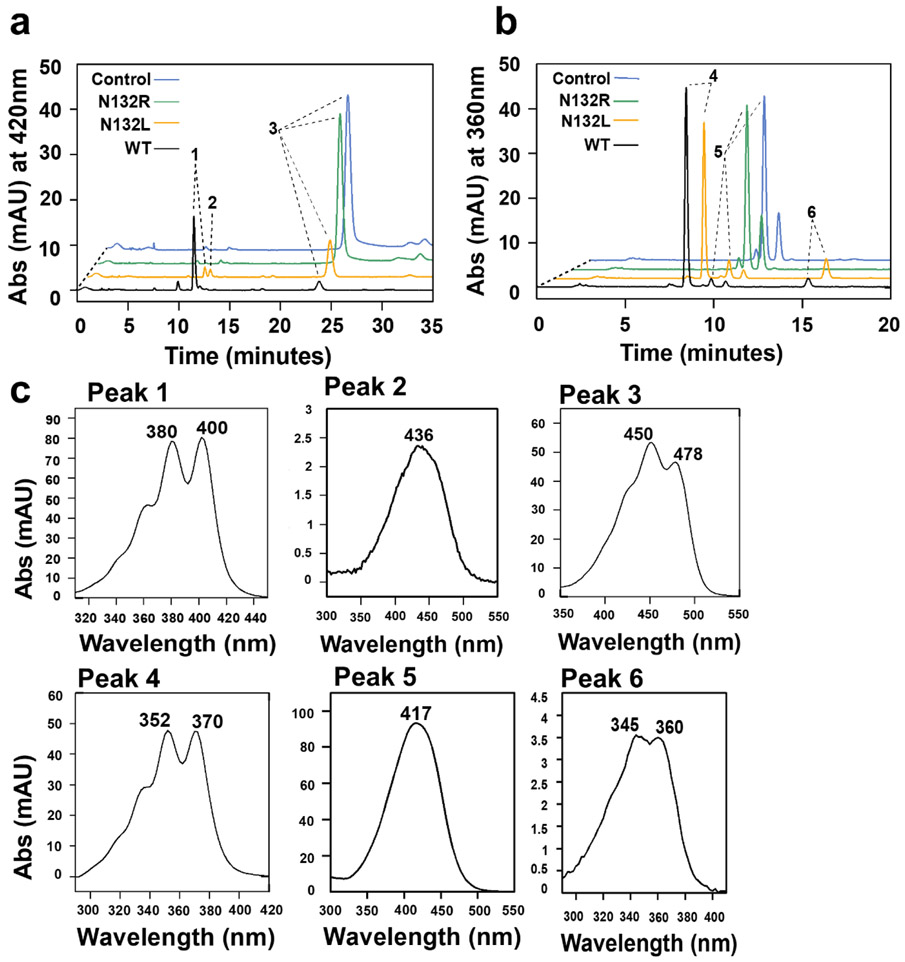
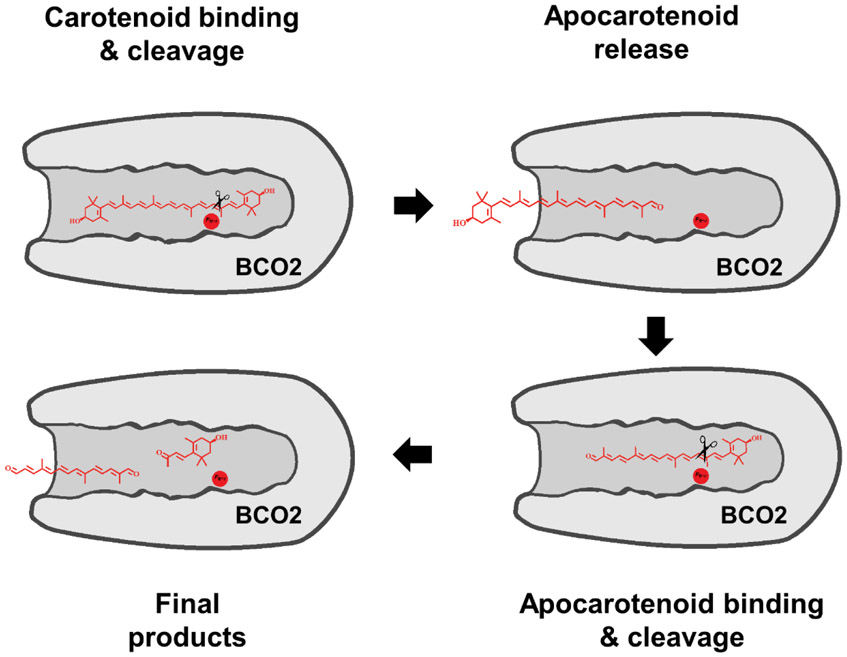
In mammals, carotenoids are converted by two carotenoid cleavage oxygenases into apocarotenoids, including vitamin A. Although knowledge about β-carotene oxygenase-1 (BCO1) and vitamin A metabolism has tremendously increased, the function of β-carotene oxygenase-2 (BCO2) remains less well-defined. We here studied the role of BCO2 in the metabolism of long chain β-apocarotenoids, which recently emerged as putative regulatory molecules in mammalian biology. We showed that recombinant murine BCO2 converted the alcohol, aldehyde, and carboxylic acid of a β-apocarotenoid substrate by oxidative cleavage at position C9,C10 into a β-ionone and a diapocarotenoid product. Chain length variation (C20 to C40) and ionone ring site modifications of the apocarotenoid substrate did not impede catalytic activity or alter the regioselectivity of the double bond cleavage by BCO2. Isotope labeling experiments revealed that the double bond cleavage of an apocarotenoid followed a dioxygenase reaction mechanism. Structural modeling and site directed mutagenesis identified amino acid residues in the substrate tunnel of BCO2 that are critical for apocarotenoid binding and catalytic processing. Mice deficient for BCO2 accumulated apocarotenoids in their livers, indicating that the enzyme engages in apocarotenoid metabolism. Together, our study provides novel structural and functional insights into BCO2 catalysis and establishes the enzyme as a key component of apocarotenoid homeostasis in mice.
在哺乳动物中,类胡萝卜素通过两种类胡萝卜素裂解加氧酶转化为类胡萝卜素降解产物,包括维生素 A。尽管人们对β-胡萝卜素加氧酶-1(BCO1)和维生素 A 代谢的了解有了极大的增加,但β-胡萝卜素加氧酶-2(BCO2)的功能仍不太明确。我们在这里研究了 BCO2 在长链β-类胡萝卜素降解产物代谢中的作用,最近这些产物作为哺乳动物生物学中的潜在调节分子出现。我们表明,重组鼠 BCO2 通过在 C9、C10 位置的氧化裂解将β-类胡萝卜素底物的醇、醛和羧酸转化为β-紫罗兰酮和二脱叶醇产物。类胡萝卜素底物的链长变化(C20 至 C40)和紫罗兰酮环位置修饰并没有阻碍催化活性或改变 BCO2 对双键裂解的区域选择性。同位素标记实验表明,类胡萝卜素的双键裂解遵循双加氧酶反应机制。结构建模和定点突变鉴定了 BCO2 底物隧道中的氨基酸残基,这些残基对类胡萝卜素结合和催化加工至关重要。缺乏 BCO2 的小鼠在肝脏中积累类胡萝卜素降解产物,表明该酶参与类胡萝卜素降解产物代谢。总之,我们的研究为 BCO2 催化提供了新的结构和功能见解,并确立了该酶是小鼠类胡萝卜素降解产物动态平衡的关键组成部分。