Department Virology, Paul-Ehrlich-Institut, Langen, Germany.
Research Division, Federal Institute for Drugs and Medical Devices, Bonn, Germany.
Cell Mol Gastroenterol Hepatol. 2021;12(1):159-180. doi: 10.1016/j.jcmgh.2021.02.002. Epub 2021 Feb 15.
The Hepatitis E virus hijacks the endosomal system for its release. These structures are highly dependent on cholesterol. Hence, this study investigates the impact of HEV on cholesterol-metabolism, the effect of intracellular cholesterol content on HEV-release and the potential of cholesterol-modulators to serve as antivirals.
Intracellular cholesterol-content of cells was modulated and impacts on HEV were monitored using qPCR, Western blot, microscopy, virus-titration and density-gradient centrifugation. Blood-lipids and HEV-RNA were routinely quantified in chronically infected patients during follow-up visits.
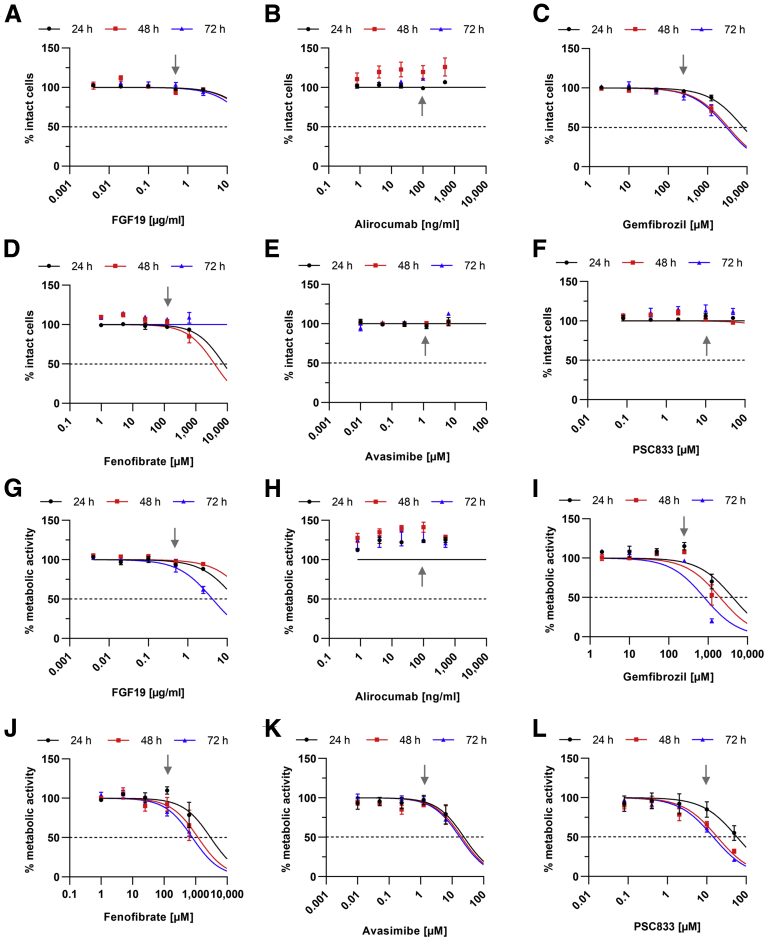
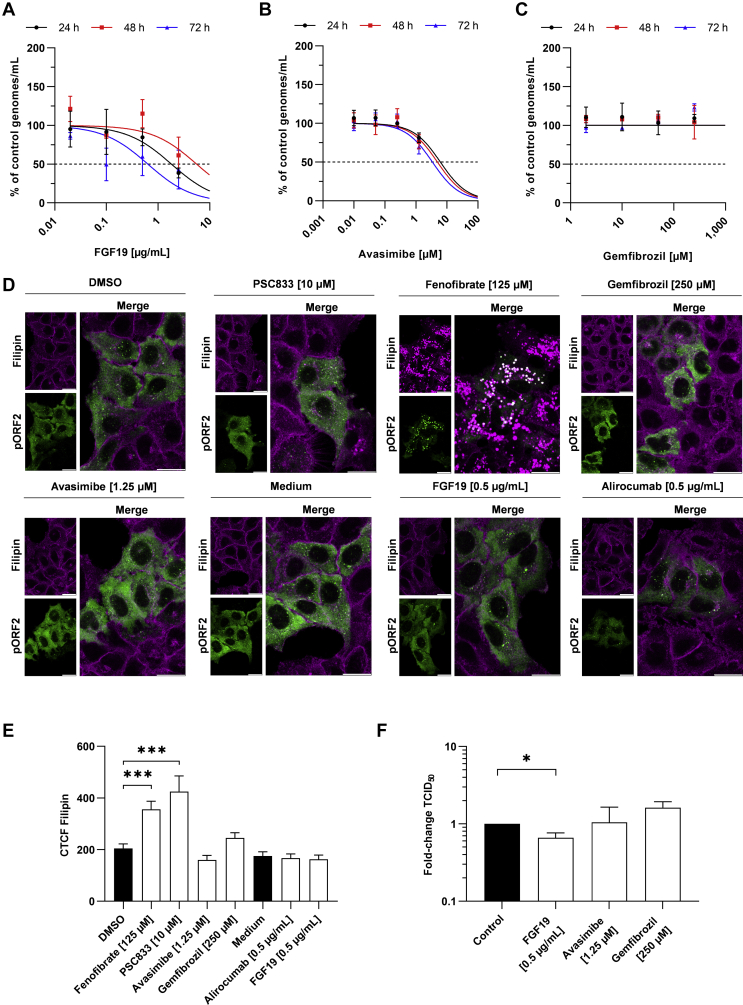
In HEV-infected cells, decreased levels of cholesterol are found. In patients, HEV infection decreases serum-lipid concentrations. Importantly, statin treatment herein increases viral titers. Similarly, reduction of intracellular cholesterol via simvastatin treatment increases viral release in vitro. On the contrary, elevating intracellular cholesterol via LDL or 25-hydroxycholesterol strongly reduces viral release due to enhanced lysosomal degradation of HEV. Drug-induced elevation of intracellular cholesterol via fenofibrate or PSC833 impairs HEV release via the same mechanism.
This study analyses the crosstalk between HEV and intracellular cholesterol. The results highlight the importance of an intact cholesterol homeostasis for HEV-release and thereby identify a potential target for antiviral strategies. Especially fenofibrate is considered a promising novel antiviral against HEV. Beyond this, the study may help clinicians evaluating co-treatments of HEV-infected patients with statins, as this may be counter indicated.
戊型肝炎病毒(HEV)劫持内体系统进行释放。这些结构高度依赖于胆固醇。因此,本研究调查了 HEV 对胆固醇代谢的影响、细胞内胆固醇含量对 HEV 释放的影响以及胆固醇调节剂作为抗病毒药物的潜力。
通过 qPCR、Western blot、显微镜观察、病毒滴定和密度梯度离心来调节细胞内胆固醇含量,并监测对 HEV 的影响。在慢性感染患者的随访过程中,常规定量检测血脂和 HEV-RNA。
在 HEV 感染的细胞中,发现胆固醇水平降低。在患者中,HEV 感染会降低血清脂质浓度。重要的是,此处他汀类药物治疗会增加病毒滴度。同样,通过辛伐他汀处理降低细胞内胆固醇会增加病毒在体外的释放。相反,通过 LDL 或 25-羟胆固醇升高细胞内胆固醇会因增强 HEV 的溶酶体降解而强烈减少病毒释放。通过非诺贝特或 PSC833 诱导药物升高细胞内胆固醇会通过相同的机制抑制 HEV 释放。
本研究分析了 HEV 与细胞内胆固醇之间的串扰。研究结果强调了完整的胆固醇动态平衡对 HEV 释放的重要性,从而确定了抗病毒策略的潜在靶点。特别是非诺贝特被认为是一种有前途的新型抗 HEV 药物。除此之外,该研究可能有助于临床医生评估感染 HEV 的患者与他汀类药物联合治疗,因为这可能是不合适的。