Applied Psychology, Faculty of Education, Western University, London, ON, Canada.
Department of Paediatrics, The Hospital for Sick Children, University of Toronto, Toronto, ON, Canada.
Sci Rep. 2021 Feb 18;11(1):4085. doi: 10.1038/s41598-021-83125-z.
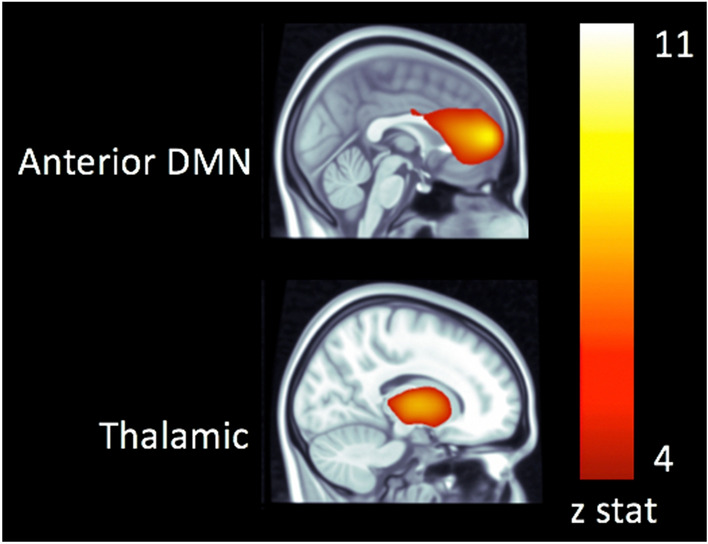
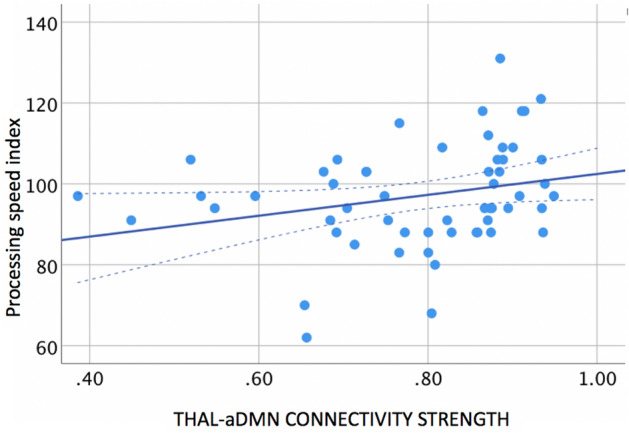
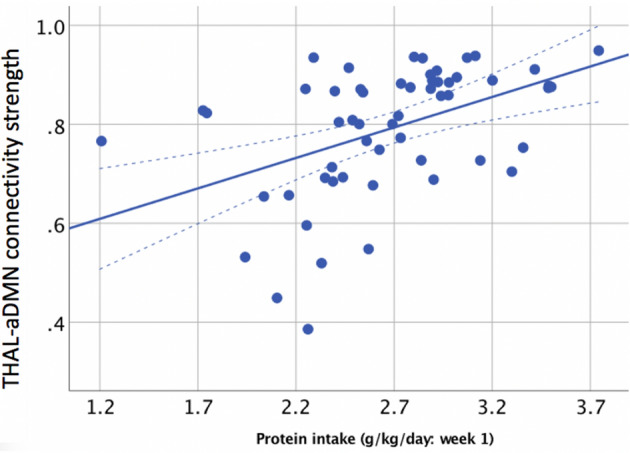
Nutritional intake can promote early neonatal brain development in very preterm born neonates (< 32 weeks' gestation). In a group of 7-year-old very preterm born children followed since birth, we examined whether early nutrient intake in the first weeks of life would be associated with long-term brain function and neurocognitive skills at school age. Children underwent resting-state functional MRI (fMRI), intelligence testing (Wechsler Intelligence Scale for Children, 5th Ed) and visual-motor processing (Beery-Buktenica, 5th Ed) at 7 years. Relationships were assessed between neonatal macronutrient intakes, functional connectivity strength between thalamic and default mode networks (DMN), and neuro-cognitive function using multivariable regression. Greater functional connectivity strength between thalamic networks and DMN was associated with greater intake of protein in the first week (β = 0.17; 95% CI 0.11, 0.23, p < 0.001) but lower intakes of fat (β = - 0.06; 95% CI - 0.09, - 0.02, p = 0.001) and carbohydrates (β = - 0.03; 95% CI - 0.04, - 0.01, p = 0.003). Connectivity strength was also associated with protein intake during the first month (β = 0.22; 95% CI 0.06, 0.37, p = 0.006). Importantly, greater thalamic-DMN connectivity strength was associated with higher processing speed indices (β = 26.9; 95% CI 4.21, 49.49, p = 0.02) and visual processing scores (β = 9.03; 95% CI 2.27, 15.79, p = 0.009). Optimizing early protein intake may contribute to promoting long-term brain health in preterm-born children.
营养摄入可以促进极早产儿(<32 周)的早期大脑发育。在一组从出生就开始随访的 7 岁极早产儿中,我们研究了生命最初几周的早期营养摄入是否与学龄期的大脑功能和神经认知技能有关。这些孩子在 7 岁时接受了静息态功能磁共振成像(fMRI)、智力测试(韦氏儿童智力量表,第 5 版)和视觉运动处理(Beery-Buktenica,第 5 版)。使用多元回归评估新生儿宏量营养素摄入、丘脑与默认模式网络(DMN)之间的功能连接强度与神经认知功能之间的关系。丘脑网络与 DMN 之间更强的功能连接强度与第一周蛋白质摄入较高有关(β=0.17;95%置信区间 0.11,0.23,p<0.001),而脂肪(β=-0.06;95%置信区间-0.09,-0.02,p=0.001)和碳水化合物(β=-0.03;95%置信区间-0.04,-0.01,p=0.003)的摄入量较低。连接强度也与第一个月的蛋白质摄入有关(β=0.22;95%置信区间 0.06,0.37,p=0.006)。重要的是,更强的丘脑-DMN 连接强度与更高的处理速度指数(β=26.9;95%置信区间 4.21,49.49,p=0.02)和视觉处理分数(β=9.03;95%置信区间 2.27,15.79,p=0.009)相关。优化早期蛋白质摄入可能有助于促进早产儿的长期大脑健康。