• 文献检索
  • 文档翻译
  • 深度研究
  • 学术资讯
  • Suppr Zotero 插件Zotero 插件
  • 邀请有礼
  • 套餐&价格
  • 历史记录
应用&插件
Suppr Zotero 插件Zotero 插件浏览器插件Mac 客户端Windows 客户端微信小程序
定价
高级版会员购买积分包购买API积分包
服务
文献检索文档翻译深度研究API 文档MCP 服务
关于我们
关于 Suppr公司介绍联系我们用户协议隐私条款
关注我们

Suppr 超能文献

核心技术专利:CN118964589B侵权必究
粤ICP备2023148730 号-1Suppr @ 2026

文献检索

告别复杂PubMed语法,用中文像聊天一样搜索,搜遍4000万医学文献。AI智能推荐,让科研检索更轻松。

立即免费搜索

文件翻译

保留排版,准确专业,支持PDF/Word/PPT等文件格式,支持 12+语言互译。

免费翻译文档

深度研究

AI帮你快速写综述,25分钟生成高质量综述,智能提取关键信息,辅助科研写作。

立即免费体验

基于音乐的生物反馈减少地面跑步中的胫骨冲击:概念验证研究。

Music-based biofeedback to reduce tibial shock in over-ground running: a proof-of-concept study.

机构信息

Biomechanics and Motor Control of Human Movement, Department of Movement and Sports Sciences, Ghent University, 9000, Ghent, Belgium.

Department of Arts, Music and Theatre Sciences, IPEM, Ghent University, 9000, Ghent, Belgium.

出版信息

Sci Rep. 2021 Feb 18;11(1):4091. doi: 10.1038/s41598-021-83538-w.

DOI:10.1038/s41598-021-83538-w
PMID:33603028
原文链接:https://pmc.ncbi.nlm.nih.gov/articles/PMC7892879/
Abstract

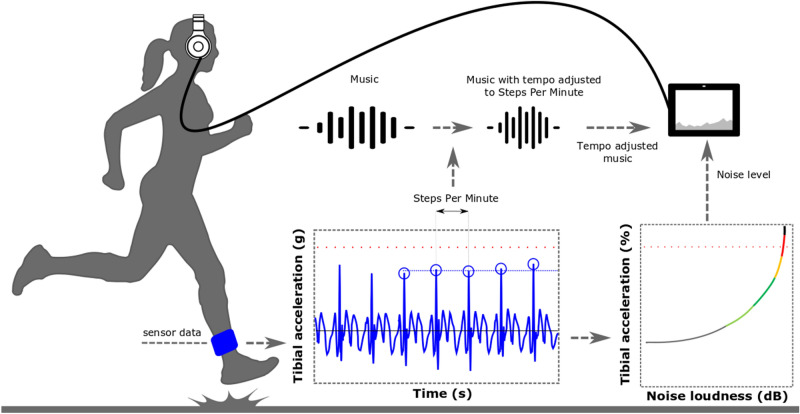
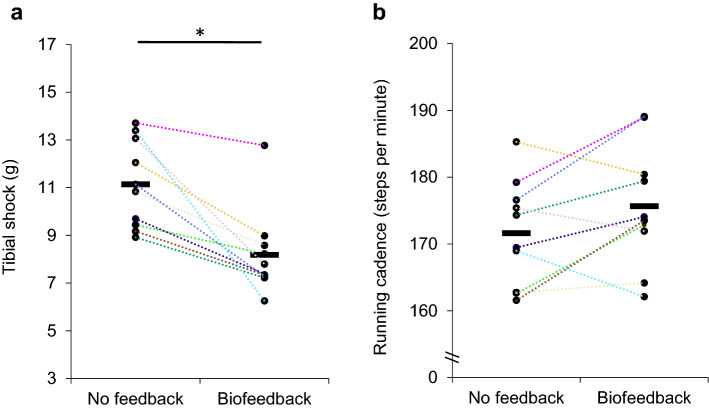
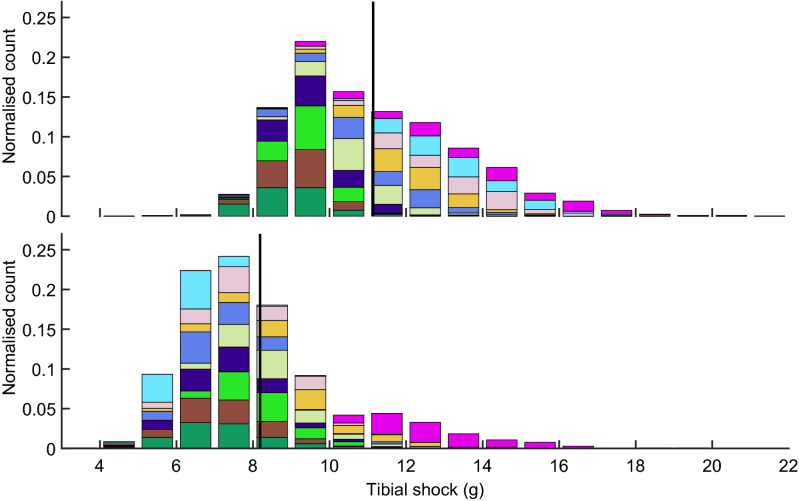
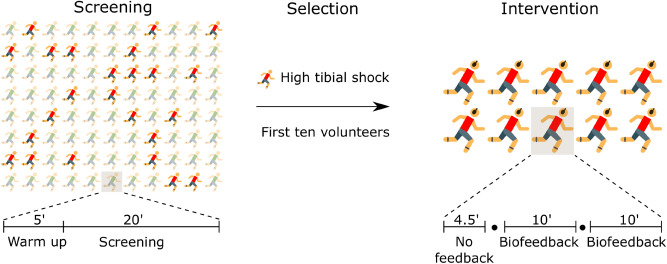
Methods to reduce impact in distance runners have been proposed based on real-time auditory feedback of tibial acceleration. These methods were developed using treadmill running. In this study, we extend these methods to a more natural environment with a proof-of-concept. We selected ten runners with high tibial shock. They used a music-based biofeedback system with headphones in a running session on an athletic track. The feedback consisted of music superimposed with noise coupled to tibial shock. The music was automatically synchronized to the running cadence. The level of noise could be reduced by reducing the momentary level of tibial shock, thereby providing a more pleasant listening experience. The running speed was controlled between the condition without biofeedback and the condition of biofeedback. The results show that tibial shock decreased by 27% or 2.96 g without guided instructions on gait modification in the biofeedback condition. The reduction in tibial shock did not result in a clear increase in the running cadence. The results indicate that a wearable biofeedback system aids in shock reduction during over-ground running. This paves the way to evaluate and retrain runners in over-ground running programs that target running with less impact through instantaneous auditory feedback on tibial shock.

摘要

已经提出了基于胫骨加速度实时听觉反馈来减少长跑运动员冲击力的方法。这些方法是在跑步机上跑步的基础上开发的。在这项研究中,我们将这些方法扩展到了一个更自然的环境中,进行了概念验证。我们选择了 10 名胫骨冲击较高的跑步者。他们在田径场上跑步时,使用带有耳机的基于音乐的生物反馈系统。反馈包括叠加在胫骨冲击上的噪声的音乐。音乐可以根据跑步的节奏自动同步。通过降低胫骨冲击的瞬时水平,可以降低噪声水平,从而提供更愉悦的听觉体验。跑步速度在没有生物反馈的情况下和有生物反馈的情况下进行控制。结果表明,在没有步态修改指导的生物反馈条件下,胫骨冲击降低了 27%或 2.96g。胫骨冲击的降低并没有导致跑步节奏明显增加。结果表明,可穿戴式生物反馈系统有助于减少地面跑步时的冲击。这为通过胫骨冲击的即时听觉反馈来评估和重新训练目标是减少冲击的地面跑步项目中的跑步者铺平了道路。
https://cdn.ncbi.nlm.nih.gov/pmc/blobs/f6b0/7892879/04d31fdd2532/41598_2021_83538_Fig6_HTML.jpg
https://cdn.ncbi.nlm.nih.gov/pmc/blobs/f6b0/7892879/edf6d3888234/41598_2021_83538_Fig1_HTML.jpg
https://cdn.ncbi.nlm.nih.gov/pmc/blobs/f6b0/7892879/7e57baa40e12/41598_2021_83538_Fig2_HTML.jpg
https://cdn.ncbi.nlm.nih.gov/pmc/blobs/f6b0/7892879/de2fd753f79d/41598_2021_83538_Fig3_HTML.jpg
https://cdn.ncbi.nlm.nih.gov/pmc/blobs/f6b0/7892879/98cd7b93f313/41598_2021_83538_Fig4_HTML.jpg
https://cdn.ncbi.nlm.nih.gov/pmc/blobs/f6b0/7892879/928d1aecdf1b/41598_2021_83538_Fig5_HTML.jpg
https://cdn.ncbi.nlm.nih.gov/pmc/blobs/f6b0/7892879/04d31fdd2532/41598_2021_83538_Fig6_HTML.jpg
https://cdn.ncbi.nlm.nih.gov/pmc/blobs/f6b0/7892879/edf6d3888234/41598_2021_83538_Fig1_HTML.jpg
https://cdn.ncbi.nlm.nih.gov/pmc/blobs/f6b0/7892879/7e57baa40e12/41598_2021_83538_Fig2_HTML.jpg
https://cdn.ncbi.nlm.nih.gov/pmc/blobs/f6b0/7892879/de2fd753f79d/41598_2021_83538_Fig3_HTML.jpg
https://cdn.ncbi.nlm.nih.gov/pmc/blobs/f6b0/7892879/98cd7b93f313/41598_2021_83538_Fig4_HTML.jpg
https://cdn.ncbi.nlm.nih.gov/pmc/blobs/f6b0/7892879/928d1aecdf1b/41598_2021_83538_Fig5_HTML.jpg
https://cdn.ncbi.nlm.nih.gov/pmc/blobs/f6b0/7892879/04d31fdd2532/41598_2021_83538_Fig6_HTML.jpg

相似文献

1
Music-based biofeedback to reduce tibial shock in over-ground running: a proof-of-concept study.基于音乐的生物反馈减少地面跑步中的胫骨冲击:概念验证研究。
Sci Rep. 2021 Feb 18;11(1):4091. doi: 10.1038/s41598-021-83538-w.
2
Reducing the peak tibial acceleration of running by music-based biofeedback: A quasi-randomized controlled trial.音乐生物反馈降低跑步时胫骨峰值加速度:一项准随机对照试验。
Scand J Med Sci Sports. 2022 Apr;32(4):698-709. doi: 10.1111/sms.14123. Epub 2022 Feb 14.
3
Learning effects in over-ground running gait retraining: A six-month follow-up of a quasi-randomized controlled trial.在地面跑步步态再训练中的学习效果:一项准随机对照试验的六个月随访研究。
J Sports Sci. 2024 Mar;42(6):475-482. doi: 10.1080/02640414.2024.2323849. Epub 2024 Apr 27.
4
Change-Point Detection of Peak Tibial Acceleration in Overground Running Retraining.在地面跑步复训中检测峰值胫骨加速度的变化点。
Sensors (Basel). 2020 Mar 19;20(6):1720. doi: 10.3390/s20061720.
5
Biomechanical adaptations following a music-based biofeedback gait retraining program to reduce peak tibial accelerations.基于音乐的生物反馈步态再训练方案对减少胫骨峰值加速度的生物力学适应。
Scand J Med Sci Sports. 2022 Jul;32(7):1142-1152. doi: 10.1111/sms.14162. Epub 2022 Apr 21.
6
Transfer Learning Effects of Biofeedback Running Retraining in Untrained Conditions.生物反馈跑步再训练在未训练条件下的迁移学习效应。
Med Sci Sports Exerc. 2019 Sep;51(9):1904-1908. doi: 10.1249/MSS.0000000000002007.
7
Validity and reliability of peak tibial accelerations as real-time measure of impact loading during over-ground rearfoot running at different speeds.在不同速度下,足尖加速度峰值作为地面后足跑步中冲击负荷的实时测量的有效性和可靠性。
J Biomech. 2019 Mar 27;86:238-242. doi: 10.1016/j.jbiomech.2019.01.039. Epub 2019 Jan 30.
8
Use of audio biofeedback to reduce tibial impact accelerations during running.使用音频生物反馈减少跑步时胫骨的冲击加速度。
J Biomech. 2014 May 7;47(7):1739-41. doi: 10.1016/j.jbiomech.2014.03.008. Epub 2014 Mar 14.
9
Running to the beat: Does listening to music affect running cadence and lower extremity biomechanics?随着节奏奔跑:听音乐是否会影响跑步步伐和下肢生物力学?
Gait Posture. 2023 Jun;103:62-66. doi: 10.1016/j.gaitpost.2023.04.010. Epub 2023 Apr 13.
10
Can runners maintain a newly learned gait pattern outside a laboratory environment following gait retraining?跑步者在步态再训练后能否在实验室环境之外保持新习得的步态模式?
Gait Posture. 2019 Mar;69:8-12. doi: 10.1016/j.gaitpost.2019.01.014. Epub 2019 Jan 10.

引用本文的文献

1
A review of concurrent sonified biofeedback in balance and gait training.平衡与步态训练中同步听觉生物反馈的综述。
J Neuroeng Rehabil. 2025 Feb 26;22(1):38. doi: 10.1186/s12984-025-01565-4.
2
Exploring Musical Feedback for Gait Retraining: A Novel Approach to Orthopedic Rehabilitation.探索用于步态再训练的音乐反馈:一种骨科康复的新方法。
Healthcare (Basel). 2025 Jan 14;13(2):144. doi: 10.3390/healthcare13020144.
3
Feature derivation and classification of auditory-motor coupling dynamics in healthy and neurologically impaired adults.

本文引用的文献

1
Effects of music in exercise and sport: A meta-analytic review.音乐在运动和锻炼中的影响:一项荟萃分析综述。
Psychol Bull. 2020 Feb;146(2):91-117. doi: 10.1037/bul0000216. Epub 2019 Dec 5.
2
The sonic instructor: A music-based biofeedback system for improving weightlifting technique.声波教练:一种基于音乐的生物反馈系统,用于改善举重技术。
PLoS One. 2019 Aug 28;14(8):e0220915. doi: 10.1371/journal.pone.0220915. eCollection 2019.
3
The Cognitive Demands of Gait Retraining in Runners: An EEG Study.跑步者步态再训练的认知需求:一项 EEG 研究。
健康及神经功能受损成年人听觉-运动耦合动力学的特征推导与分类
PLoS One. 2024 Dec 16;19(12):e0315607. doi: 10.1371/journal.pone.0315607. eCollection 2024.
4
Perceptual coupling in human dyads: Kinematics does not affect interpersonal synchronization.人类二元组中的感知耦合:运动学不影响人际同步。
Heliyon. 2024 Jun 28;10(13):e33831. doi: 10.1016/j.heliyon.2024.e33831. eCollection 2024 Jul 15.
5
Predicting overstriding with wearable IMUs during treadmill and overground running.使用可穿戴式惯性测量单元预测跑步机和地面跑步中的跨步过大。
Sci Rep. 2024 Mar 15;14(1):6347. doi: 10.1038/s41598-024-56888-4.
6
Sensitiveness of Variables Extracted from a Fitness Smartwatch to Detect Changes in Vertical Impact Loading during Outdoors Running.从健身智能手表中提取的变量对户外跑步时垂直冲击负荷变化的敏感性。
Sensors (Basel). 2023 Mar 8;23(6):2928. doi: 10.3390/s23062928.
7
Using Musical Feedback Increases Stride Frequency in Recreational Runners.使用音乐反馈可提高业余跑步者的步频。
Int J Environ Res Public Health. 2022 Mar 24;19(7):3870. doi: 10.3390/ijerph19073870.
8
Is This the Real Life, or Is This Just Laboratory? A Scoping Review of IMU-Based Running Gait Analysis.这是现实生活,还是仅仅是实验室?基于惯性测量单元的跑步步态分析的范围综述。
Sensors (Basel). 2022 Feb 23;22(5):1722. doi: 10.3390/s22051722.
9
A Wearable Biofeedback Device to Increase Gait Swing Time Could Have Positive Effects on Gait among Older Adults.一种可增加步态摆动时间的可穿戴生物反馈设备可能对老年人的步态产生积极影响。
Sensors (Basel). 2021 Dec 24;22(1):102. doi: 10.3390/s22010102.
10
Reliability and Validity of Running Cadence and Stance Time Derived from Instrumented Wireless Earbuds.无线耳戴式传感器测量步频和步时的可靠性和有效性研究
Sensors (Basel). 2021 Nov 30;21(23):7995. doi: 10.3390/s21237995.
J Mot Behav. 2020;52(3):360-371. doi: 10.1080/00222895.2019.1635983. Epub 2019 Jul 22.
4
Validity and reliability of peak tibial accelerations as real-time measure of impact loading during over-ground rearfoot running at different speeds.在不同速度下,足尖加速度峰值作为地面后足跑步中冲击负荷的实时测量的有效性和可靠性。
J Biomech. 2019 Mar 27;86:238-242. doi: 10.1016/j.jbiomech.2019.01.039. Epub 2019 Jan 30.
5
Kinematics and shock attenuation during a prolonged run on the athletic track as measured with inertial magnetic measurement units.使用惯性磁测量单元测量在田径跑道上长时间跑步期间的运动学和冲击衰减。
Gait Posture. 2019 Feb;68:155-160. doi: 10.1016/j.gaitpost.2018.11.020. Epub 2018 Nov 19.
6
Reducing Impact Loading in Runners: A One-Year Follow-up.减少跑步者的冲击负荷:一年随访。
Med Sci Sports Exerc. 2018 Dec;50(12):2500-2506. doi: 10.1249/MSS.0000000000001710.
7
Kinetic risk factors of running-related injuries in female recreational runners.女性跑步爱好者跑步相关损伤的动力学风险因素。
Scand J Med Sci Sports. 2018 Oct;28(10):2164-2172. doi: 10.1111/sms.13228. Epub 2018 Jun 28.
8
Decoding Musical Training from Dynamic Processing of Musical Features in the Brain.从大脑对音乐特征的动态处理中解码音乐训练。
Sci Rep. 2018 Jan 15;8(1):708. doi: 10.1038/s41598-018-19177-5.
9
Influence of outdoor running fatigue and medial tibial stress syndrome on accelerometer-based loading and stability.户外跑步疲劳和胫骨内侧应力综合征对基于加速度计的负荷及稳定性的影响。
Gait Posture. 2018 Jan;59:222-228. doi: 10.1016/j.gaitpost.2017.10.021. Epub 2017 Oct 23.
10
Gait Retraining for the Reduction of Injury Occurrence in Novice Distance Runners: 1-Year Follow-up of a Randomized Controlled Trial.新手长跑运动员降低损伤发生率的步态再训练:一项随机对照试验的 1 年随访。
Am J Sports Med. 2018 Feb;46(2):388-395. doi: 10.1177/0363546517736277. Epub 2017 Oct 24.