Biomechanics and Motor Control of Human Movement, Department of Movement and Sports Sciences, Ghent University, 9000 Ghent, Belgium.
IPEM, Department of Arts, Music and Theatre Sciences, Ghent University, 9000 Ghent, Belgium.
Sensors (Basel). 2020 Mar 19;20(6):1720. doi: 10.3390/s20061720.
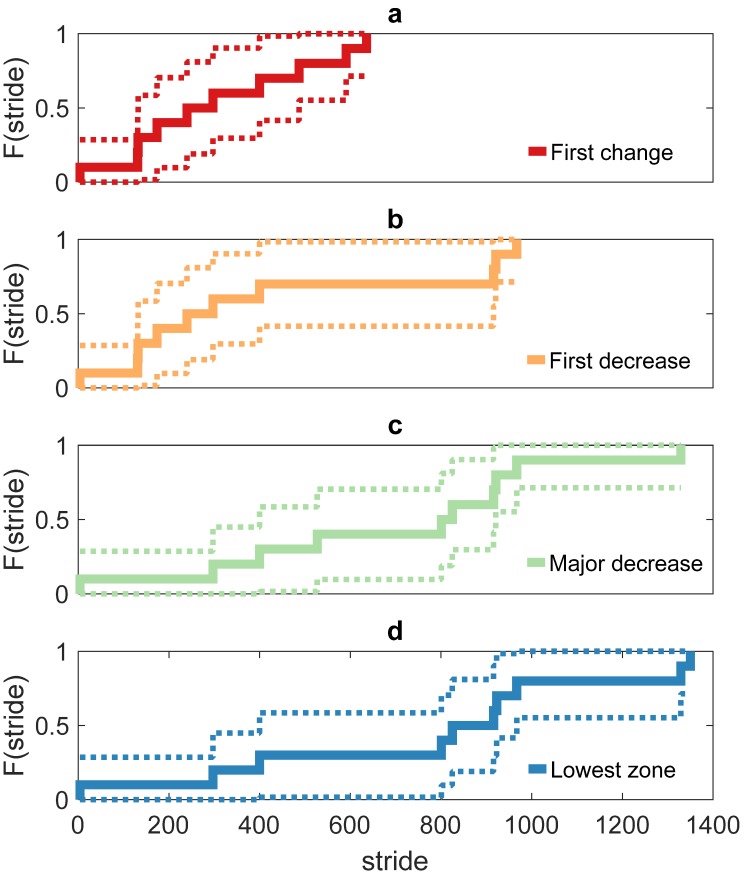
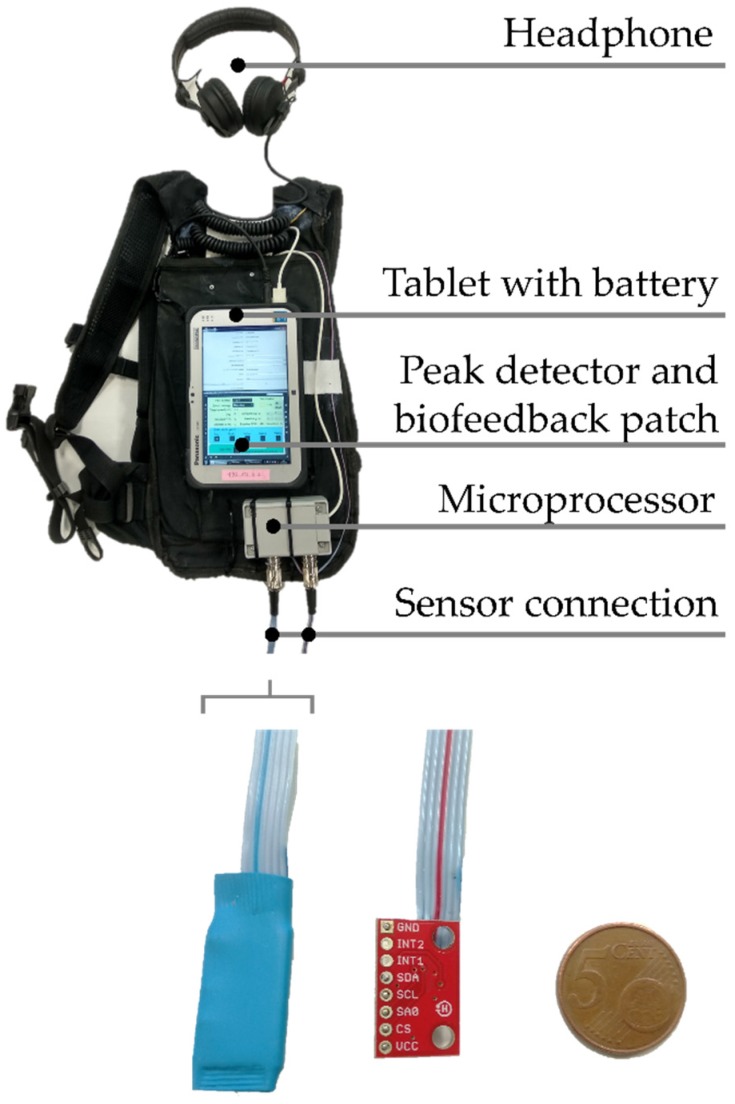
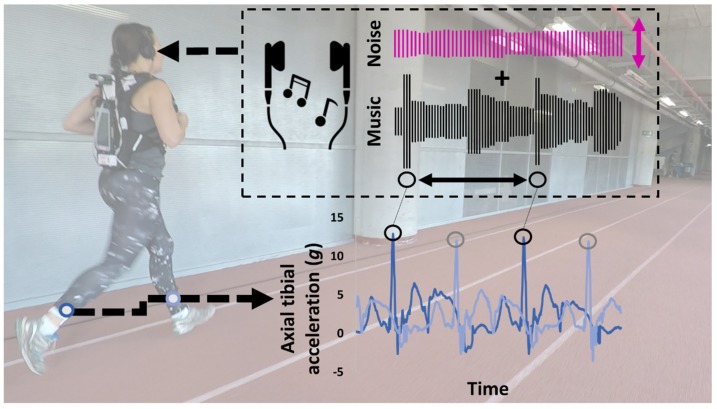
A method is presented for detecting changes in the axial peak tibial acceleration while adapting to self-discovered lower-impact running. Ten runners with high peak tibial acceleration were equipped with a wearable auditory biofeedback system. They ran on an athletic track without and with real-time auditory biofeedback at the instructed speed of 3.2 m·s. Because inter-subject variation may underline the importance of individualized retraining, a change-point analysis was used for each subject. The tuned change-point application detected major and subtle changes in the time series. No changes were found in the no-biofeedback condition. In the biofeedback condition, a first change in the axial peak tibial acceleration occurred on average after 309 running gait cycles (3'40"). The major change was a mean reduction of 2.45 which occurred after 699 running gait cycles (8'04") in this group. The time needed to achieve the major reduction varied considerably between subjects. Because of the individualized approach to gait retraining and its relatively quick response due to a strong sensorimotor coupling, we want to highlight the potential of a stand-alone biofeedback system that provides real-time, continuous, and auditory feedback in response to the axial peak tibial acceleration for lower-impact running.
提出了一种检测适应自发现的低冲击跑步时轴向峰值胫骨加速度变化的方法。十位峰值胫骨加速度较高的跑步者配备了可穿戴听觉生物反馈系统。他们在田径场上跑步,在规定的 3.2m·s 速度下,有无实时听觉生物反馈。由于个体差异可能强调个体化再训练的重要性,因此对每个个体进行了变化点分析。调整后的变化点应用程序可以检测到时间序列中的主要和细微变化。在无生物反馈的情况下未发现变化。在生物反馈条件下,轴向峰值胫骨加速度的第一次变化平均在 309 个跑步步态周期(3'40")后发生。主要变化是在该组中 699 个跑步步态周期(8'04")后平均减少 2.45。在这个组中,实现主要减少所需的时间在个体之间差异很大。由于步态再训练的个体化方法以及由于强感觉运动耦合而相对快速的响应,我们想强调提供实时、连续和听觉反馈以响应轴向峰值胫骨加速度的独立生物反馈系统在低冲击跑步中的潜力。