Institute of Organic Chemistry and Center for Molecular Biosciences Innsbruck (CMBI), University of Innsbruck, Innrain 80/82, 6020, Innsbruck, Austria.
Institute of General, Inorganic and Theoretical Chemistry and Center for Molecular Biosciences Innsbruck (CMBI), University of Innsbruck, Innrain 80/82, 6020, Innsbruck, Austria.
Sci Rep. 2021 Feb 18;11(1):4173. doi: 10.1038/s41598-021-83705-z.
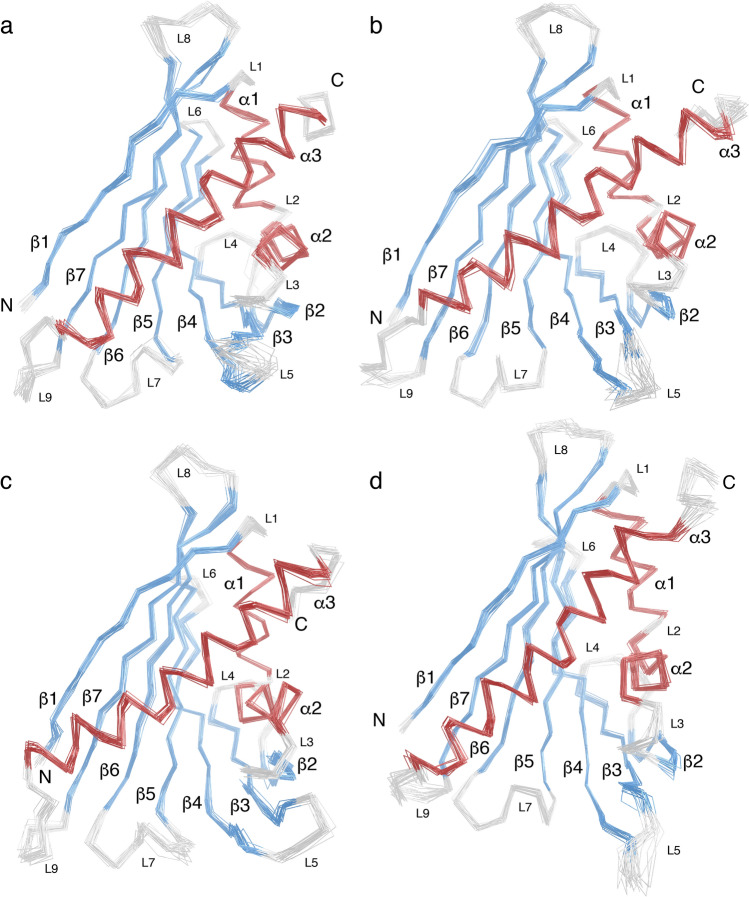
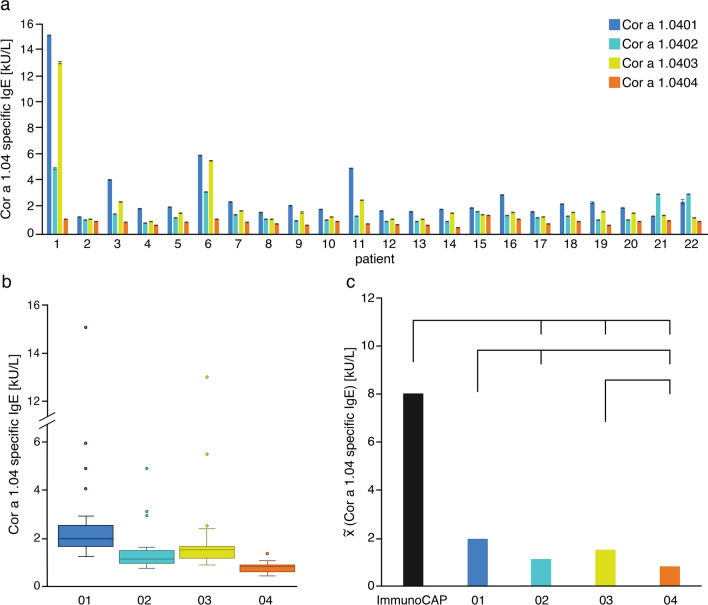
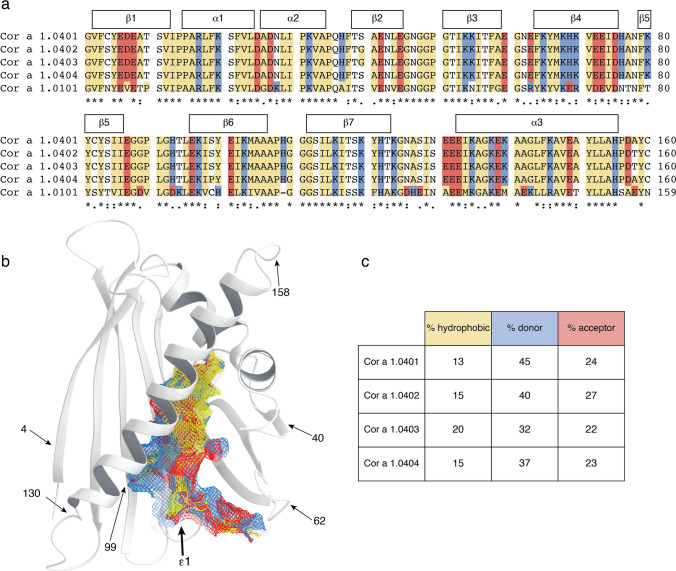
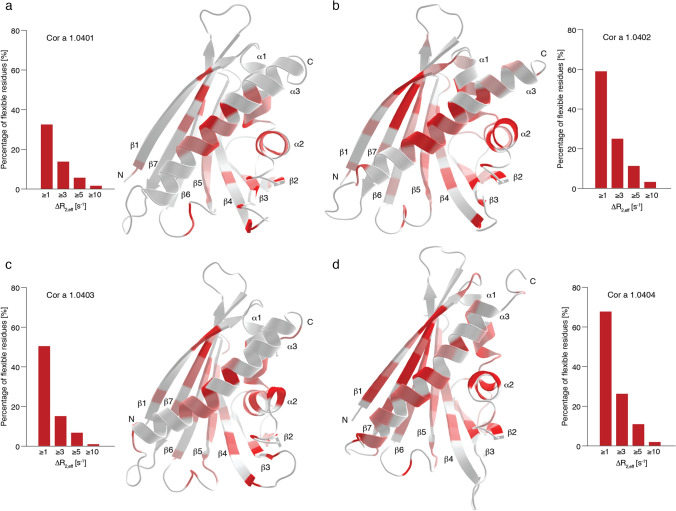
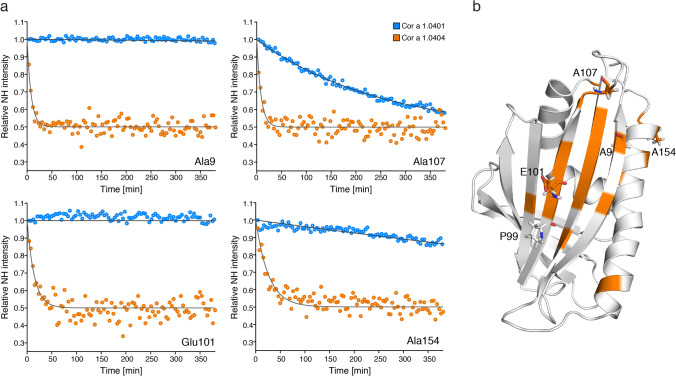
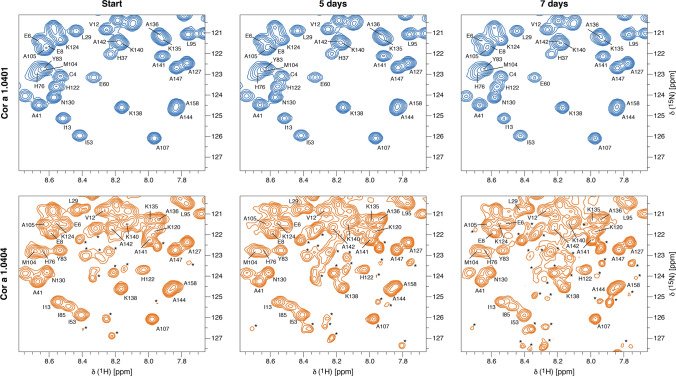
A major proportion of allergic reactions to hazelnuts (Corylus avellana) are caused by immunologic cross-reactivity of IgE antibodies to pathogenesis-related class 10 (PR-10) proteins. Intriguingly, the four known isoforms of the hazelnut PR-10 allergen Cor a 1, denoted as Cor a 1.0401-Cor a 1.0404, share sequence identities exceeding 97% but possess different immunologic properties. In this work we describe the NMR solution structures of these proteins and provide an in-depth study of their biophysical properties. Despite sharing highly similar three-dimensional structures, the four isoforms exhibit remarkable differences regarding structural flexibility, hydrogen bonding and thermal stability. Our experimental data reveal an inverse relation between structural flexibility and IgE-binding in ELISA experiments, with the most flexible isoform having the lowest IgE-binding potential, while the isoform with the most rigid backbone scaffold displays the highest immunologic reactivity. These results point towards a significant entropic contribution to the process of antibody binding.
榛子( Corylus avellana )过敏反应的主要部分是由 IgE 抗体对与发病机制相关的 10 类(PR-10)蛋白的免疫交叉反应引起的。有趣的是,榛子 PR-10 过敏原 Cor a 1 的四个已知同工型,称为 Cor a 1.0401-Cor a 1.0404,其序列同一性超过 97%,但具有不同的免疫学特性。在这项工作中,我们描述了这些蛋白质的 NMR 溶液结构,并对其生物物理特性进行了深入研究。尽管共享高度相似的三维结构,但这四个同工型在结构灵活性、氢键和热稳定性方面表现出显著差异。我们的实验数据表明,在 ELISA 实验中,结构灵活性与 IgE 结合呈反比关系,最灵活的同工型具有最低的 IgE 结合潜力,而具有最刚性骨架支架的同工型显示出最高的免疫反应性。这些结果表明抗体结合过程中存在显著的熵贡献。