School of Pharmacy, Hebei University of Chinese Medicine, Shijiazhuang, Hebei, 050200, People's Republic of China.
Department of Pharmacy, The Fourth Hospital of Hebei Medical University, Shijiazhuang, Hebei, 050011, People's Republic of China.
Drug Des Devel Ther. 2021 Feb 12;15:543-556. doi: 10.2147/DDDT.S296405. eCollection 2021.
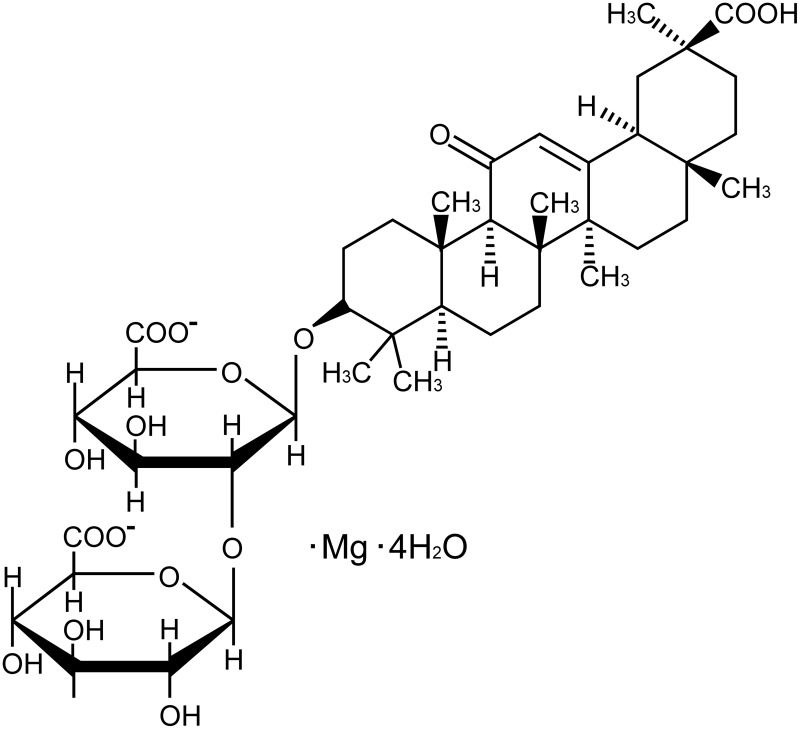
Magnesium isoglycyrrhizinate (MgIG), a single stereoisomer magnesium salt of glycyrrhizic acid, has beneficial effects on the cardiovascular system through anti-inflammatory, anti-oxidation, and anti-apoptotic actions. However, MgIG has not been shown to provide protection against cardiotoxicity induced by arsenic trioxide (ATO). This study aims to demonstrate the protection of MgIG against ATO-induced cardiac toxicity in mice and to investigate the underlying mechanism.
A mouse cardiotoxicity model was established by administering 5 mg/kg ATO for 7 days. MgIG used in conjunction with the ATO to assess its cardioprotection.
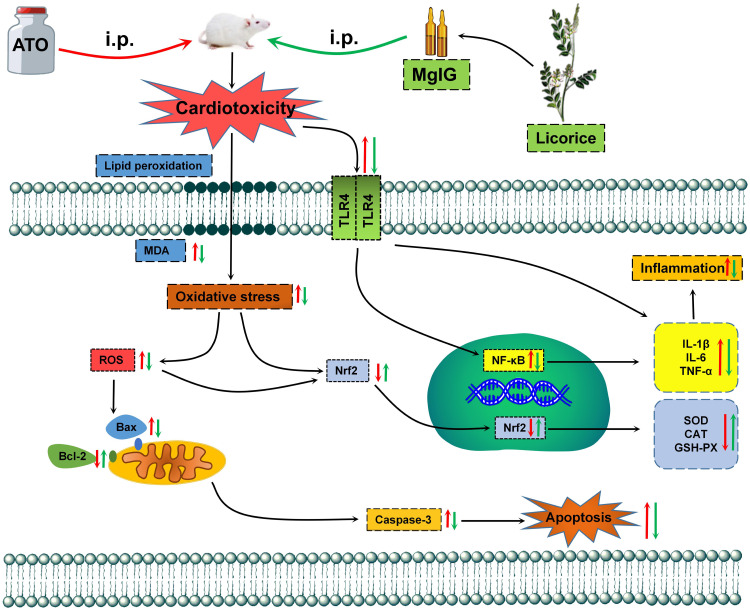
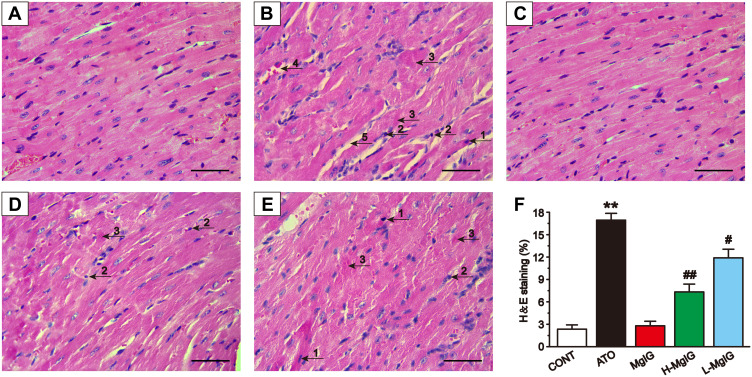
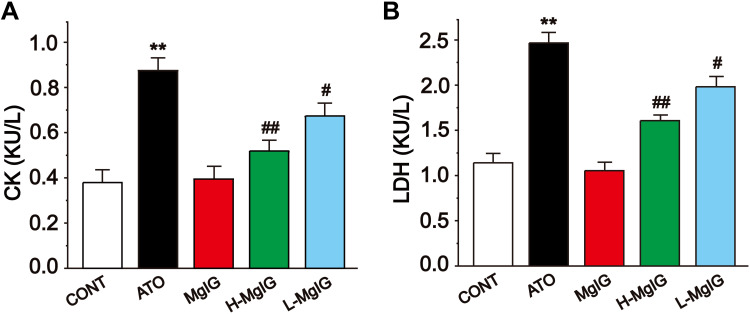
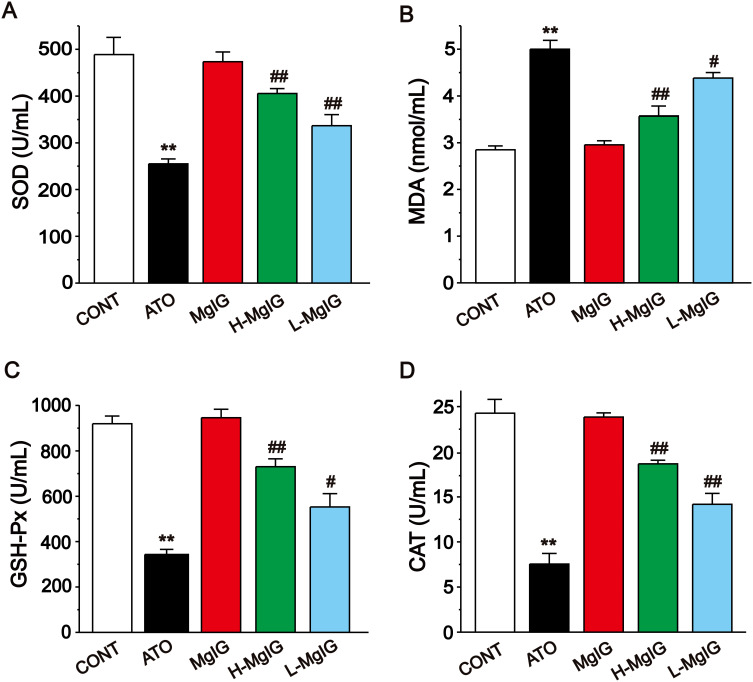
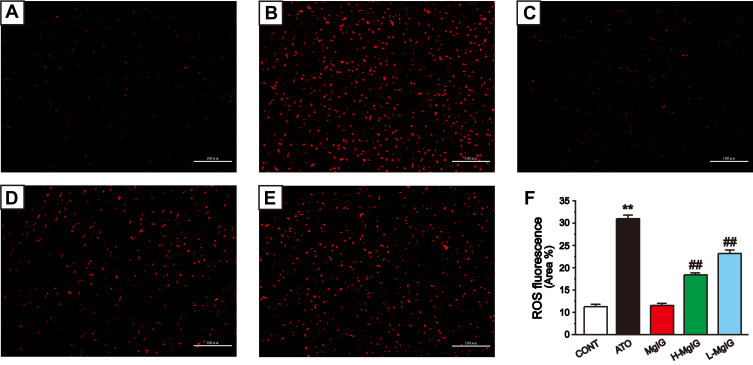
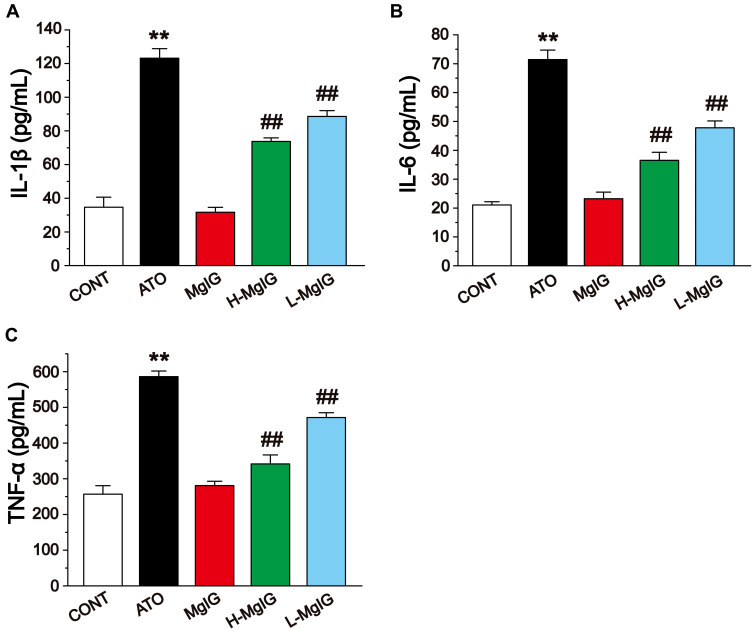
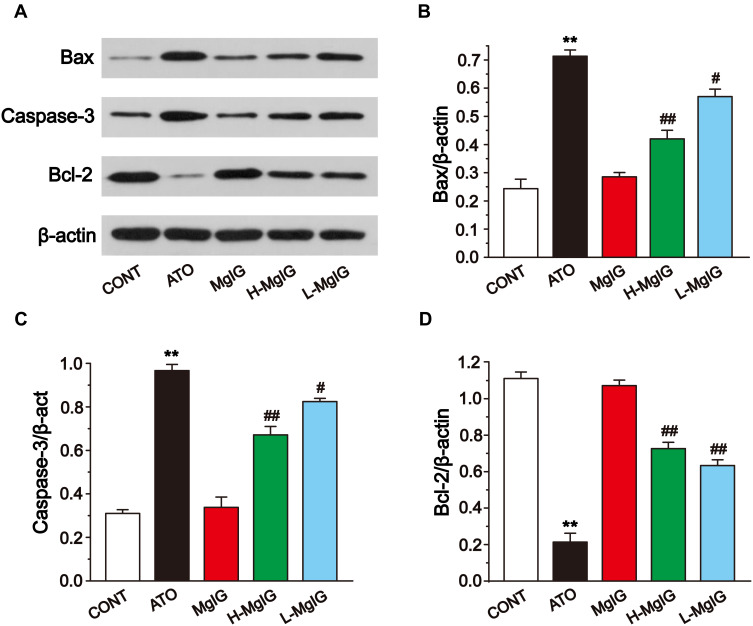
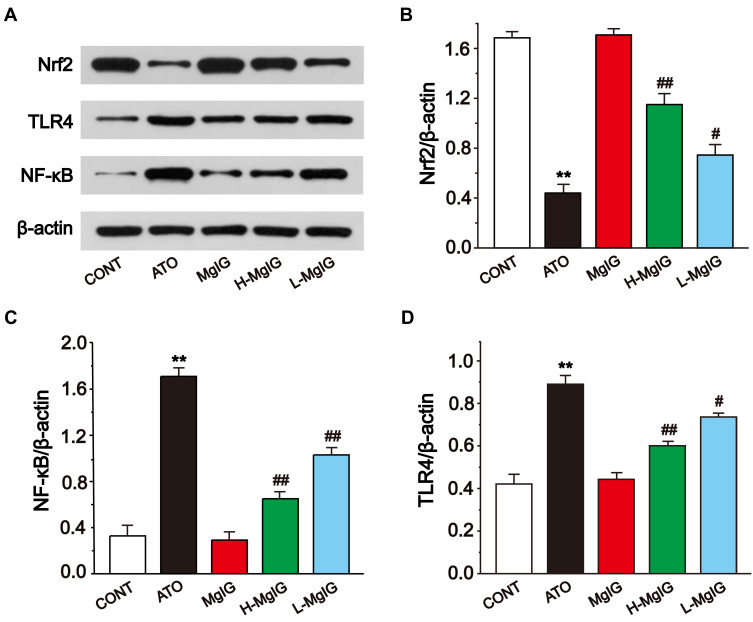
MgIG administration could significantly reduce reactive oxygen species generation and the changes in tissue morphology. Also, MgIG administration increased the activity of antioxidase, such as superoxide dismutase, catalase, and glutathione peroxidase, and reduced malondialdehyde content and pro-inflammatory cytokine levels. Western blotting showed decreased expression of Bcl-2 associated X protein and Caspase-3, with increased expression of B-cell lymphoma 2. Importantly, MgIG administration increased nuclear factor-erythroid-2-related factor 2 (Nrf2) expression, while the expressions of nuclear factor kappa-B (NF-κB) and toll-like receptor-4 (TLR4) were significantly decreased.
Our data showed that MgIG alleviates ATO-induced cardiotoxicity, which is associated to the anti-inflammation, anti-oxidation, and anti-apoptosis action, potentially through activation of the Nrf2 pathway and suppression of the TLR4/NF-κB pathway.
作为甘草酸的单一立体异构体镁盐,镁甘氨酸(MgIG)通过抗炎、抗氧化和抗细胞凋亡作用对心血管系统有益。然而,MgIG 尚未显示对三氧化二砷(ATO)诱导的心脏毒性有保护作用。本研究旨在证明 MgIG 对小鼠 ATO 诱导的心脏毒性的保护作用,并探讨其潜在机制。
通过给予 5mg/kg ATO 连续 7 天建立小鼠心脏毒性模型。联合使用 MgIG 和 ATO 来评估其心脏保护作用。
MgIG 给药可显著减少活性氧的生成和组织形态的变化。此外,MgIG 给药增加了抗氧化酶(如超氧化物歧化酶、过氧化氢酶和谷胱甘肽过氧化物酶)的活性,降低了丙二醛含量和促炎细胞因子水平。Western blot 显示 Bcl-2 相关 X 蛋白和 Caspase-3 的表达减少,B 细胞淋巴瘤 2 的表达增加。重要的是,MgIG 给药增加了核因子-红细胞 2 相关因子 2(Nrf2)的表达,而核因子 kappa-B(NF-κB)和 Toll 样受体 4(TLR4)的表达明显降低。
我们的数据表明,MgIG 减轻了 ATO 诱导的心脏毒性,这与抗炎、抗氧化和抗细胞凋亡作用有关,可能通过激活 Nrf2 途径和抑制 TLR4/NF-κB 途径。