Department of Diagnostics, School of Integrated Chinese and Western Medicine, Hebei University of Chinese Medicine, Shijiazhuang, Hebei, 050200, People's Republic of China.
Hebei Key Laboratory of Integrative Medicine on Liver-Kidney Patterns, Shijiazhuang 050200, Hebei, People's Republic of China.
Drug Des Devel Ther. 2020 May 19;14:1921-1931. doi: 10.2147/DDDT.S247947. eCollection 2020.
Arsenic trioxide (ATO) has been shown to induce hepatic injury. Crocetin is a primary constituent of saffron, which has been verified to have antioxidant and anti-inflammatory effects. In the current experiment, we evaluated the efficacy of crocetin against ATO-induced hepatic injury and explored the potential molecular mechanisms in rats.
Rats were pretreated with 25 or 50 mg/kg crocetin 6 h prior to treating with 5 mg/kg ATO to induce hepatic injury daily for 7 days.
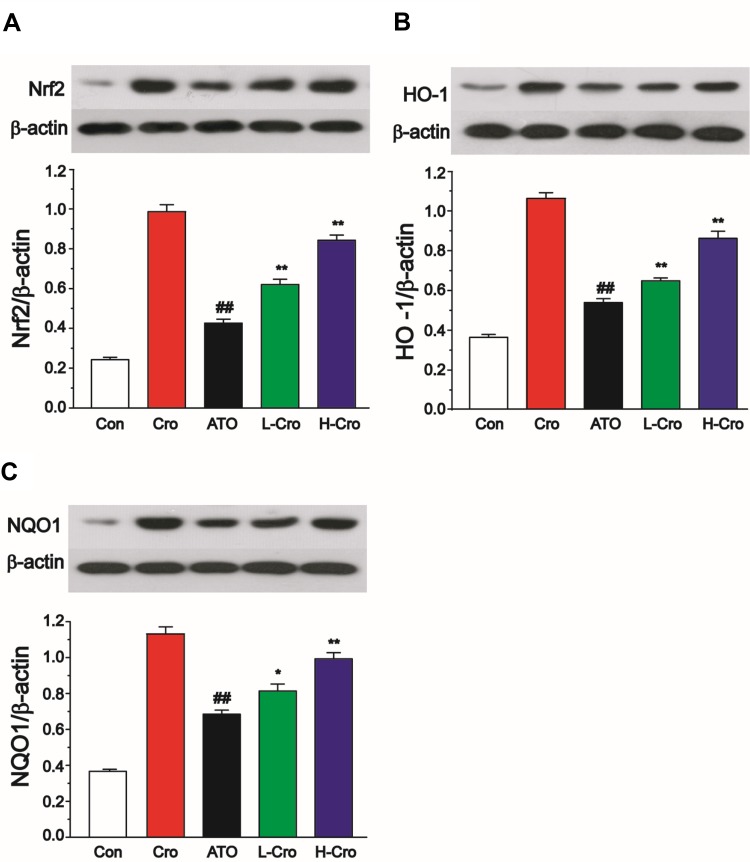
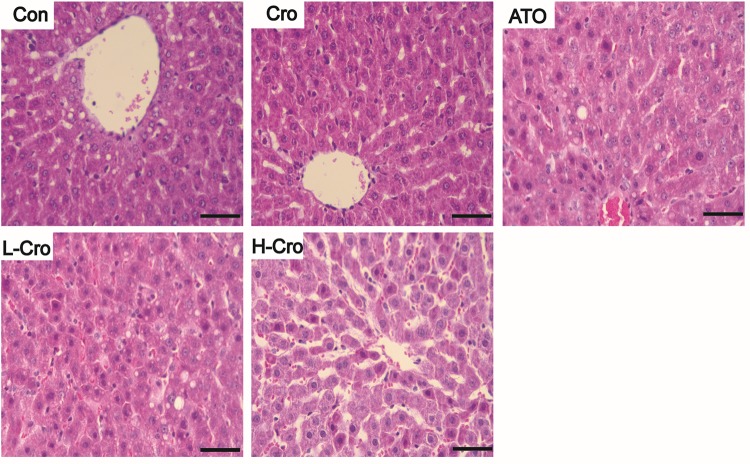
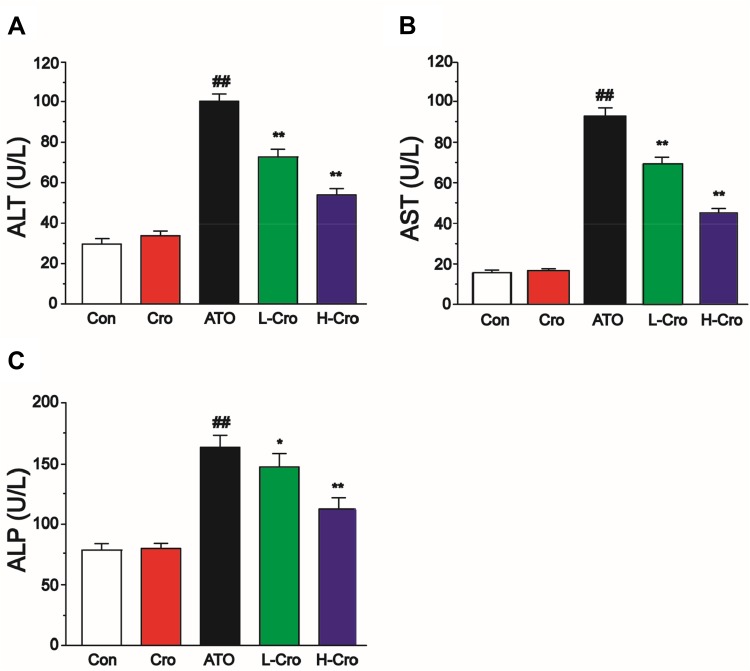
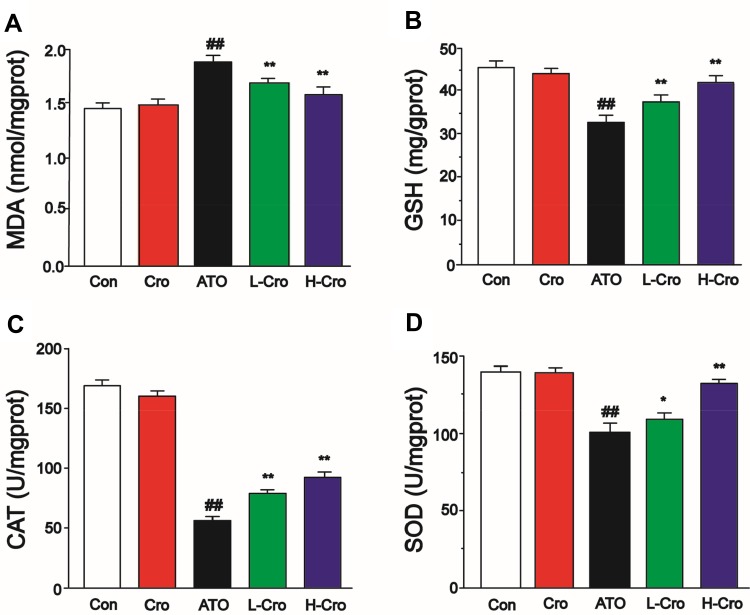
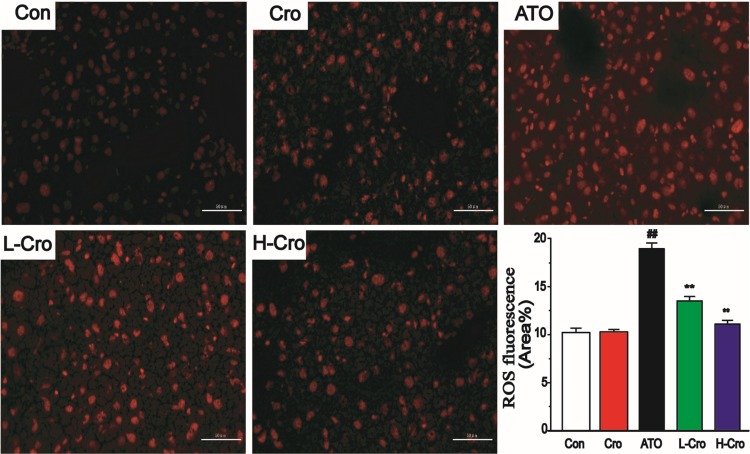
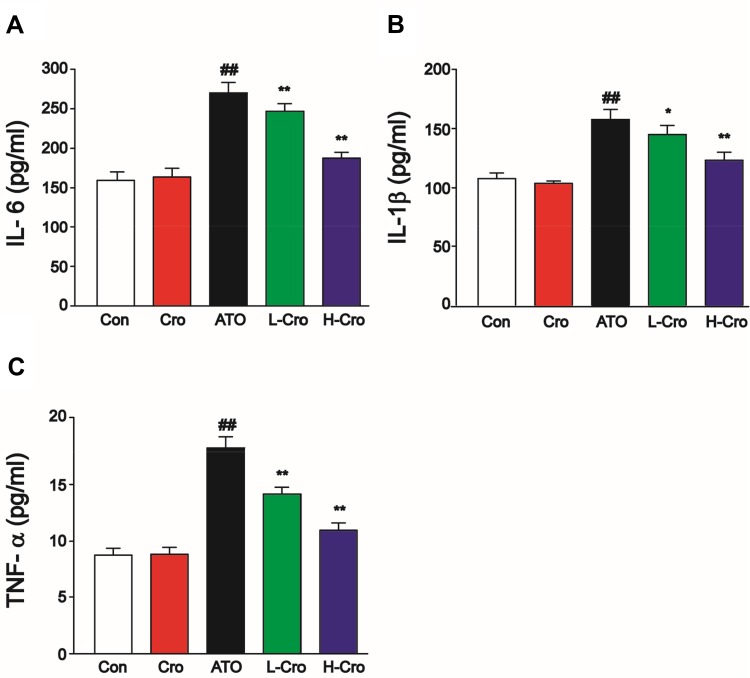
Treatment with crocetin attenuated ATO-induced body weight loss, decreases in food and water consumption, and improved ATO-induced hepatic pathological damage. Crocetin significantly inhibited ATO-induced alanine aminotransferase (ALT), aspartate aminotransferase (AST), and alkaline phosphatase (ALP) increases. Crocetin prevented ATO-induced liver malondialdehyde (MDA) and reactive oxygen species (ROS) levels. Crocetin abrogated the ATO-induced decrease of catalase (CAT) and superoxide dismutase (SOD) activity. Crocetin was found to significantly restore the protein levels of interleukin 6 (IL-6), interleukin 1β (IL-1β), and tumor necrosis factor-alpha (TNF-α). Furthermore, crocetin promoted the expression of nuclear factor erythroid 2 related factor 2 (Nrf2), heme oxygenase-1 (HO-1), and NADP(H): quinone oxidoreductase 1 (NQO1).
These findings suggest that crocetin ameliorates ATO-induced hepatic injury in rats. In addition, the effect of crocetin might be related to its role in antioxidant stress, as an anti-inflammatory agent, and in regulating the Nrf2 signaling pathway.
三氧化二砷(ATO)已被证明可导致肝损伤。西红花酸是藏红花的主要成分之一,已被证实具有抗氧化和抗炎作用。在本实验中,我们评估了西红花酸对 ATO 诱导的肝损伤的疗效,并在大鼠中探讨了其潜在的分子机制。
大鼠在每天用 5mg/kgATO 诱导肝损伤前 6 小时预先用 25 或 50mg/kg 西红花酸预处理 7 天。
西红花酸治疗可减轻 ATO 诱导的体重减轻、食物和水消耗减少,并改善 ATO 诱导的肝病理损伤。西红花酸显著抑制 ATO 诱导的丙氨酸氨基转移酶(ALT)、天冬氨酸氨基转移酶(AST)和碱性磷酸酶(ALP)升高。西红花酸防止 ATO 诱导的肝丙二醛(MDA)和活性氧(ROS)水平升高。西红花酸消除了 ATO 诱导的过氧化氢酶(CAT)和超氧化物歧化酶(SOD)活性降低。西红花酸被发现可显著恢复白细胞介素 6(IL-6)、白细胞介素 1β(IL-1β)和肿瘤坏死因子-α(TNF-α)的蛋白水平。此外,西红花酸促进核因子红细胞 2 相关因子 2(Nrf2)、血红素加氧酶-1(HO-1)和 NADP(H):醌氧化还原酶 1(NQO1)的表达。
这些发现表明西红花酸可改善大鼠 ATO 诱导的肝损伤。此外,西红花酸的作用可能与其在抗氧化应激、抗炎作用和调节 Nrf2 信号通路中的作用有关。