Liu Can, Qin Shijiao, Xie Jin, Lin Xu, Zheng Yunwu, Yang Jing, Kan Huan, Shi Zhengjun
The Key Laboratory of State Forestry and Grassland Administration on Highly-Efficient Utilization of Forestry Biomass Resources in Southwest China, Southwest Forestry University, Kunming, China.
College of Life Science, Southwest Forestry University, Kunming, China.
Front Bioeng Biotechnol. 2021 Feb 2;9:638546. doi: 10.3389/fbioe.2021.638546. eCollection 2021.
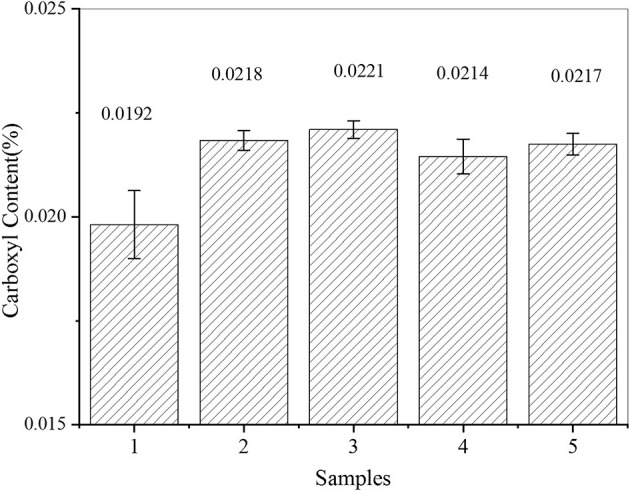
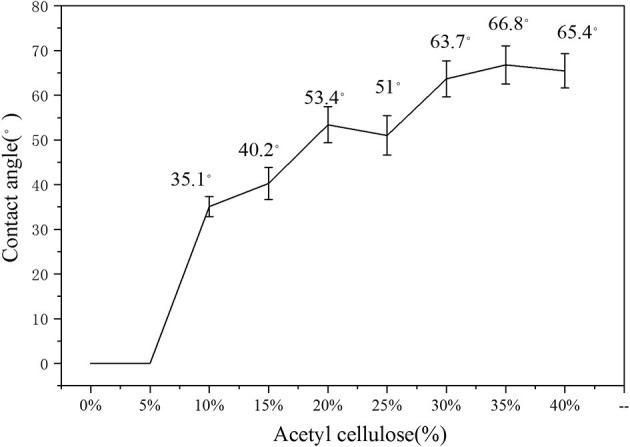
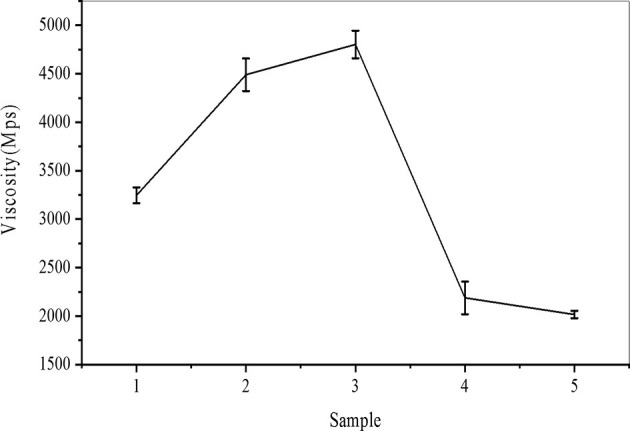
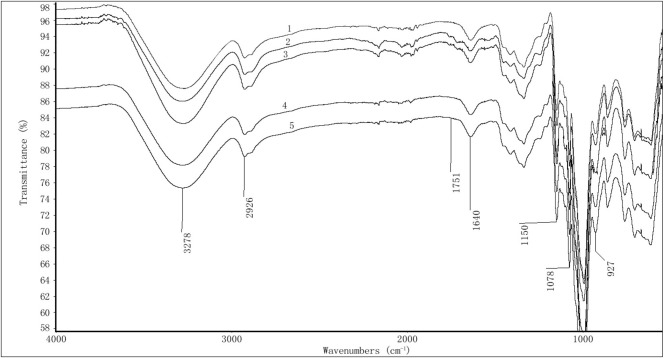
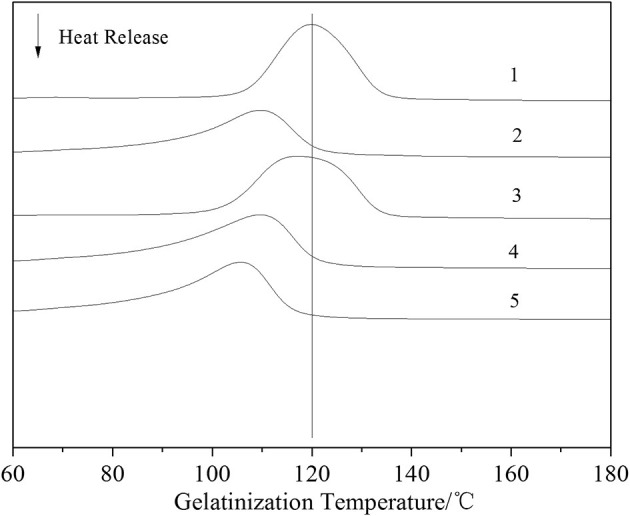
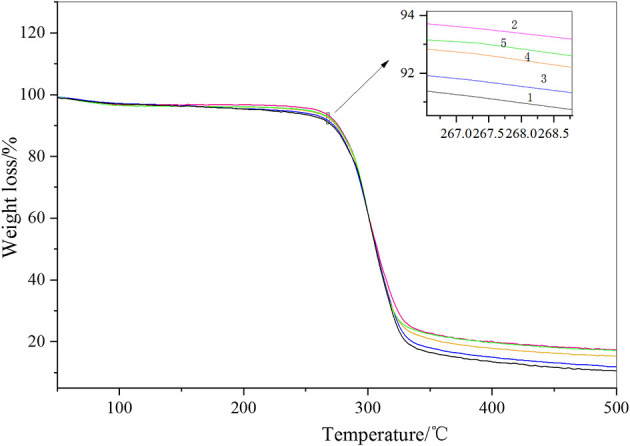
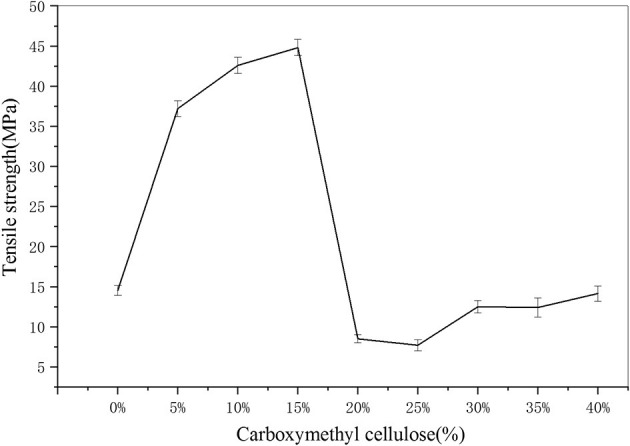
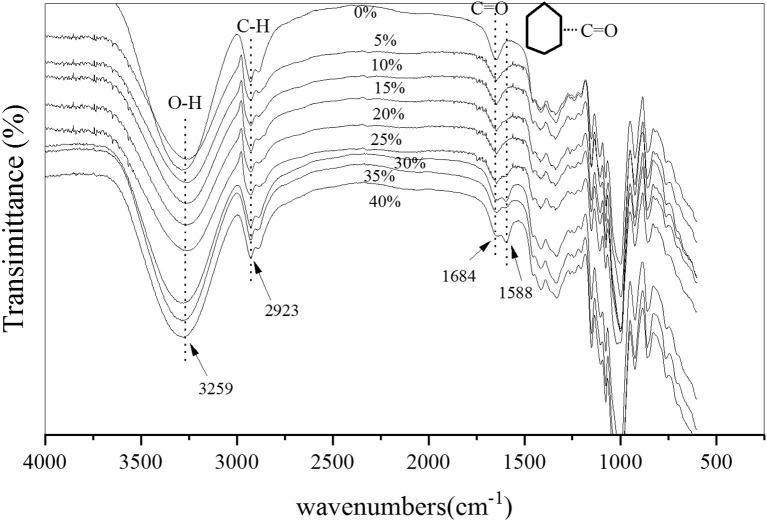
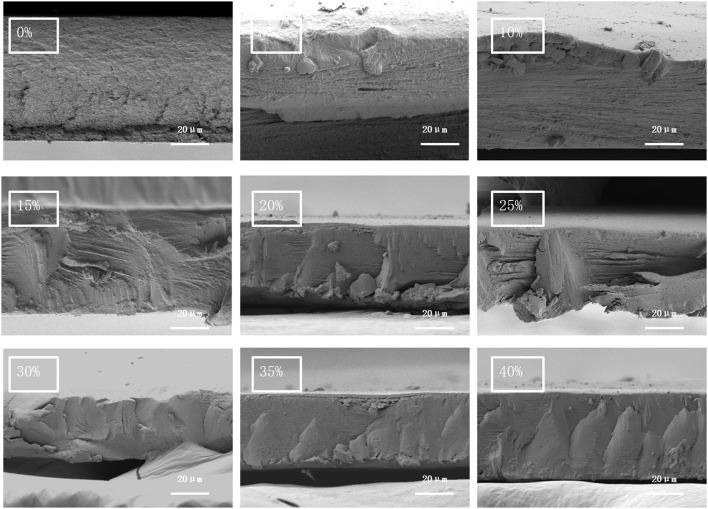
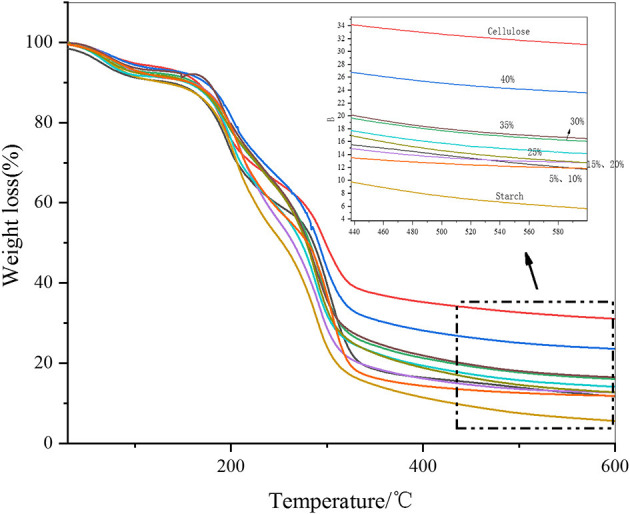
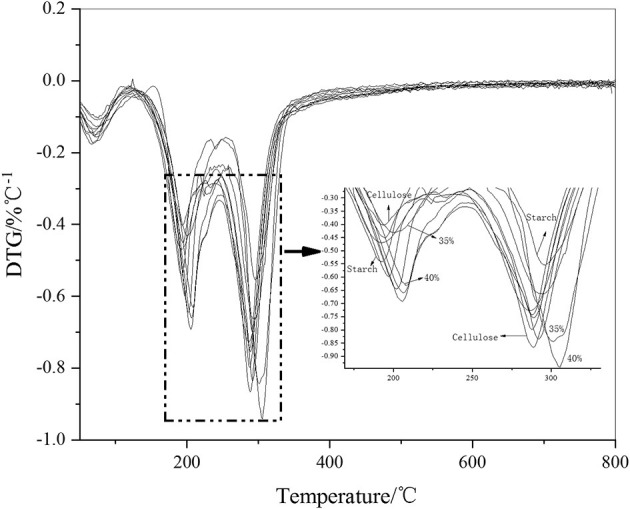
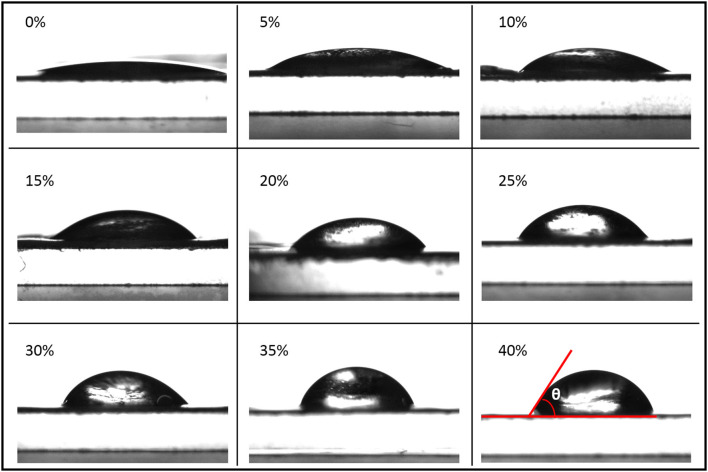
Carboxymethyl cellulose, a hydrophobic derivative from cellulose that can be prepared from different biomass, has been widely applied in food, medicine, chemical, and other industries. In this work, carboxymethyl cellulose was used as the additive to improve the hydrophobicity and strength of carboxylated starch film, which is prepared from starch catalyzed by bio-α-amylase. This study investigated the effects of different bio-α-amylase dosages (starch 0.5%, starch 1%) and different activation times (10, 30 min) on starch to prepare the carboxylated starch. The effects of different carboxymethyl cellulose content on the carboxylated starch film were investigated by analysis viscosity, fourier-transform infrared spectroscopy, thermogravimetric analysis, differential scanning calorimetry, x-ray powder diffraction, scanning electron microscope, and contact angle. The results showed that preparing carboxylated starch using activated starch increased the carboxyl content, which could improve the effectiveness of the activated enzyme compared to prolonging the activation time. The carboxyl starch prepared by enzyme catalysis had a lower gelatinization temperature, and enzyme activation destroyed the crystallization area of the starch, thus facilitating the carboxylation reaction. The addition of 15% carboxymethyl cellulose improved the mechanical properties of the prepared film with maximum tensile strength of 44.8 MPa. Carboxymethyl cellulose effectively improved the hydrophobicity of the starch film with the addition amount of 10-30%, while hydrophobic property was stable at 66.8° when the addition amount was exceeded to 35%. In this work, it can be found that carboxymethyl cellulose improve the mechanical and hydrophobic properties of starch film, laying the foundation for the application of carboxylated starch materials.
羧甲基纤维素是一种可由不同生物质制备的纤维素疏水衍生物,已广泛应用于食品、医药、化工等行业。在本研究中,羧甲基纤维素被用作添加剂,以提高由生物α-淀粉酶催化淀粉制备的羧化淀粉膜的疏水性和强度。本研究考察了不同生物α-淀粉酶用量(淀粉0.5%、淀粉1%)和不同活化时间(10、30分钟)对淀粉制备羧化淀粉的影响。通过分析粘度、傅里叶变换红外光谱、热重分析、差示扫描量热法、X射线粉末衍射、扫描电子显微镜和接触角,研究了不同羧甲基纤维素含量对羧化淀粉膜的影响。结果表明,使用活化淀粉制备羧化淀粉可提高羧基含量,与延长活化时间相比,这可提高活化酶的效率。酶催化制备的羧化淀粉糊化温度较低,酶活化破坏了淀粉的结晶区,从而促进了羧化反应。添加15%的羧甲基纤维素可改善制备膜的力学性能,最大拉伸强度为44.8MPa。羧甲基纤维素在添加量为10-30%时有效提高了淀粉膜的疏水性,而当添加量超过35%时,疏水性稳定在66.8°。在本研究中,可以发现羧甲基纤维素改善了淀粉膜的力学和疏水性能,为羧化淀粉材料的应用奠定了基础。