Laboratory of Membrane Biology and Biophysics, The Rockefeller University, New York, United States.
Tri-Institutional Training Program in Chemical Biology, New York, United States.
Elife. 2021 Feb 19;10:e63524. doi: 10.7554/eLife.63524.
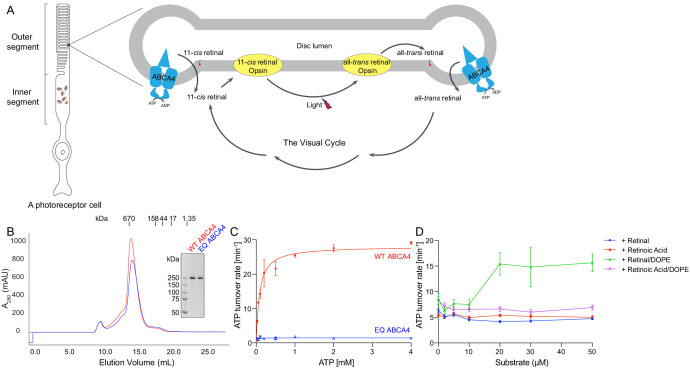
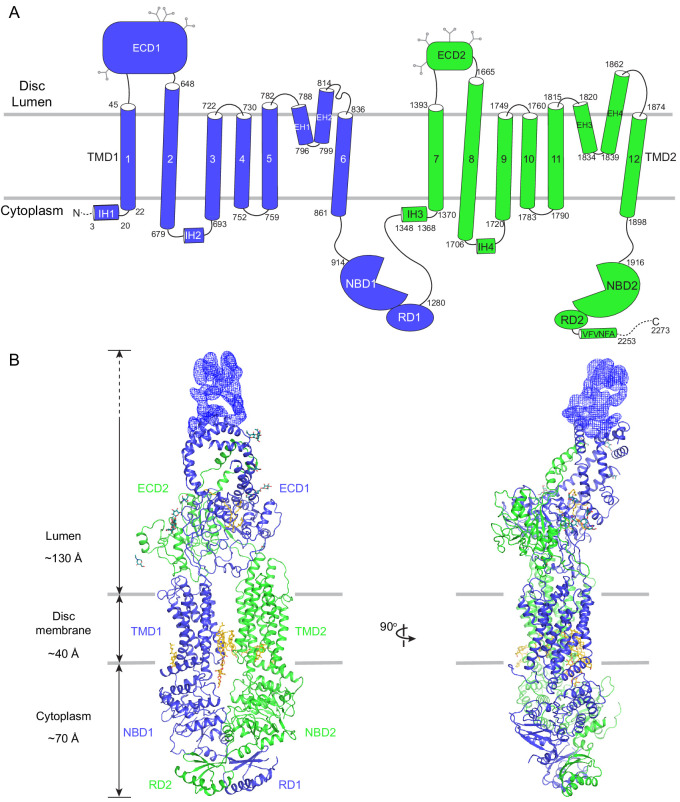
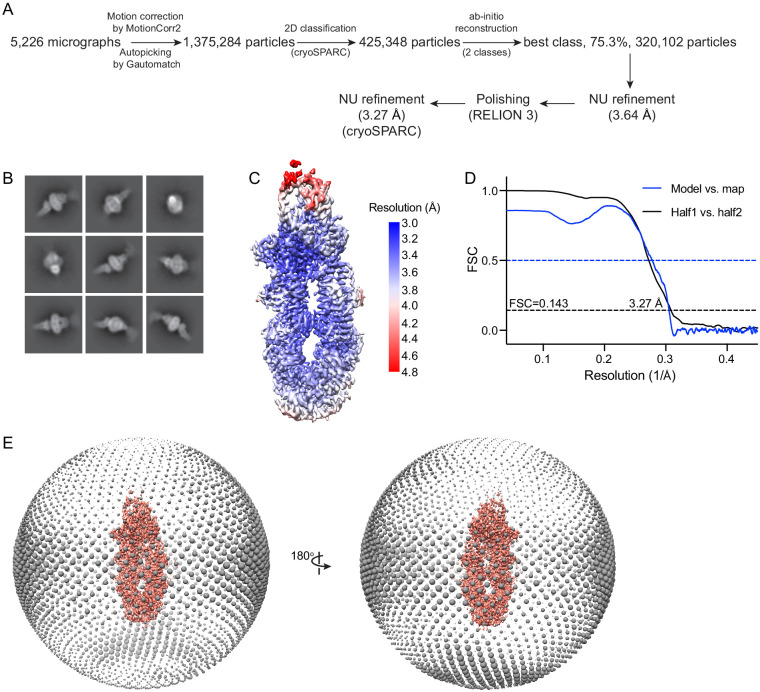
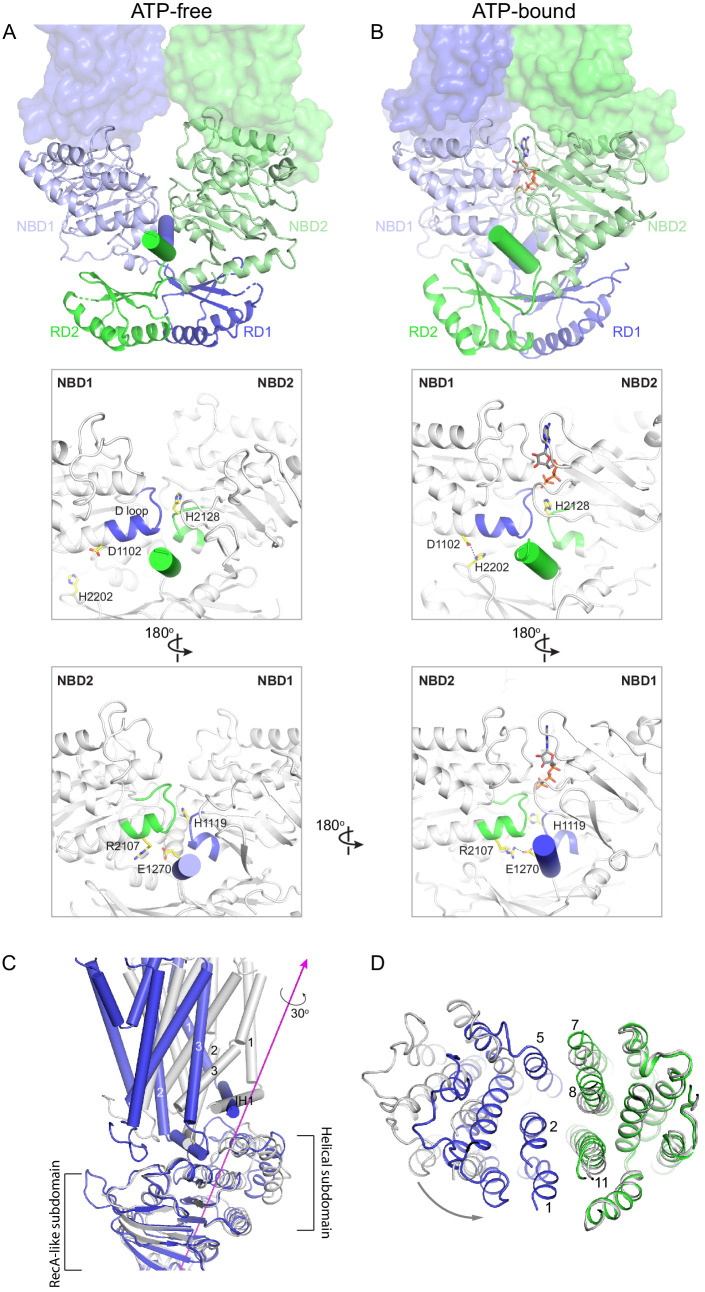
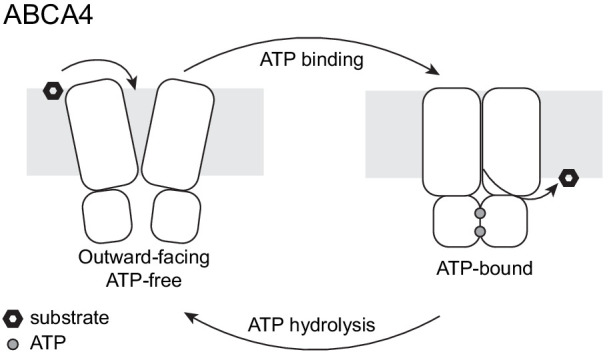
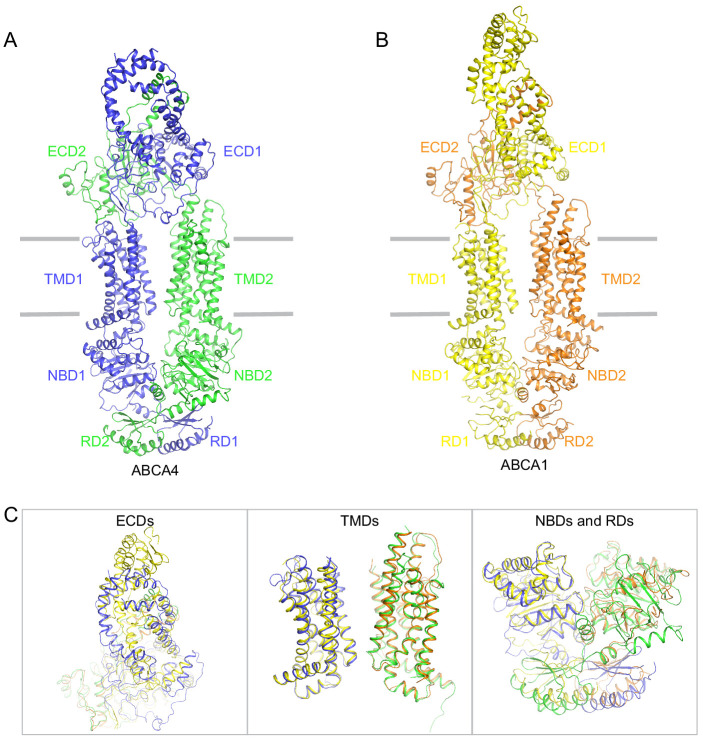
The ATP-binding cassette (ABC) transporter family contains thousands of members with diverse functions. Movement of the substrate, powered by ATP hydrolysis, can be outward (export) or inward (import). ABCA4 is a eukaryotic importer transporting retinal to the cytosol to enter the visual cycle. It also removes toxic retinoids from the disc lumen. Mutations in ABCA4 cause impaired vision or blindness. Despite decades of clinical, biochemical, and animal model studies, the molecular mechanism of ABCA4 is unknown. Here, we report the structures of human ABCA4 in two conformations. In the absence of ATP, ABCA4 adopts an outward-facing conformation, poised to recruit substrate. The presence of ATP induces large conformational changes that could lead to substrate release. These structures provide a molecular basis to understand many disease-causing mutations and a rational guide for new experiments to uncover how ABCA4 recruits, flips, and releases retinoids.
ATP 结合盒(ABC)转运蛋白家族包含数千种具有不同功能的成员。在 ATP 水解的驱动下,底物可以向外(外排)或向内(内吞)移动。ABCA4 是一种真核进口器,将视网膜转运到细胞质中以进入视觉循环。它还将有毒的类视黄醇从盘腔中清除。ABCA4 的突变会导致视力受损或失明。尽管经过几十年的临床、生化和动物模型研究,ABCA4 的分子机制仍不清楚。在这里,我们报告了两种构象下的人 ABCA4 结构。在没有 ATP 的情况下,ABCA4 采用向外开放的构象,准备招募底物。ATP 的存在诱导了较大的构象变化,这可能导致底物释放。这些结构为理解许多致病突变提供了分子基础,并为揭示 ABCA4 如何招募、翻转和释放类视黄醇提供了合理的实验指导。