Department of Biomedical Engineering, University of Arkansas, Fayetteville, AR, USA.
Division of Pediatric Surgery, University of Arkansas for Medical Sciences, Little Rock, AR, USA.
J Clin Monit Comput. 2022 Feb;36(1):147-159. doi: 10.1007/s10877-020-00632-6. Epub 2021 Feb 19.
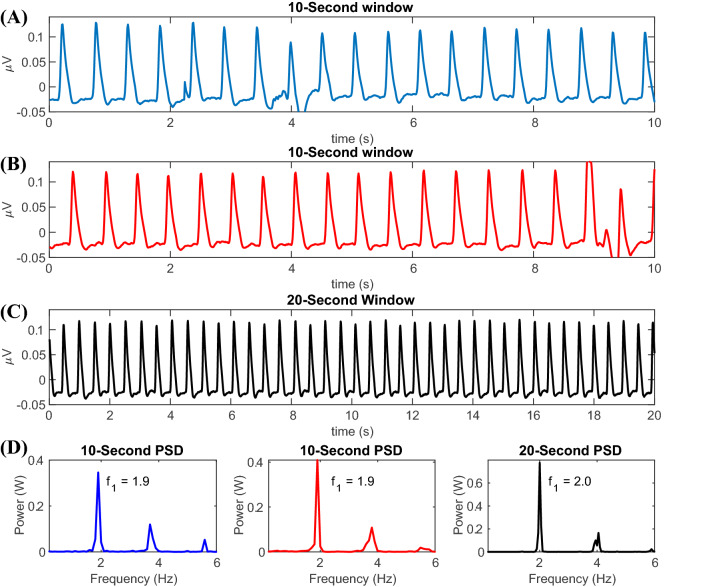
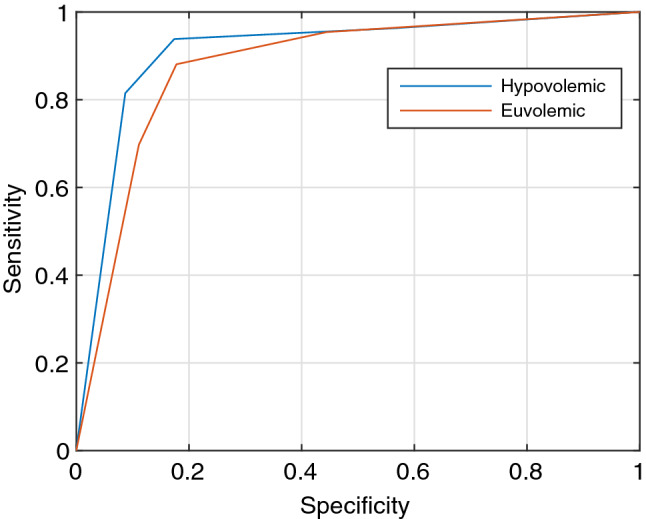
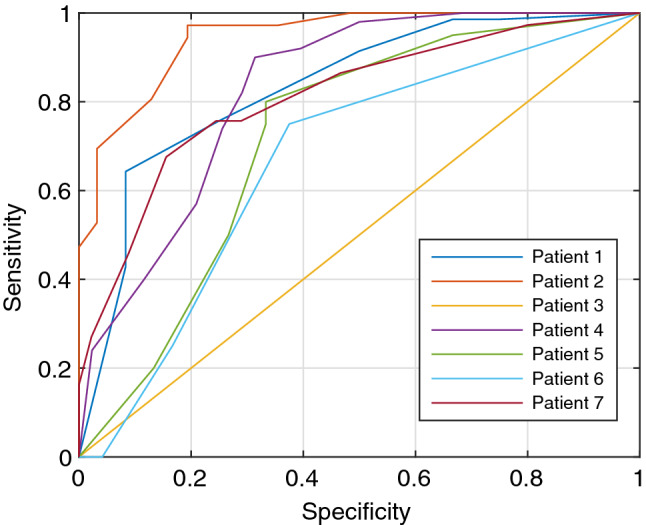
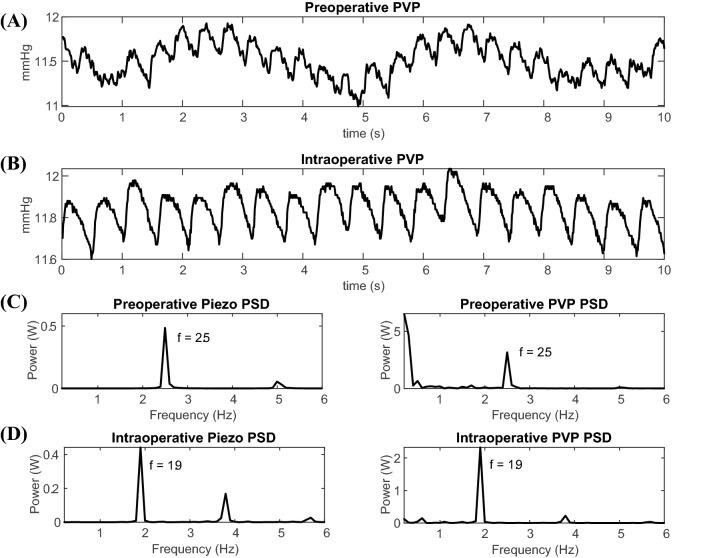
Analysis of peripheral venous pressure (PVP) waveforms is a novel method of monitoring intravascular volume. Two pediatric cohorts were studied to test the effect of anesthetic agents on the PVP waveform and cross-talk between peripheral veins and arteries: (1) dehydration setting in a pyloromyotomy using the infused anesthetic propofol and (2) hemorrhage setting during elective surgery for craniosynostosis with the inhaled anesthetic isoflurane. PVP waveforms were collected from 39 patients that received propofol and 9 that received isoflurane. A multiple analysis of variance test determined if anesthetics influence the PVP waveform. A prediction system was built using k-nearest neighbor (k-NN) to distinguish between: (1) PVP waveforms with and without propofol and (2) different minimum alveolar concentration (MAC) groups of isoflurane. 52 porcine, 5 propofol, and 7 isoflurane subjects were used to determine the cross-talk between veins and arteries at the heart and respiratory rate frequency during: (a) during and after bleeding with constant anesthesia, (b) before and after propofol, and (c) at each MAC value. PVP waveforms are influenced by anesthetics, determined by MANOVA: p value < 0.01, η = 0.478 for hypovolemic, and η = 0.388 for euvolemic conditions. The k-NN prediction models had 82% and 77% accuracy for detecting propofol and MAC, respectively. The cross-talk relationship at each stage was: (a) ρ = 0.95, (b) ρ = 0.96, and (c) could not be evaluated using this cohort. Future research should consider anesthetic agents when analyzing PVP waveforms developing future clinical monitoring technology that uses PVP.
外周静脉压力 (PVP) 波形分析是一种监测血管内容量的新方法。我们研究了两个儿科队列,以测试麻醉剂对 PVP 波形和外周静脉与动脉之间串扰的影响:(1) 在使用输注麻醉药异丙酚的幽门肌切开术中脱水设置,以及 (2) 在择期颅缝早闭手术中使用吸入麻醉药异氟醚时出血设置。从接受异丙酚的 39 名患者和接受异氟醚的 9 名患者中收集了 PVP 波形。使用多变量方差分析测试麻醉剂是否影响 PVP 波形。使用 k-最近邻 (k-NN) 建立预测系统,以区分:(1) 有和没有异丙酚的 PVP 波形,以及 (2) 不同最低肺泡浓度 (MAC) 异氟醚组。使用 52 只猪、5 只异丙酚和 7 只异氟醚来确定在以下情况下静脉和动脉之间的串扰:(a) 在持续麻醉下进行和之后的出血期间,(b) 在使用异丙酚之前和之后,以及 (c) 在每个 MAC 值下。PVP 波形受麻醉剂影响,多变量方差分析确定:p 值 < 0.01,η = 0.478 用于低血容量,η = 0.388 用于正常血容量条件。k-NN 预测模型对检测异丙酚和 MAC 的准确率分别为 82%和 77%。每个阶段的串扰关系为:(a) ρ = 0.95,(b) ρ = 0.96,(c) 无法使用该队列进行评估。未来的研究应该在分析 PVP 波形时考虑麻醉剂,开发使用 PVP 的未来临床监测技术。