Li Kai, Zhang Jieling, Zhang Mingkang, Wu Yaohua, Lu Xinyu, Zhu Yiping
Department of Oncology, The First Affiliated Hospital of Wannan Medical College, Wuhu, 241002, China.
Department of Clinical medicine, Wannan Medical College, Wuhu, 241002, China.
World J Surg Oncol. 2021 Feb 19;19(1):54. doi: 10.1186/s12957-021-02166-w.
MicroRNAs (miRNAs) play an important role in tumor occurrence. The role of miR-378a-5p and CDK1 in colorectal cancer (CRC) was investigated in this study.
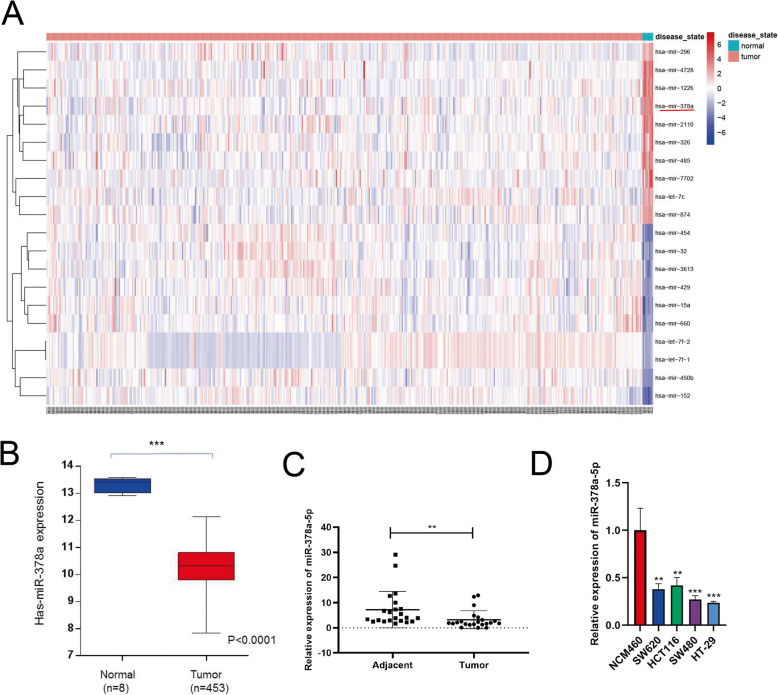
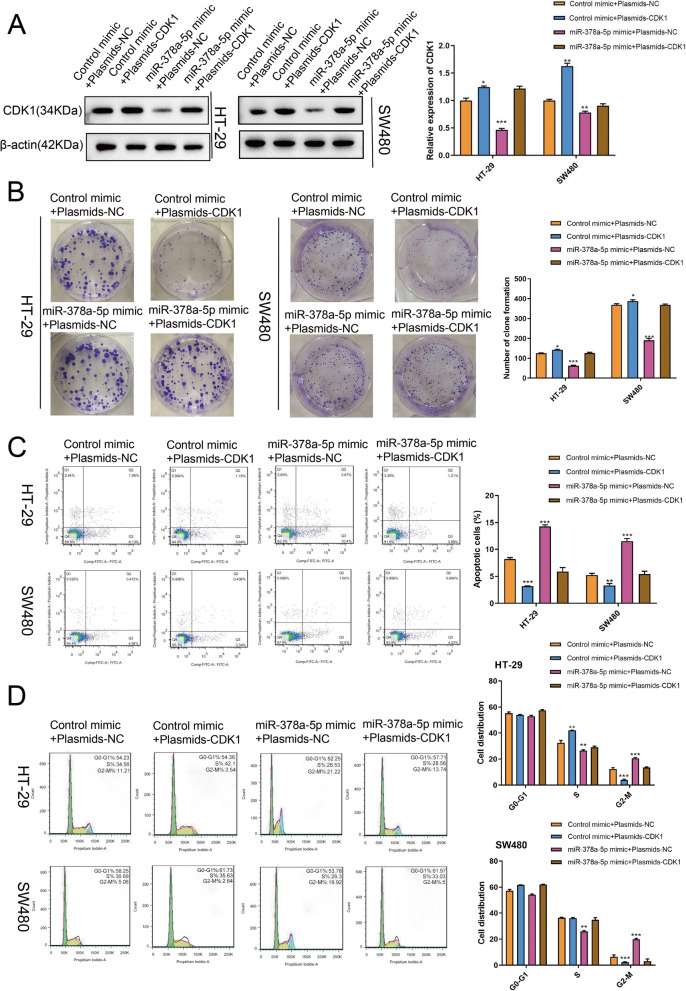
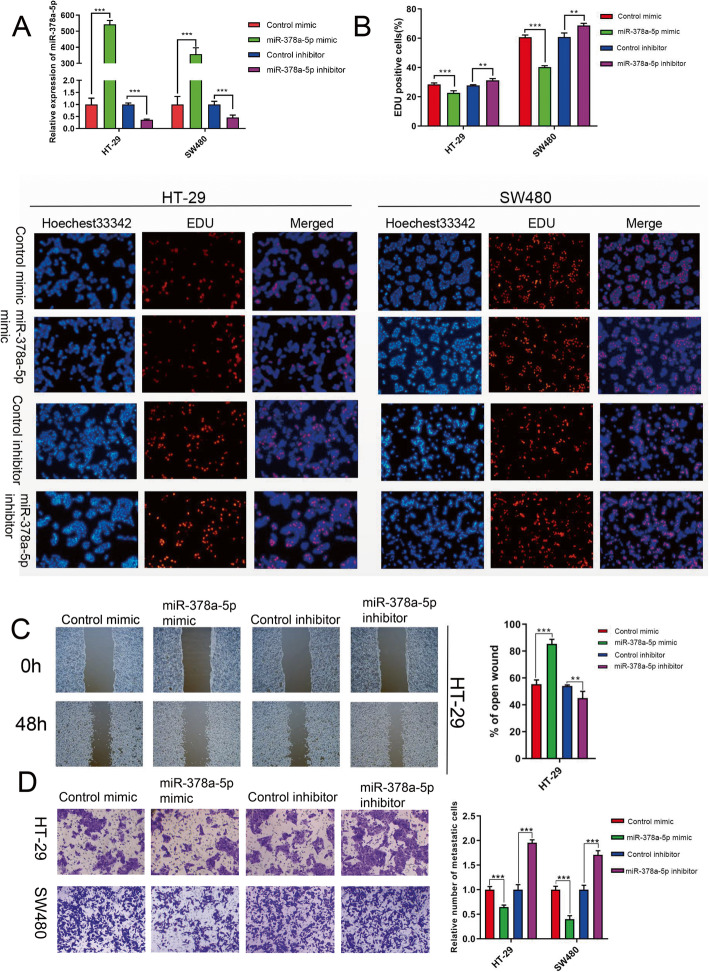
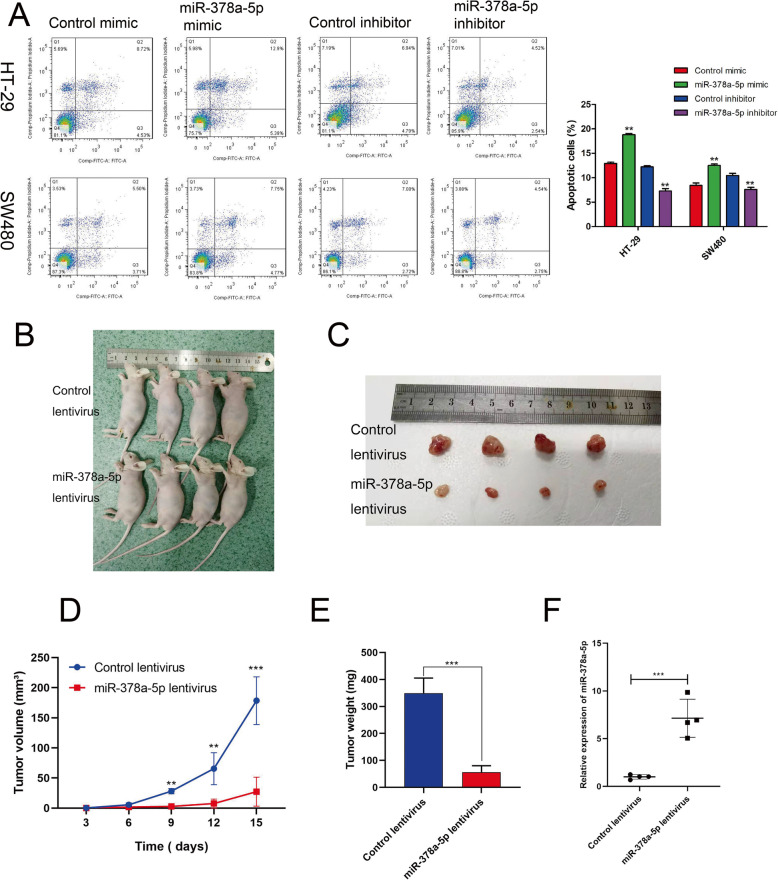
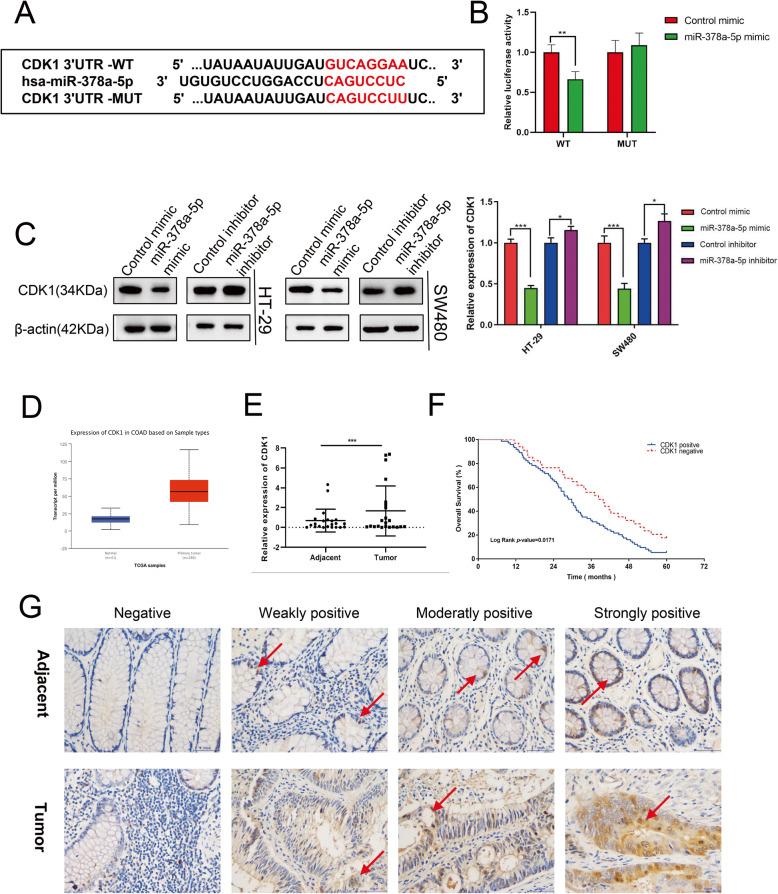
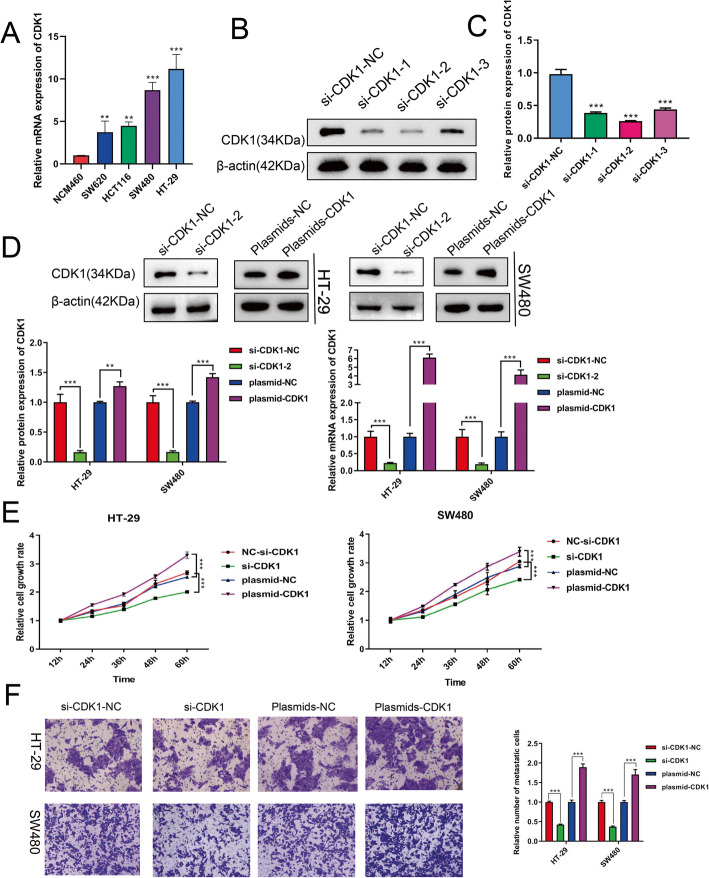
Investigation of TCGA database and the detection of miR-378a-5p expression in colorectal cancer pathological tissues and colorectal cancer cell lines were undertaken by using qRT-PCR. We performed cell function experiments (CCK-8 assay, EdU assay, colony formation assay, wound healing assay, transwell assay, cell apoptosis assessment, and cell cycle assessment) and nude mouse tumor formation experiments to evaluate the effects of miR-378a-5p on proliferation, metastasis, and invasion to explore the role of miR-378a-5p in vivo and in vitro. Next, through TCGA database, immunohistochemical staining of pathological tissues, and cell function experiments, the role of the target gene CDK1 of miR-378a-5p was verified by database prediction, and dual luciferase reporter gene experiments in colorectal cancer cells were performed. Finally, whether upregulation of CDK1 restores the inhibitory effect of overexpression of miR-378a-5p on the proliferation of CRC cells was studied by overexpression of CDK1.
Bioinformatic analysis showed significant downregulation of miR-378a-5p levels in colorectal cancer (CRC). Cell function experiments and tumor xenograft mouse models confirmed the low expression of miR-378a-5p within CRC tissues, which indicated the tumor suppressive role of miR-378a-5p in CRC. To better explore the regulation of miR-378a-5p in CRC, we predicted and validated cell cycle-dependent protein kinase 1 (CDK1) as the miR-378a-5p target gene and observed that miR-378a-5p suppressed CRC cell proliferation by targeting CDK1.
The results of this study help to elucidate the mechanism by which miR-378a-5p can be used as a tumor marker to inhibit the growth of colorectal cancer and CDK1, which is related to the prognosis of colorectal cancer patients. MiR-378a-5p inhibits CRC cell proliferation by suppressing CDK1 expression, which may become a possible therapeutic target for treatment of CRC.
微小RNA(miRNA)在肿瘤发生中起重要作用。本研究探讨了miR-378a-5p和细胞周期蛋白依赖性激酶1(CDK1)在结直肠癌(CRC)中的作用。
利用qRT-PCR对TCGA数据库进行研究,并检测结直肠癌病理组织和结直肠癌细胞系中miR-378a-5p的表达。我们进行了细胞功能实验(CCK-8检测、EdU检测、集落形成检测、伤口愈合检测、transwell检测、细胞凋亡评估和细胞周期评估)以及裸鼠肿瘤形成实验,以评估miR-378a-5p对增殖、转移和侵袭的影响,从而探究miR-378a-5p在体内和体外的作用。接下来,通过TCGA数据库、病理组织免疫组化染色和细胞功能实验,通过数据库预测验证miR-378a-5p的靶基因CDK1的作用,并在结直肠癌细胞中进行双荧光素酶报告基因实验。最后,通过过表达CDK1研究CDK1的上调是否能恢复miR-378a-5p过表达对CRC细胞增殖的抑制作用。
生物信息学分析显示,结直肠癌(CRC)中miR-378a-5p水平显著下调。细胞功能实验和肿瘤异种移植小鼠模型证实了CRC组织中miR-378a-5p的低表达,这表明miR-378a-5p在CRC中具有肿瘤抑制作用。为了更好地探究miR-378a-5p在CRC中的调控作用,我们预测并验证了细胞周期依赖性蛋白激酶1(CDK1)为miR-378a-5p的靶基因,并观察到miR-378a-5p通过靶向CDK1抑制CRC细胞增殖。
本研究结果有助于阐明miR-378a-5p作为肿瘤标志物抑制结直肠癌生长的机制以及与结直肠癌患者预后相关的CDK1。MiR-378a-5p通过抑制CDK1表达抑制CRC细胞增殖,这可能成为治疗CRC的一个潜在治疗靶点。