Department of Gastroenterology, Nara Medical University, Nara, Japan.
J Cell Mol Med. 2021 Apr;25(8):4001-4013. doi: 10.1111/jcmm.16363. Epub 2021 Feb 20.
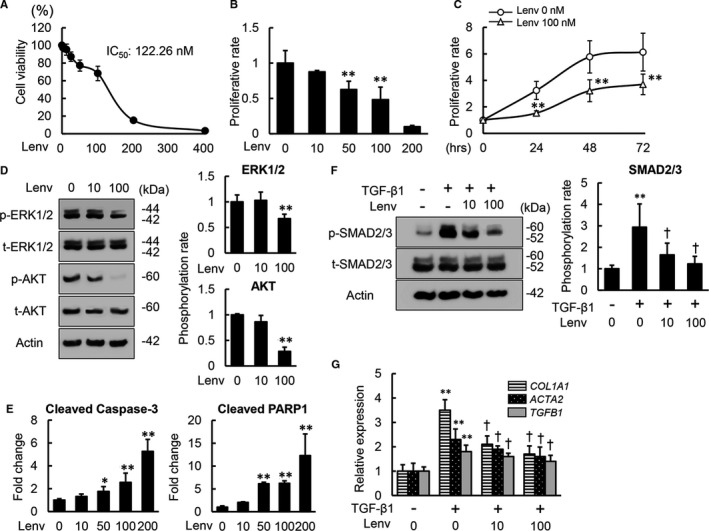
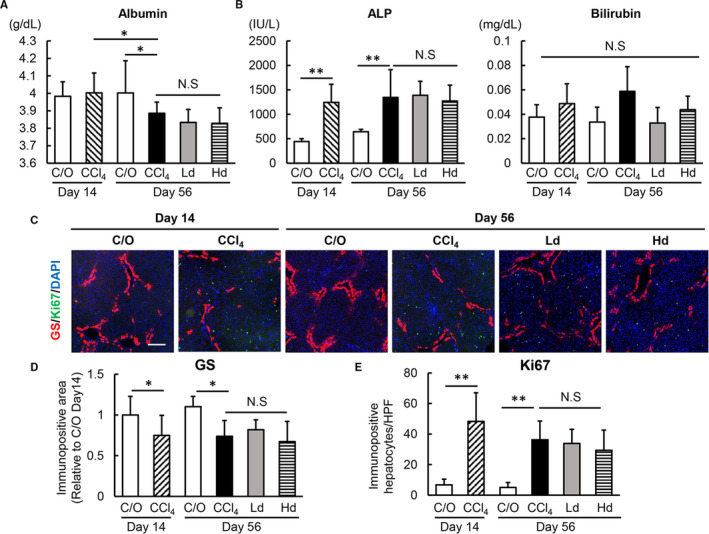
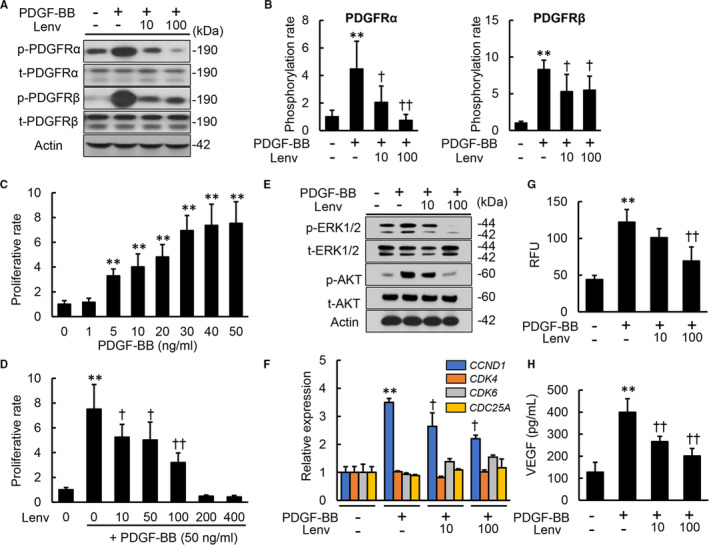
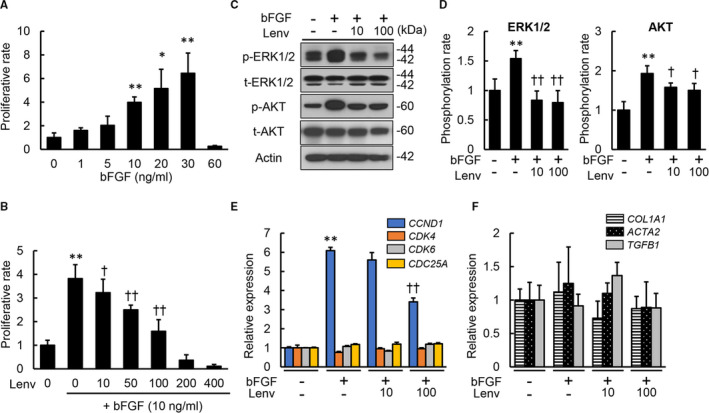
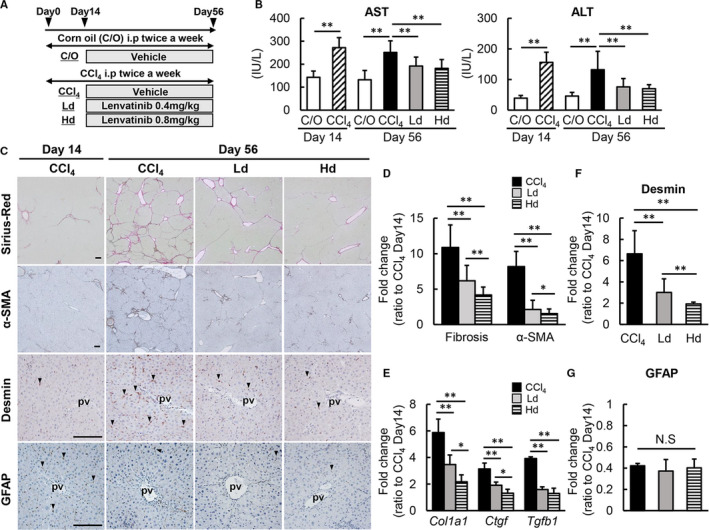
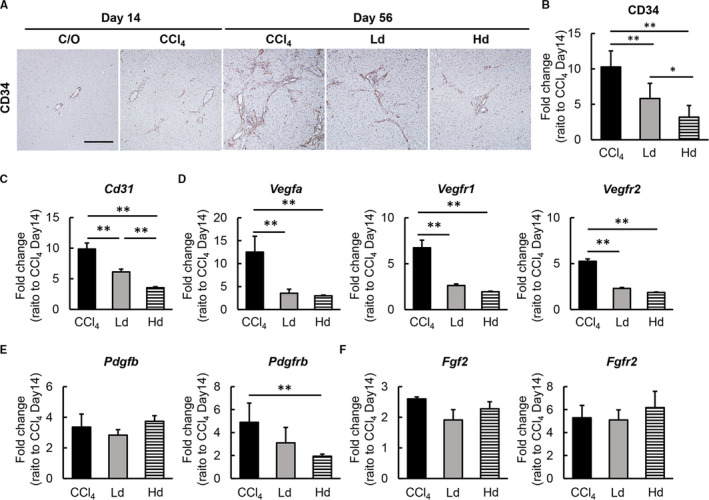
Molecular targeted agents are pharmacologically used to treat liver fibrosis and have gained increased attention. The present study examined the preventive effect of lenvatinib on experimental liver fibrosis and sinusoidal capillarization as well as the in vitro phenotypes of hepatic stellate cells. LX-2, a human stellate cell line, was used for in vitro studies. In vivo liver fibrosis was induced in F344 rats using carbon tetrachloride by intraperitoneal injection for 8 weeks, and oral administration of lenvatinib was started two weeks after initial injection of carbon tetrachloride. Lenvatinib restrained proliferation and promoted apoptosis of LX-2 with suppressed phosphorylation of extracellular signal-regulated kinase 1/2 and AKT. It also down-regulated COL1A1, ACTA2 and TGFB1 expressions by inhibiting the transforming growth factor-β1/Smad2/3 pathway. Treatment with lenvatinib also suppressed platelet-derived growth factor-BB-stimulated proliferation, chemotaxis and vascular endothelial growth factor-A production, as well as basic fibroblast growth factor-induced LX-2 proliferation. In vivo study showed that lenvatinib attenuated liver fibrosis development with reduction in activated hepatic stellate cells and mRNA expression of profibrogenic markers. Intrahepatic neovascularization was ameliorated with reduced hepatic expressions of Vegf1, Vegf2 and Vegfa in lenvatinib-treated rats. Collectively, these results suggest the potential use of lenvatinib as a novel therapeutic strategy for liver fibrosis.
分子靶向药物在药理学上被用于治疗肝纤维化,并引起了越来越多的关注。本研究探讨了仑伐替尼对实验性肝纤维化和窦状隙毛细血管化的预防作用,以及对肝星状细胞体外表型的影响。LX-2 是人肝星状细胞系,用于体外研究。F344 大鼠通过腹腔注射四氯化碳诱导体内肝纤维化,在初次注射四氯化碳 2 周后开始仑伐替尼口服给药。仑伐替尼抑制 LX-2 的增殖并促进其凋亡,同时抑制细胞外信号调节激酶 1/2 和 AKT 的磷酸化。它还通过抑制转化生长因子-β1/Smad2/3 通路下调 COL1A1、ACTA2 和 TGFB1 的表达。仑伐替尼治疗还抑制血小板衍生生长因子-BB 刺激的增殖、趋化和血管内皮生长因子-A 的产生,以及碱性成纤维细胞生长因子诱导的 LX-2 增殖。体内研究表明,仑伐替尼通过减少活化的肝星状细胞和纤维化标记物的 mRNA 表达来减轻肝纤维化的发展。仑伐替尼治疗大鼠肝内新生血管化得到改善,肝内 Vegf1、Vegf2 和 Vegfa 的表达减少。综上所述,这些结果表明仑伐替尼可能作为肝纤维化的一种新的治疗策略。