Cai X, Fry C V, Wagner C S
School of Public Affairs, Zhejiang University, Hangzhou, 310058 China.
Shidler College of Business, University of Hawai'i at Manoa, Honolulu, USA.
Scientometrics. 2021;126(4):3683-3692. doi: 10.1007/s11192-021-03873-7. Epub 2021 Feb 14.
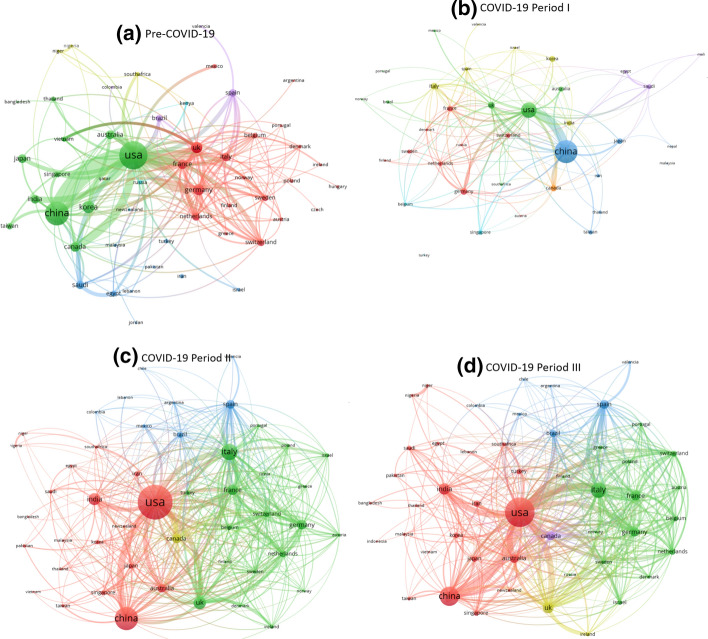
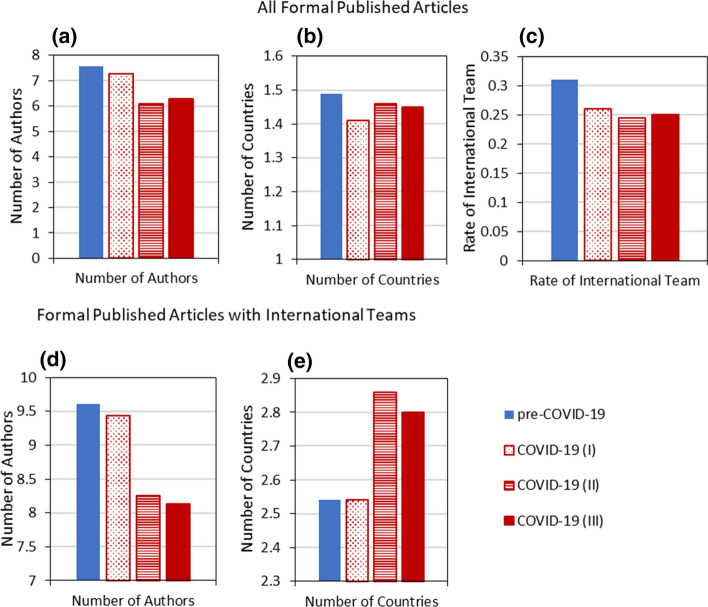
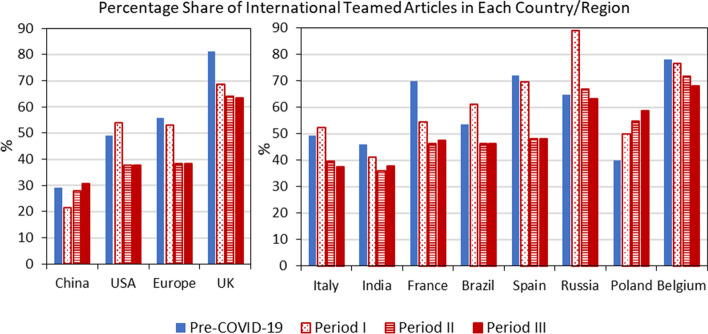
After the initial shock of the early months of the global COVID-19 pandemic, international collaboration in COVID-19 research continues to show aberrant patterns compared to coronavirus research in pre-COVID times. The most affected nations tend to produce the greatest number of coronavirus articles, with output closely coupled to the rate of infection. COVID-19 research has fewer nations and smaller teams than pre-COVID research, a trend which intensifies throughout the pandemic. The United States remains the single largest contributor to the global publication output, but contrary to China's dominance in the initial months of the pandemic, China's contribution falls as the national COVID-19 caseload drops. China-USA collaborations drop as the pandemic continues, perhaps due to China's reduced rate of publication on the topic, and perhaps due to political obstacles, or a combination of these factors.
在经历了全球新冠疫情最初几个月的冲击之后,与新冠疫情之前的冠状病毒研究相比,新冠疫情研究中的国际合作仍呈现出异常模式。受影响最严重的国家往往产出的冠状病毒相关文章数量最多,产出与感染率紧密相关。与新冠疫情之前的研究相比,新冠疫情研究涉及的国家更少,团队规模更小,这一趋势在整个疫情期间不断加剧。美国仍然是全球出版物产出的最大单一贡献者,但与疫情最初几个月中国占据主导地位不同的是,随着中国国内新冠病例数下降,中国的贡献也随之减少。随着疫情持续,中美合作减少,这可能是由于中国在该主题上的发表率下降,也可能是由于政治障碍,或者是这些因素的综合作用。