Alboni S, Benatti C, Colliva C, Radighieri G, Blom J M C, Brunello N, Tascedda F
Department of Life Sciences, University of Modena and Reggio Emilia, Modena, Italy.
Centre of Neuroscience and Neurotechnology, University of Modena and Reggio Emilia, Modena, Italy.
Front Pharmacol. 2021 Feb 4;11:603979. doi: 10.3389/fphar.2020.603979. eCollection 2020.
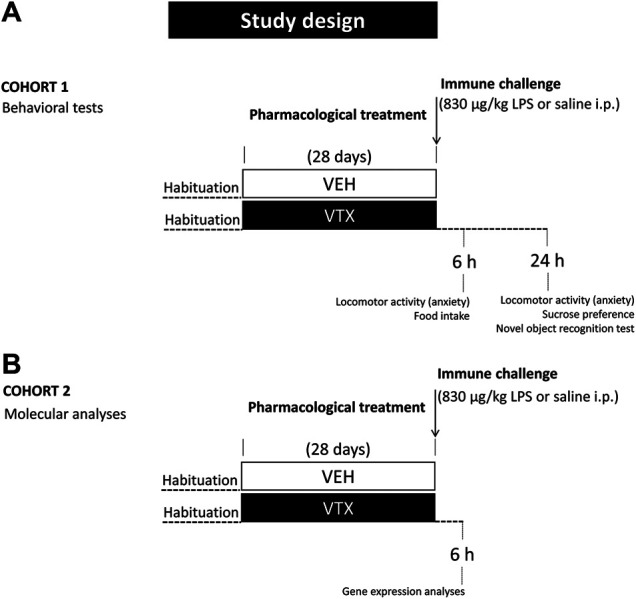
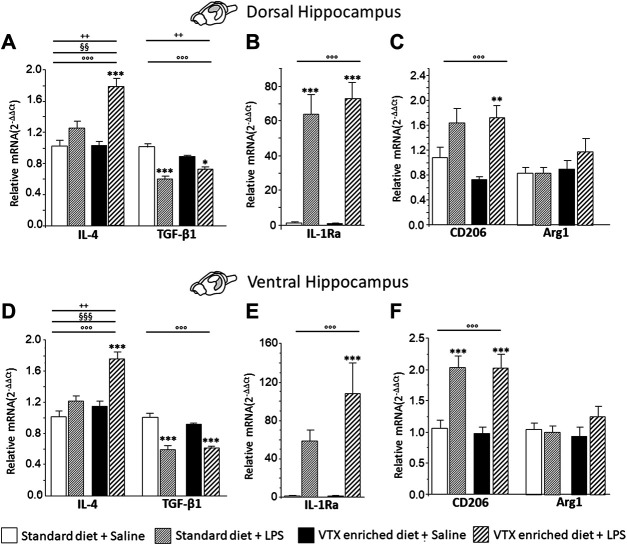
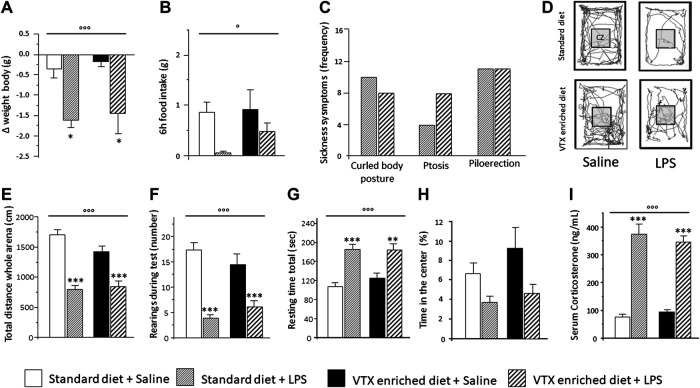
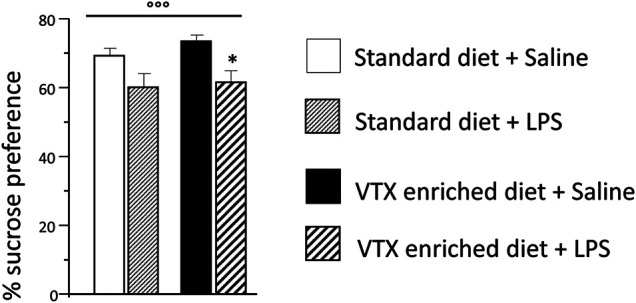
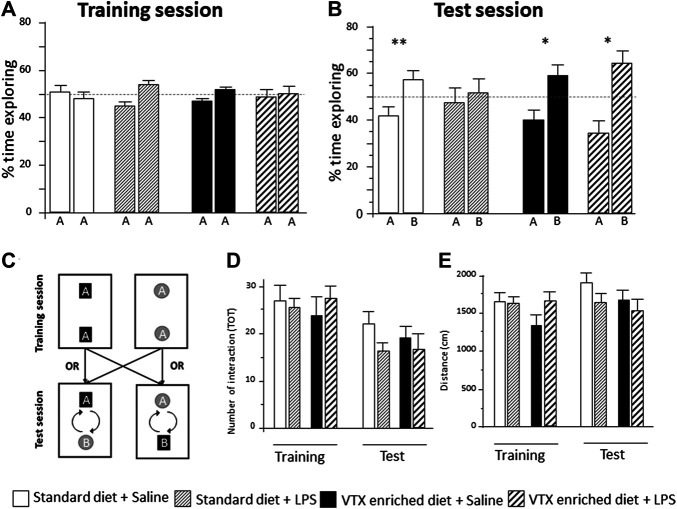
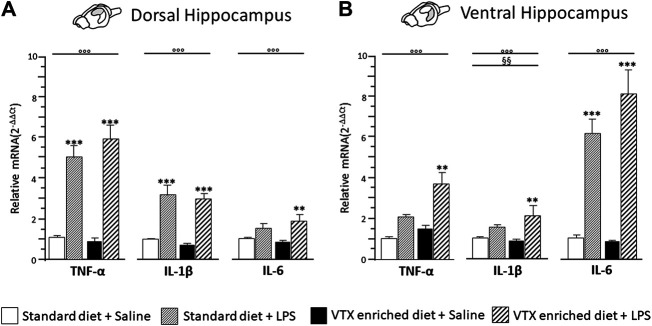
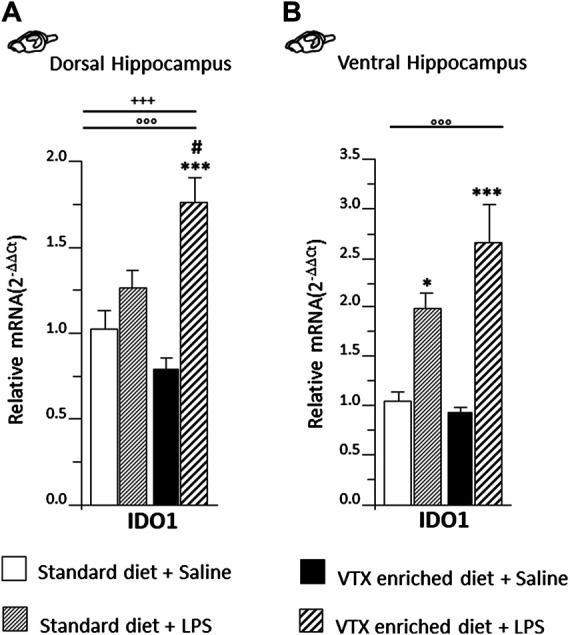
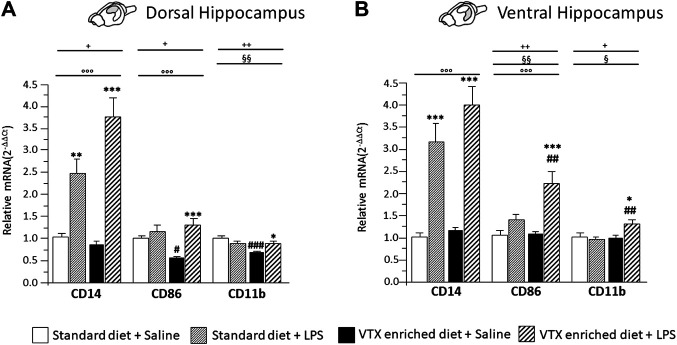
Vortioxetine is a novel multimodal antidepressant that modulates a wide range of neurotransmitters throughout the brain. Preclinical and clinical studies have shown that vortioxetine exerts positive effects on different cognitive domains and neuroprotective effects. Considering the key role of microglial cells in brain plasticity and cognition, we aimed at investigating the effects of pretreatment with vortioxetine in modulating behavioral and molecular effects induced by an immune challenge: peripheral injection of lipopolysaccharide (LPS). To this purpose, C57BL/6J male mice were first exposed to a 28-day standard diet or vortioxetine-enriched diet, which was followed by an acute immune challenge with LPS. Sickness symptoms and depressive-like behaviors (anhedonia and memory impairment) were tested 6 and 24 h after exposure to LPS, respectively. Moreover, the expressions of markers of immune activation and M1/M2 markers of microglia polarization were measured in the dorsal and ventral parts of the hippocampus. The pretreatment with vortioxetine did not affect both LPS-induced sickness behavior and anhedonia but prevented the deficit in the recognition memory induced by the immune challenge. At the transcriptional level, chronic exposure to vortioxetine did not prevent LPS-induced upregulation of proinflammatory cytokines 6 h after the immune challenge but rather seemed to potentiate the immune response to the challenge also by affecting the levels of expression of markers of microglia M1 phenotype, like cluster of differentiation (CD)14 and CD86, in an area-dependent manner. However, at the same time point, LPS injection significantly increased the expression of the M2 polarization inducer, interleukin 4, only in the hippocampus of animals chronically exposed to vortioxetine. These results demonstrate that a chronic administration of vortioxetine specifically prevents LPS-induced memory impairment, without affecting acute sickness behavior and anhedonia, and suggest that hippocampal microglia may represent a cellular target of this novel antidepressant medication. Moreover, we provide a useful model to further explore the molecular mechanisms specifically underlying cognitive impairments following an immune challenge.
伏硫西汀是一种新型多模式抗抑郁药,可调节全脑范围内的多种神经递质。临床前和临床研究表明,伏硫西汀对不同认知领域具有积极作用,并具有神经保护作用。考虑到小胶质细胞在脑可塑性和认知中的关键作用,我们旨在研究伏硫西汀预处理对免疫挑战(外周注射脂多糖(LPS))诱导的行为和分子效应的调节作用。为此,首先将C57BL/6J雄性小鼠暴露于28天的标准饮食或富含伏硫西汀的饮食,随后用LPS进行急性免疫挑战。分别在暴露于LPS后6小时和24小时测试疾病症状和抑郁样行为(快感缺失和记忆障碍)。此外,在海马背侧和腹侧测量免疫激活标志物和小胶质细胞极化的M1/M2标志物的表达。伏硫西汀预处理既不影响LPS诱导的疾病行为和快感缺失,也不影响免疫挑战诱导的识别记忆缺陷。在转录水平上,长期暴露于伏硫西汀并不能阻止免疫挑战6小时后LPS诱导的促炎细胞因子上调,反而似乎通过以区域依赖的方式影响小胶质细胞M1表型标志物(如分化簇(CD)14和CD86)的表达水平来增强对挑战的免疫反应。然而,在同一时间点,LPS注射仅在长期暴露于伏硫西汀的动物海马中显著增加了M2极化诱导剂白细胞介素4的表达。这些结果表明长期给予伏硫西汀可特异性预防LPS诱导的记忆障碍,而不影响急性疾病行为和快感缺失,并表明海马小胶质细胞可能是这种新型抗抑郁药物的细胞靶点。此外,我们提供了一个有用的模型,以进一步探索免疫挑战后认知障碍背后的具体分子机制。