
炎性树突状细胞有助于调节镰状细胞病中的免疫反应。
Inflammatory Dendritic Cells Contribute to Regulate the Immune Response in Sickle Cell Disease.
作者信息
Sesti-Costa Renata, Borges Marina Dorigatti, Lanaro Carolina, de Albuquerque Dulcinéia Martins, Saad Sara Terezinha Olalla, Costa Fernando Ferreira
机构信息
Hematology and Hemotherapy Center, University of Campinas, UNICAMP, Campinas, Brazil.
出版信息
Front Immunol. 2021 Feb 4;11:617962. doi: 10.3389/fimmu.2020.617962. eCollection 2020.
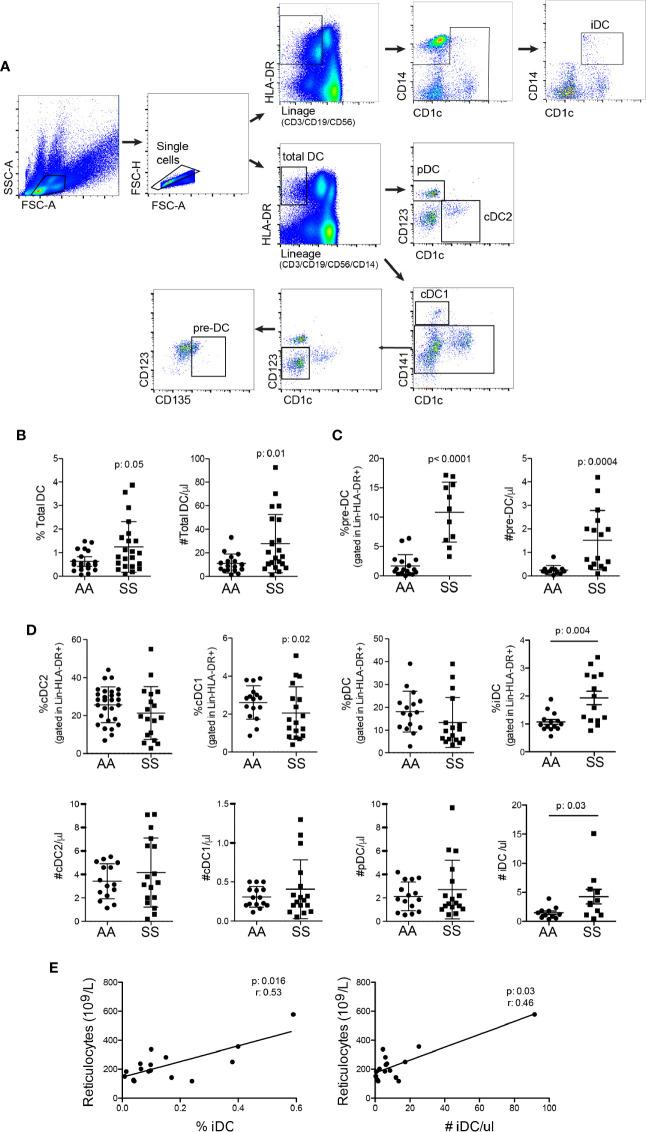
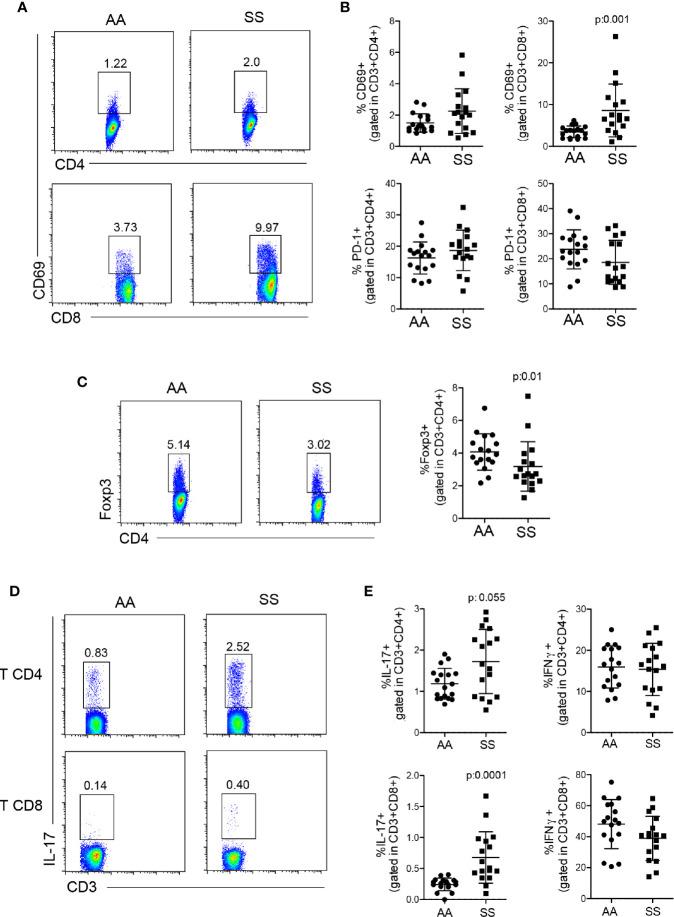
Sickle cell disease (SCD), one of the most common hemoglobinopathies worldwide, is characterized by a chronic inflammatory component, with systemic release of inflammatory cytokines, due to hemolysis and vaso-occlusive processes. Patients with SCD demonstrate dysfunctional T and B lymphocyte responses, and they are more susceptible to infection. Although dendritic cells (DCs) are the main component responsible for activating and polarizing lymphocytic function, and are able to produce pro-inflammatory cytokines found in the serum of patients with SCD, minimal studies have thus far been devoted to these cells. In the present study, we identified the subpopulations of circulating DCs in patients with SCD, and found that the bloodstream of the patients showed higher numbers and percentages of DCs than that of healthy individuals. Among all the main DCs subsets, inflammatory DCs (CD14 DCs) were responsible for this rise and correlated with higher reticulocyte count. The patients had more activated monocyte-derived DCs (mo-DCs), which produced MCP-1, IL-6, and IL-8 in culture. We found that a CD14 mo-DC subset present in culture from some of the patients was the more activated subset and was mainly responsible for cytokine production, and this subset was also responsible for IL-17 production in co-culture with T lymphocytes. Finally, we suggest an involvement of heme oxygenase in the upregulation of CD14 in mo-DCs from the patients, indicating a potential mechanism for inducing inflammatory DC differentiation from circulating monocytes in the patients, which correlated with inflammatory cytokine production, T lymphocyte response skewing, and reticulocyte count.
镰状细胞病(SCD)是全球最常见的血红蛋白病之一,其特征是存在慢性炎症成分,由于溶血和血管阻塞过程,炎症细胞因子会在全身释放。SCD患者表现出T和B淋巴细胞反应功能失调,且更容易受到感染。尽管树突状细胞(DCs)是负责激活和极化淋巴细胞功能的主要成分,并且能够产生SCD患者血清中发现的促炎细胞因子,但迄今为止针对这些细胞的研究极少。在本研究中,我们鉴定了SCD患者循环DCs的亚群,发现患者血液中的DCs数量和百分比高于健康个体。在所有主要的DCs亚群中,炎症性DCs(CD14 DCs)导致了这种增加,并且与较高的网织红细胞计数相关。患者有更多活化单核细胞来源的DCs(mo-DCs),其在培养中可产生单核细胞趋化蛋白-1(MCP-1)、白细胞介素-6(IL-6)和白细胞介素-8(IL-8)。我们发现,部分患者培养物中存在的一个CD14 mo-DC亚群是更活化的亚群,主要负责细胞因子的产生,并且该亚群在与T淋巴细胞共培养时也负责IL-17的产生。最后,我们认为血红素加氧酶参与了患者mo-DCs中CD14的上调,这表明了一种诱导患者循环单核细胞向炎症性DC分化的潜在机制,该机制与炎症细胞因子产生、T淋巴细胞反应偏向和网织红细胞计数相关。



 Zotero 插件