Aramini Beatrice, Masciale Valentina, Grisendi Giulia, Banchelli Federico, D'Amico Roberto, Maiorana Antonino, Morandi Uliano, Dominici Massimo, Haider Khawaja Husnain
Division of Thoracic Surgery, Department of Medical and Surgical Sciences, University of Modena and Reggio Emilia, Modena, Italy.
Division of Oncology, Department of Medical and Surgical Sciences, University of Modena and Reggio Emilia, Modena, Italy.
Oncotarget. 2021 Feb 2;12(3):230-250. doi: 10.18632/oncotarget.27870.
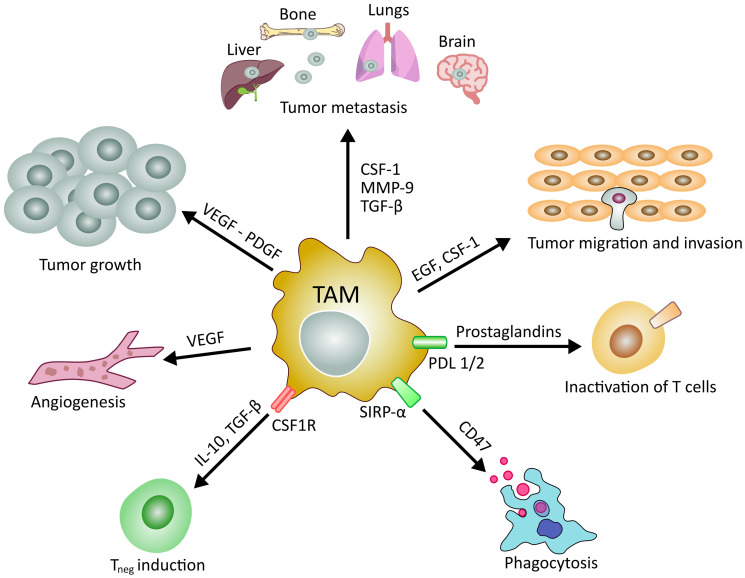
Cancer stem cells (CSCs) have been considered the key drivers of cancer initiation and progression due to their unlimited self-renewal capacity and their ability to induce tumor formation. Macrophages, particularly tumor-associated macrophages (TAMs), establish a tumor microenvironment to protect and induce CSCs development and dissemination. Many studies in the past decade have been performed to understand the molecular mediators of CSCs and TAMs, and several studies have elucidated the complex crosstalk that occurs between these two cell types. The aim of this review is to define the complex crosstalk between these two cell types and to highlight potential future anti-cancer strategies.
癌症干细胞(CSCs)因其无限的自我更新能力以及诱导肿瘤形成的能力,被认为是癌症起始和进展的关键驱动因素。巨噬细胞,尤其是肿瘤相关巨噬细胞(TAMs),构建了一个肿瘤微环境来保护并诱导癌症干细胞的发育和扩散。在过去十年中,人们开展了许多研究来了解癌症干细胞和肿瘤相关巨噬细胞的分子介质,并且有几项研究阐明了这两种细胞类型之间发生的复杂相互作用。本综述的目的是界定这两种细胞类型之间的复杂相互作用,并强调未来潜在的抗癌策略。