Holmgren Melanie, Sheets Lavinia
Department of Otolaryngology, Washington University School of Medicine, St. Louis, MO, United States.
Department of Developmental Biology, Washington University School of Medicine, St. Louis, MO, United States.
Front Cell Dev Biol. 2021 Feb 5;8:628712. doi: 10.3389/fcell.2020.628712. eCollection 2020.
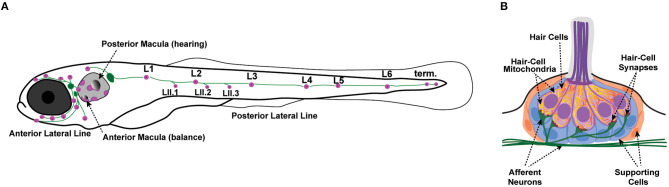
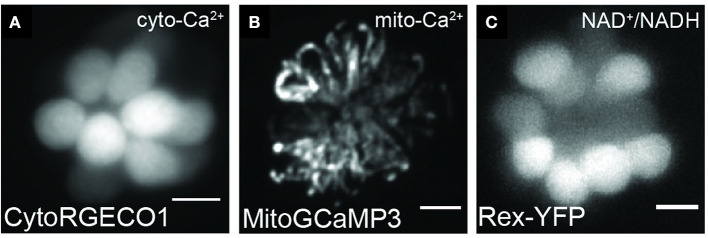
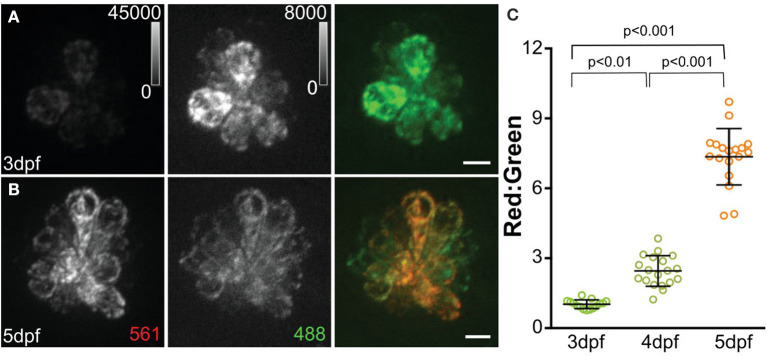
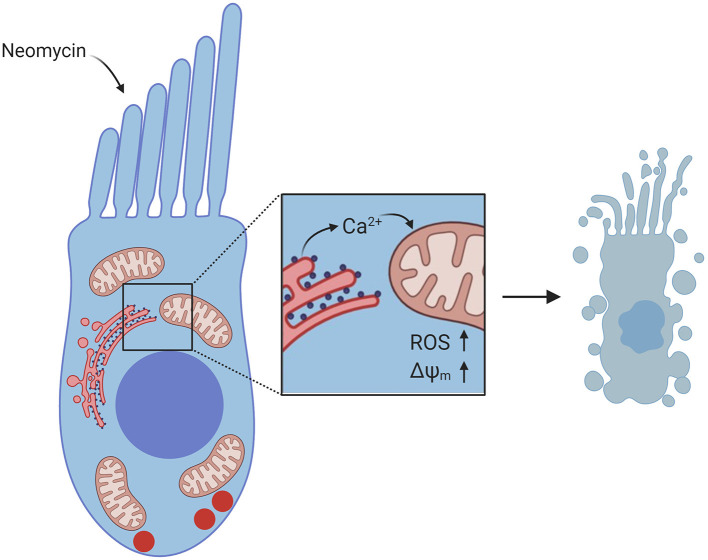
Hair cells are the mechanosensory receptors of the inner ear and can be damaged by noise, aging, and ototoxic drugs. This damage often results in permanent sensorineural hearing loss. Hair cells have high energy demands and rely on mitochondria to produce ATP as well as contribute to intracellular calcium homeostasis. In addition to generating ATP, mitochondria produce reactive oxygen species, which can lead to oxidative stress, and regulate cell death pathways. Zebrafish lateral-line hair cells are structurally and functionally analogous to cochlear hair cells but are optically and pharmacologically accessible within an intact specimen, making the zebrafish a good model in which to study hair-cell mitochondrial activity. Moreover, the ease of genetic manipulation of zebrafish embryos allows for the study of mutations implicated in human deafness, as well as the generation of transgenic models to visualize mitochondrial calcium transients and mitochondrial activity in live organisms. Studies of the zebrafish lateral line have shown that variations in mitochondrial activity can predict hair-cell susceptibility to damage by aminoglycosides or noise exposure. In addition, antioxidants have been shown to protect against noise trauma and ototoxic drug-induced hair-cell death. In this review, we discuss the tools and findings of recent investigations into zebrafish hair-cell mitochondria and their involvement in cellular processes, both under homeostatic conditions and in response to noise or ototoxic drugs. The zebrafish lateral line is a valuable model in which to study the roles of mitochondria in hair-cell pathologies and to develop therapeutic strategies to prevent sensorineural hearing loss in humans.
毛细胞是内耳的机械感觉感受器,会受到噪音、衰老和耳毒性药物的损害。这种损害通常会导致永久性感音神经性听力损失。毛细胞对能量需求很高,依赖线粒体产生ATP,并有助于细胞内钙稳态。除了产生ATP,线粒体还会产生活性氧,这可能导致氧化应激,并调节细胞死亡途径。斑马鱼侧线毛细胞在结构和功能上与耳蜗毛细胞相似,但在完整标本中可进行光学和药理学研究,这使得斑马鱼成为研究毛细胞线粒体活性的良好模型。此外,斑马鱼胚胎易于进行基因操作,这有助于研究与人类耳聋相关的突变,以及生成转基因模型以可视化活生物体中的线粒体钙瞬变和线粒体活性。对斑马鱼侧线的研究表明,线粒体活性的变化可以预测毛细胞对氨基糖苷类药物或噪音暴露损害的易感性。此外,抗氧化剂已被证明可以预防噪音损伤和耳毒性药物诱导的毛细胞死亡。在这篇综述中,我们讨论了最近对斑马鱼毛细胞线粒体及其在细胞过程中的作用的研究工具和发现,这些研究涉及稳态条件下以及对噪音或耳毒性药物的反应。斑马鱼侧线是研究线粒体在毛细胞病变中的作用以及开发预防人类感音神经性听力损失治疗策略的宝贵模型。