Postgraduate Program in Tropical Biodiversity, School of Environmental Sciences, Federal University of Amapá, Rod. Juscelino Kubitscheck, km 02, Macapá, 68903-419, Brazil.
Ecology and Conservation of Amazonian Vertebrates Research Group, Federal University of Amapá, Rod. Juscelino Kubitscheck, km 02, Macapá, 68903-419, Brazil.
Sci Rep. 2021 Feb 22;11(1):4302. doi: 10.1038/s41598-021-83803-y.
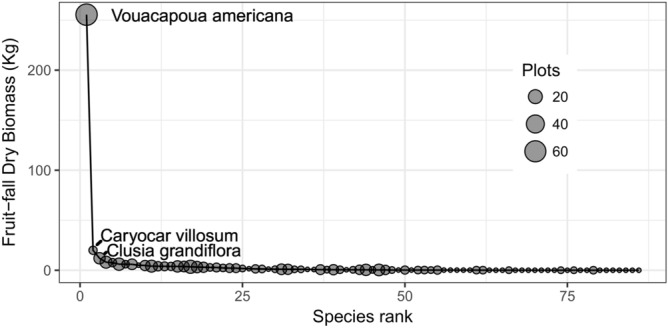
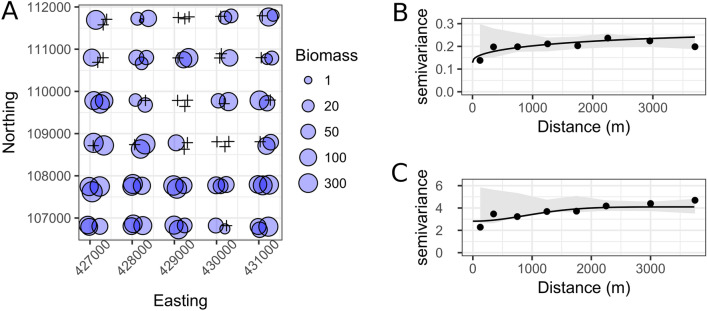
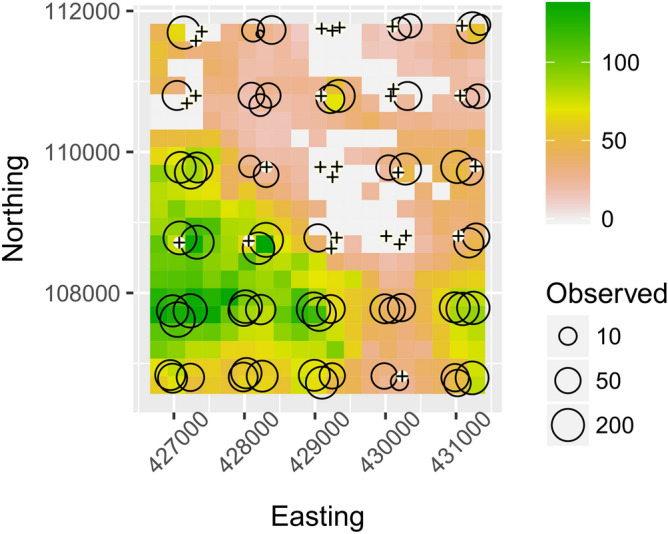
Fruit-fall provides the transfer of biomass and nutrients between forest strata and remains a poorly understood component of Amazon forest systems. Here we detail fruit-fall patterns including those of Vouacapoua americana a Critically Endangered timber species across 25 km of lowland Amazon forest in 2016. We use multi-model comparisons and an ensemble model to explain and interpolate fruit-fall data collected in 90 plots (totaling 4.42 ha). By comparing patterns in relation to observed and remotely sensed biomass estimates we establish the seasonal contribution of V. americana fruit-fall biomass. Overall fruit-fall biomass was 44.84 kg ha month from an average of 44.55 species per hectare, with V. americana dominating both the number and biomass of fallen fruits (43% and 64%, number and biomass respectively). Spatially explicit interpolations provided an estimate of 114 Mg dry biomass of V. americana fruit-fall across the 25 km area. This quantity represents the rapid transfer by a single species of between 0.01 and 0.02% of the overall above ground standing biomass in the area. These findings support calls for a more detailed understanding of the contribution of individual species to carbon and nutrient flows in tropical forest systems needed to evaluate the impacts of population declines predicted from short (< 65 year) logging cycles.
果实掉落将生物量和养分在森林各层之间进行传递,这仍然是亚马逊森林系统中一个了解甚少的组成部分。在这里,我们详细介绍了果实掉落模式,包括 2016 年在亚马逊低地森林的 25 公里范围内极度濒危木材物种 Vouacapoua americana 的果实掉落模式。我们使用多模型比较和集成模型来解释和内插在 90 个样地(总计 4.42 公顷)中收集的果实掉落数据。通过比较与观测和遥感生物量估计相关的模式,我们确定了 V. americana 果实掉落生物量的季节性贡献。总体而言,果实掉落生物量为每个月 44.84 公斤/公顷,平均每公顷有 44.55 个物种,其中 V. americana 既主导着掉落果实的数量,也主导着掉落果实的生物量(数量分别占 43%和 64%,生物量分别占 43%和 64%)。空间明确的插值提供了该 25 公里区域内 V. americana 果实掉落的 114 干生物量估计值。这个数量代表了单一物种在该区域总地上生物量的 0.01%至 0.02%之间的快速转移。这些发现支持了人们的呼吁,即需要更详细地了解个别物种对热带森林系统碳和养分流动的贡献,以便评估预测的短期(<65 年)采伐周期导致的种群减少对这些流动的影响。