Etale Anita, Nhlane Dineo S, Mosai Alseno K, Mhlongo Jessica, Khan Aaliyah, Rumbold Karl, Nuapia Yannick B
Global Change Institute, University of the Witwatersrand, Johannesburg 2000, South Africa, Johannesburg, Gauteng, 2000, South Africa.
Molecular Sciences Institute, School of Chemistry, University of the Witwatersrand, Johannesburg 2000, South Africa, Johannesburg, Gauteng, 2000, South Africa.
AAS Open Res. 2021 Jan 21;4:4. doi: 10.12688/aasopenres.13182.1. eCollection 2021.
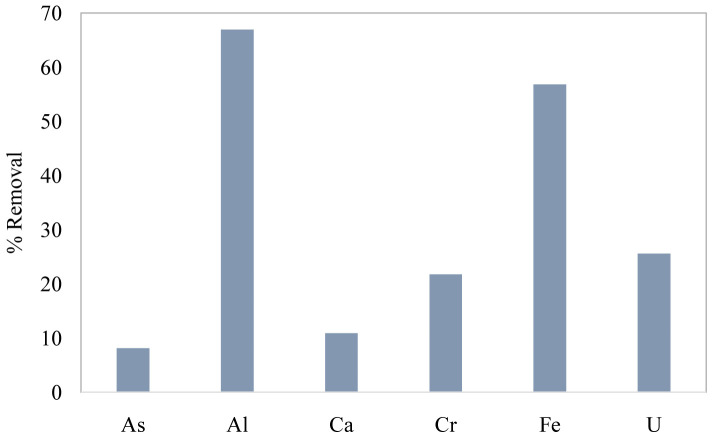
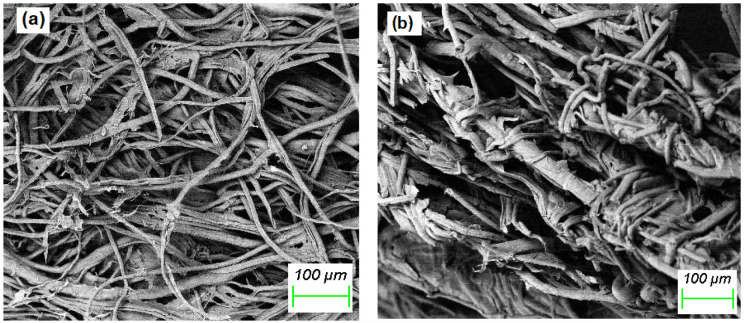
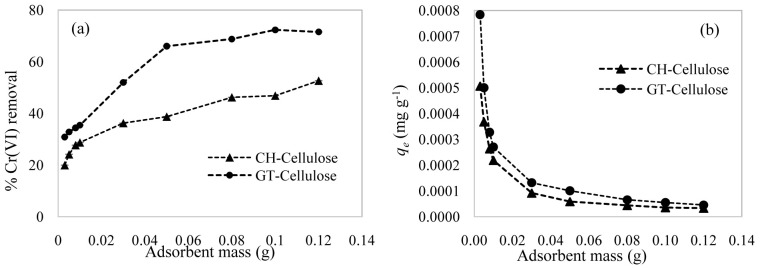
Acid mine drainage (AMD) leads to contamination of surface and ground water by high levels of toxic metals including chromium. In many cases, these waters are sources of drinking water for communities, and treatment is therefore required before consumption to prevent negative health effects. Cationised hemp cellulose was prepared by etherification with two quaternary ammonium salts: 3-chloro-2-hydroxypropyl trimethyl ammonium chloride (CHPTAC) and glycidyltrimethylammonium chloride (GTMAC) and examined for (i) the efficiency of Cr(VI) removal under acid mine-drainage (AMD) conditions, and (ii) antibacterial activity. Adsorbents were characterised by electron microscopy, Fourier transform infrared (FTIR), CP-MAS C nuclear magnetic resonance (NMR) spectroscopy, elemental composition and surface charge. FTIR and solid state C NMR confirmed the introduction of quaternary ammonium moieties on cellulose. C NMR also showed that cationisation decreased the degree of crystallisation and lateral dimensions of cellulose fibrils. Nevertheless, 47 % - 72 % of Cr(VI) ions were removed from solutions at pH 4, by 0.1 g of CHPTAC and GTMAC-cationised cellulose, respectively. Adsorption kinetics followed the pseudo-second order model and isotherms were best described by the Freundlich and Dubinin-Radushkevich models. When GTMAC-modified cellulose was applied to AMD contaminated water (pH 2.7); however, Cr(VI) removal decreased to 22% likely due to competition from Al and Fe ions. Cationised materials displayed considerable antibacterial effects, reducing the viability of by up to 45 % after just 3 hours of exposure. Together, these results suggest that cationised cellulose can be applied in the treatment of Cr(VI)-contaminated mine water particularly if pre-treatments to reduce Fe and Al concentrations are applied.
酸性矿山排水(AMD)会导致包括铬在内的高浓度有毒金属污染地表水和地下水。在许多情况下,这些水是社区的饮用水源,因此在饮用前需要进行处理以防止对健康产生负面影响。通过用两种季铵盐:3-氯-2-羟丙基三甲基氯化铵(CHPTAC)和缩水甘油基三甲基氯化铵(GTMAC)进行醚化反应制备了阳离子化大麻纤维素,并对其进行了以下研究:(i)在酸性矿山排水(AMD)条件下去除Cr(VI)的效率,以及(ii)抗菌活性。通过电子显微镜、傅里叶变换红外光谱(FTIR)、交叉极化魔角旋转碳核磁共振(NMR)光谱、元素组成和表面电荷对吸附剂进行了表征。FTIR和固态碳NMR证实了纤维素上引入了季铵基团。碳NMR还表明阳离子化降低了纤维素原纤维的结晶度和横向尺寸。然而,分别用0.1 g的CHPTAC和GTMAC阳离子化纤维素在pH值为4的溶液中可去除47%-72%的Cr(VI)离子。吸附动力学遵循准二级模型,等温线最好用Freundlich模型和Dubinin-Radushkevich模型来描述。然而,当将GTMAC改性纤维素应用于受AMD污染的水(pH 2.7)时,由于Al和Fe离子的竞争,Cr(VI)的去除率降至22%。阳离子化材料表现出相当大的抗菌作用,暴露仅3小时后就可使细菌活力降低高达45%。总之,这些结果表明阳离子化纤维素可应用于处理受Cr(VI)污染的矿井水,特别是如果采用预处理来降低Fe和Al的浓度。