Mycobacterium Research Laboratory, Rajiv Gandhi Centre for Biotechnology, Thiruvananthapuram, Kerala, India.
mSphere. 2021 Feb 24;6(1):e00036-21. doi: 10.1128/mSphere.00036-21.
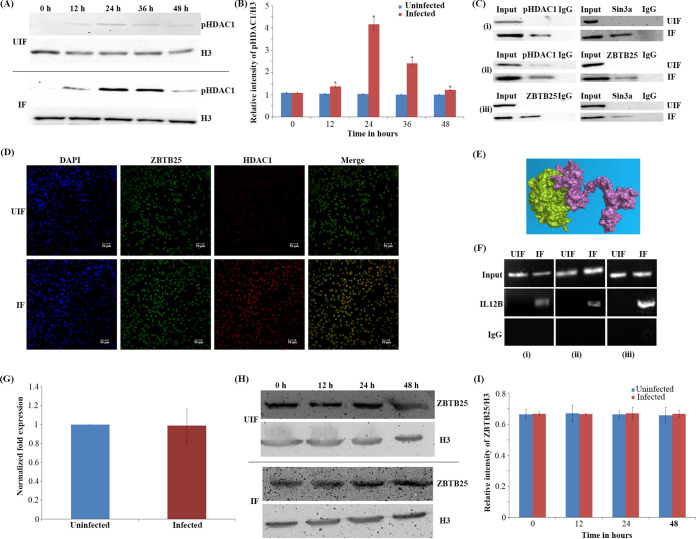
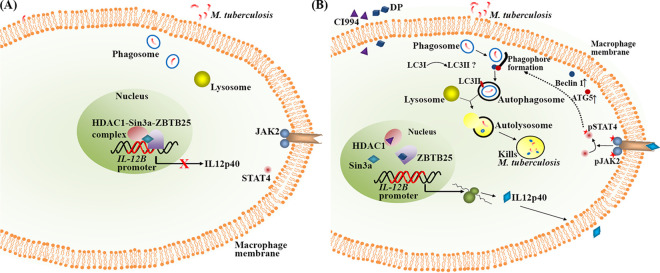
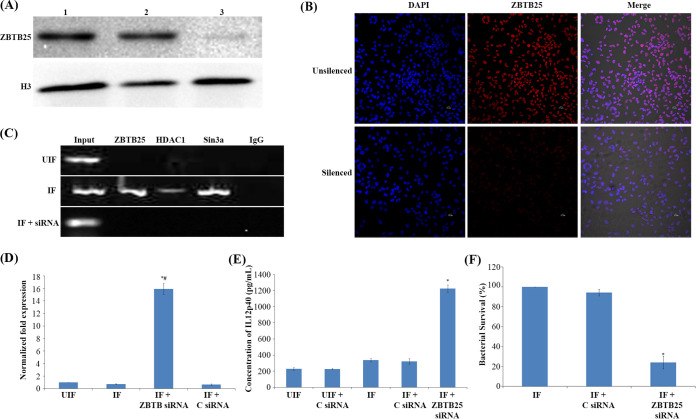
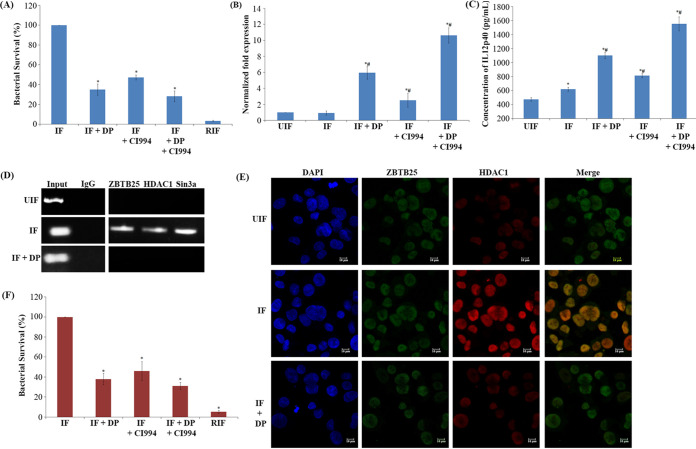
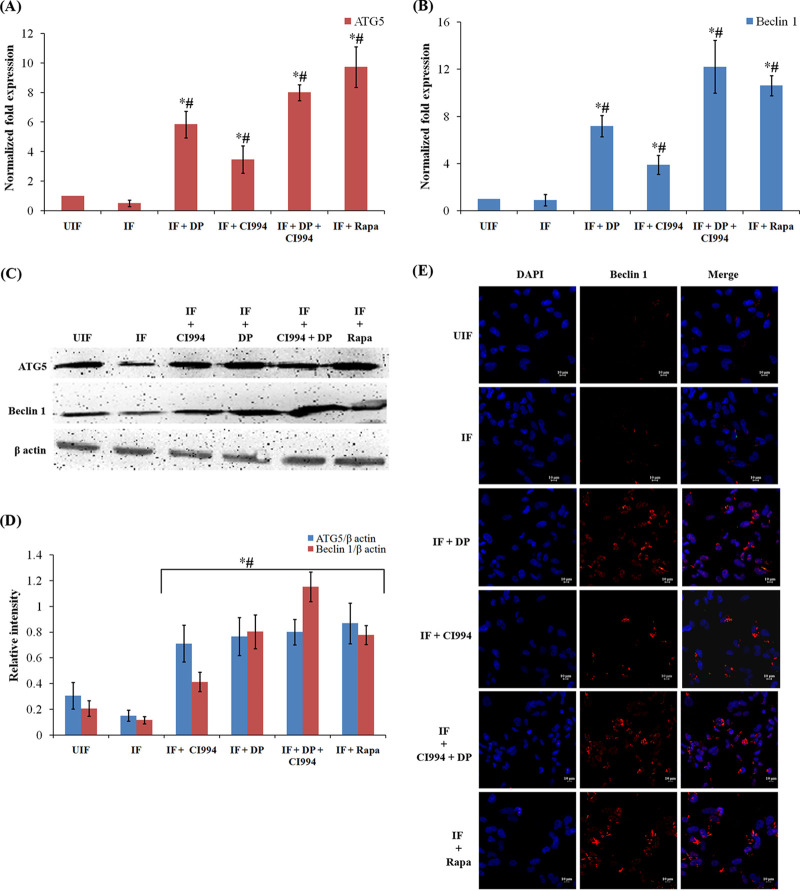
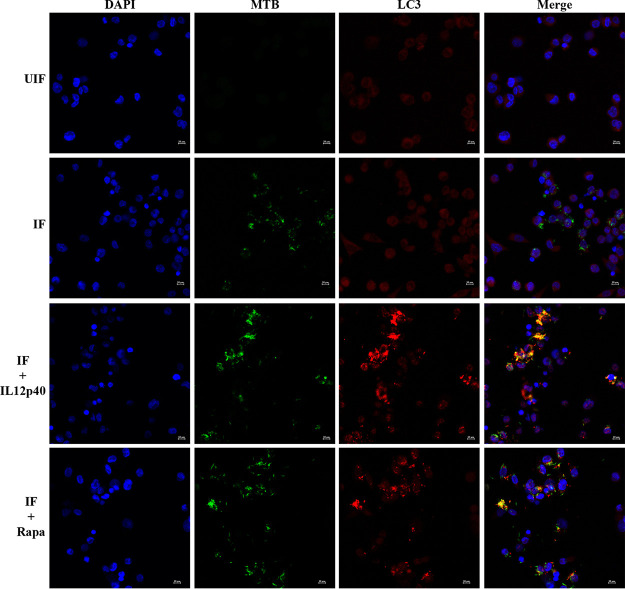
Downregulation of host gene expression is a key strategy employed by intracellular pathogens for their survival in macrophages and subsequent pathogenesis. In a previous study, we have shown that histone deacetylase 1 (HDAC1) levels go up in macrophages infected with , and it hypoacetylates histone H3 at the promoter of gene, leading to its downregulation. We now show that after infection with , HDAC1 is phosphorylated, and the levels of phosphorylated HDAC1 (pHDAC1) increase significantly in macrophages. We found that transcriptional repressor protein zinc finger and BTB domain 25 (ZBTB25) and transcriptional corepressor Sin3a associate with the HDAC1 silencing complex, which is recruited to the promoter of to downregulate its expression in infected macrophages. Knocking down of enhanced release of IL-12p40 from infected macrophages. Inhibition of HDAC1 and ZBTB25 promoted colocalization of and LC3 (microtubule-associated protein 1A/1B-light chain 3) in autophagosomes. Induction of autophagy resulted in the killing of intracellular Enhanced phosphorylation of JAK2 and STAT4 was observed in macrophages upon treatment with HDAC1 and ZBTB inhibitors, and inhibition of JAK2/STAT4 negated the killing of the intracellular pathogen, suggesting their role in the autophagy-mediated killing of intracellular In view of the emergence of drug resistance in , host-directed therapy is an attractive alternative strategy to combat tuberculosis (TB). HDACs have been proposed to be host targets for TB treatment. Our study indicates that ZBTB25, a functional subunit of the HDAC1/Sin3a repressor complex involved in suppression, could be an alternative target for host-directed anti-TB therapy. Following infection with , levels of HDAC1 go up in macrophages, and it is recruited to the promoter of where it hypoacetylates histone H3, leading to the downregulation of the gene. Here, we show that host transcriptional repressor protein ZBTB25 and transcriptional corepressor Sin3a associate with HDAC1 in the silencing complex. Knocking down of prevented the recruitment of the complex to the promoter and consequently enhanced the gene expression and the release of IL-12p40 from infected macrophages. Pharmacological inhibition of ZBTB25 in infected macrophages resulted in the induction of autophagy and killing of intracellular Drug-resistant TB is a serious challenge to TB control programs all over the world which calls for finding alternative therapeutic methods. Host-directed therapy is gaining significant momentum in treating infectious diseases. We propose that ZBTB25 is a potential target for host-directed treatment of TB.
宿主基因表达的下调是细胞内病原体在巨噬细胞中生存和随后发病的关键策略。在之前的研究中,我们已经表明,感染 后组蛋白去乙酰化酶 1(HDAC1)水平升高,并且它在 基因启动子处使组蛋白 H3 低乙酰化,导致其下调。我们现在表明,感染 后,HDAC1 被磷酸化,并且巨噬细胞中磷酸化的 HDAC1(pHDAC1)水平显著增加。我们发现转录抑制蛋白锌指和 BTB 结构域蛋白 25(ZBTB25)和转录共抑制因子 Sin3a 与 HDAC1 沉默复合物结合,该复合物被募集到 的启动子,以在感染的巨噬细胞中下调其表达。 的敲低增强了感染巨噬细胞中 IL-12p40 的释放。抑制 HDAC1 和 ZBTB25 促进了自噬体中 和 LC3(微管相关蛋白 1A/1B-轻链 3)的共定位。自噬的诱导导致细胞内 的杀伤增强。在用 HDAC1 和 ZBTB 抑制剂处理巨噬细胞时观察到 JAK2 和 STAT4 的磷酸化增强,并且 JAK2/STAT4 的抑制消除了细胞内病原体的杀伤,表明它们在自噬介导的细胞内 的杀伤中起作用。鉴于 出现耐药性,宿主导向治疗是对抗结核病(TB)的一种有吸引力的替代策略。已经提出组蛋白去乙酰化酶(HDACs)可作为治疗结核病的宿主靶标。我们的研究表明,参与 抑制的 HDAC1/Sin3a 抑制复合物的功能性亚基 ZBTB25 可能是宿主导向抗结核治疗的替代靶标。感染 后,巨噬细胞中的 HDAC1 水平升高,它被募集到 的启动子,在那里它使组蛋白 H3 低乙酰化,导致基因下调。在这里,我们表明宿主转录抑制蛋白 ZBTB25 和转录共抑制因子 Sin3a 与沉默复合物中的 HDAC1 结合。 的敲低阻止了复合物向启动子的募集,从而增强了感染巨噬细胞中基因的表达和 IL-12p40 的释放。在感染的巨噬细胞中抑制 ZBTB25 可诱导自噬并杀死细胞内 耐多药结核病是全世界结核病控制计划面临的严重挑战,这需要寻找替代的治疗方法。宿主导向治疗在治疗传染病方面正获得显著进展。我们提出 ZBTB25 是宿主导向治疗结核病的潜在靶点。