Department of Entomology, The Pennsylvania State University, University Park, PA, 16802, USA.
Sci Rep. 2021 Feb 24;11(1):4429. doi: 10.1038/s41598-021-83497-2.
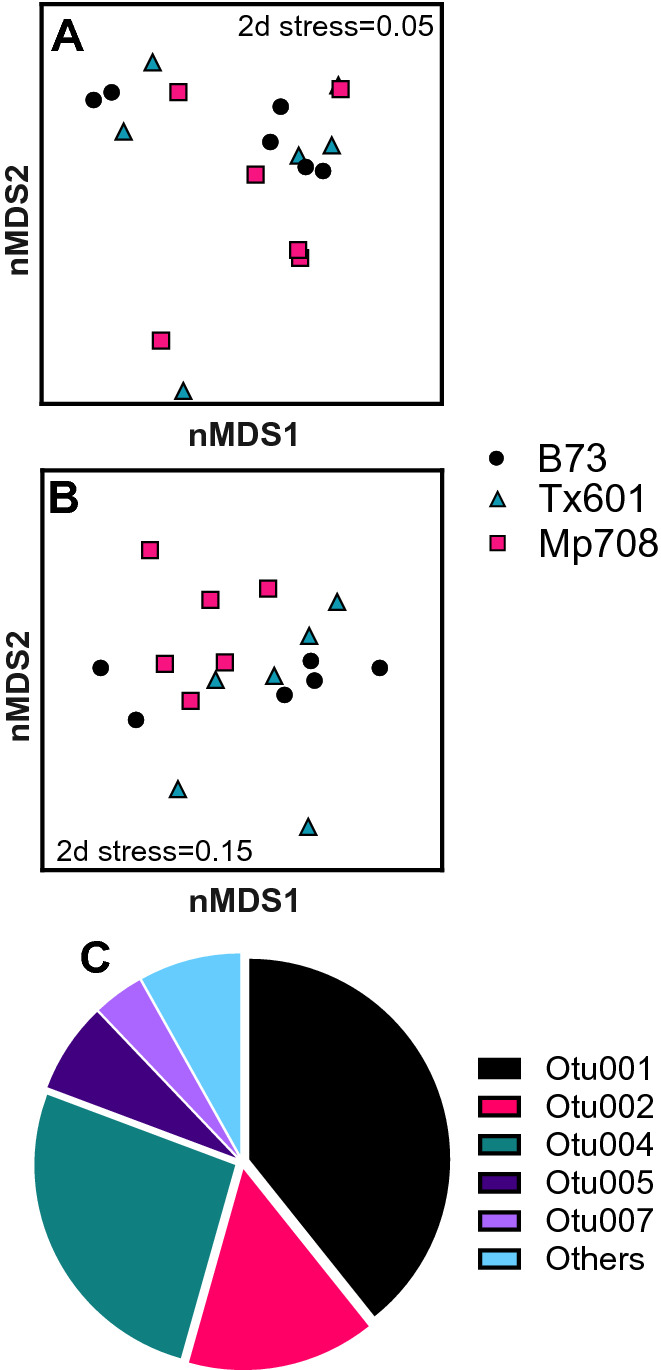
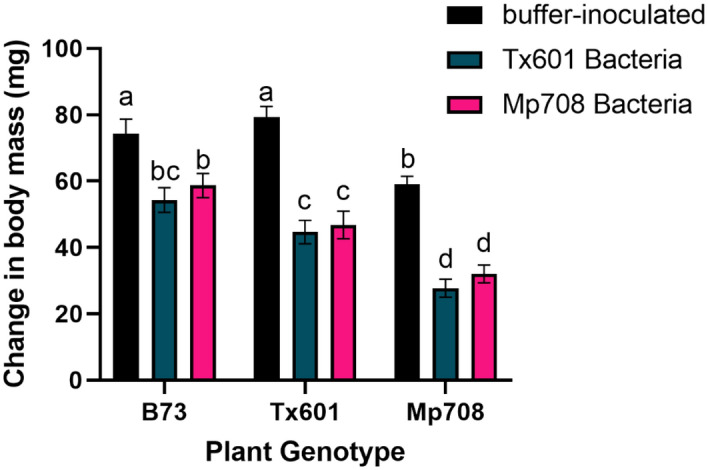
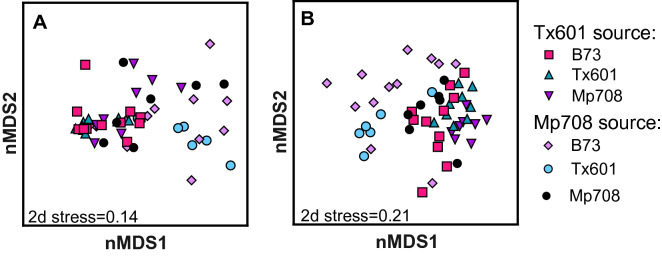
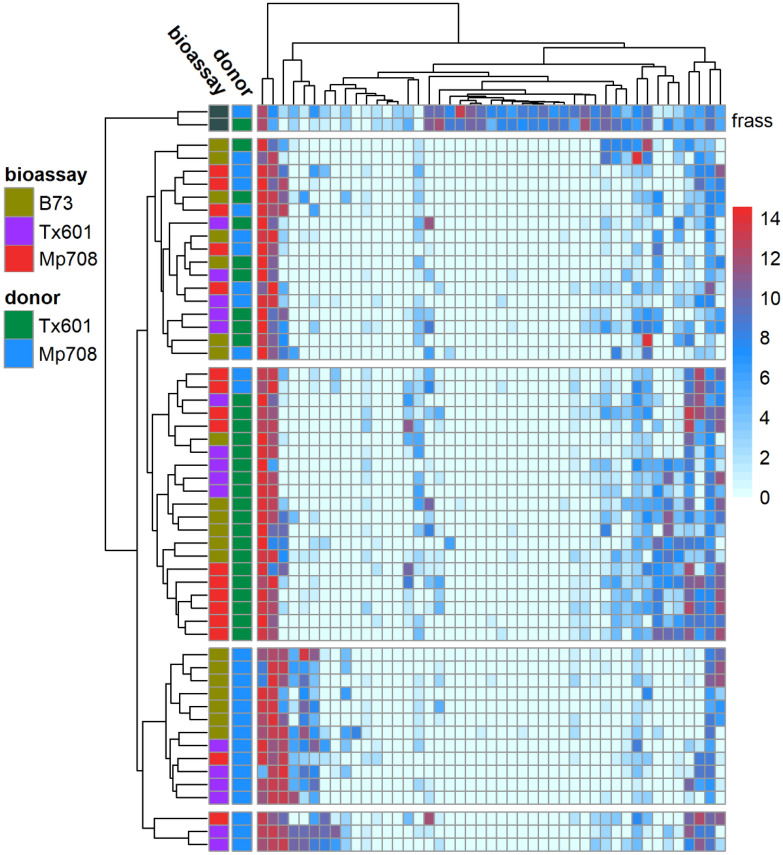
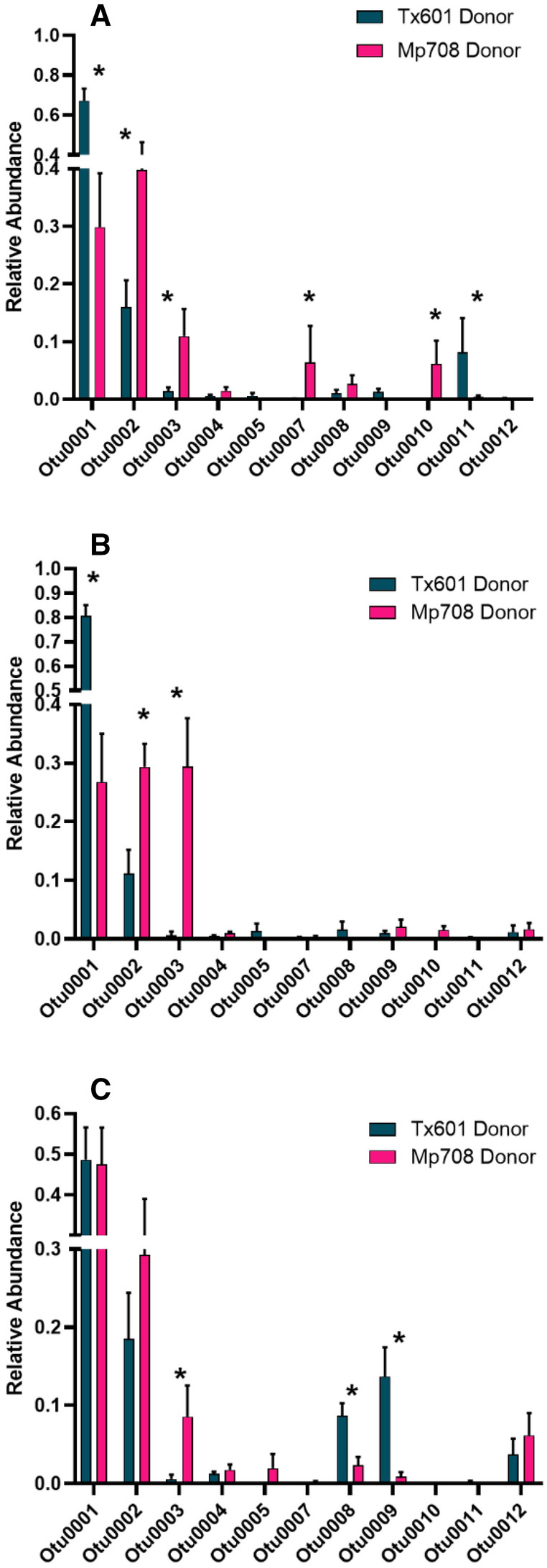
Plants can have fundamental roles in shaping bacterial communities associated with insect herbivores. For larval lepidopterans (caterpillars), diet has been shown to be a driving force shaping gut microbial communities, where the gut microbiome of insects feeding on different plant species and genotypes can vary in composition and diversity. In this study, we aimed to better understand the roles of plant genotypes, sources of microbiota, and the host gut environment in structuring bacterial communities. We used multiple maize genotypes and fall armyworm (Spodoptera frugiperda) larvae as models to parse these drivers. We performed a series of experiments using axenic larvae that received a mixed microbial community prepared from frass from larvae that consumed field-grown maize. The new larval recipients were then provided different maize genotypes that were gamma-irradiated to minimize bacteria coming from the plant during feeding. For field-collected maize, there were no differences in community structure, but we did observe differences in gut community membership. In the controlled experiment, the microbial inoculation source, plant genotype, and their interactions impacted the membership and structure of gut bacterial communities. Compared to axenic larvae, fall armyworm larvae that received frass inoculum experienced reduced growth. Our results document the role of microbial sources and plant genotypes in contributing to variation in gut bacterial communities in herbivorous larvae. While more research is needed to shed light on the mechanisms driving this variation, these results provide a method for incorporating greater gut bacterial community complexity into laboratory-reared larvae.
植物在塑造与昆虫食草动物相关的细菌群落方面可以发挥重要作用。对于幼虫鳞翅目昆虫(毛毛虫)来说,饮食被证明是塑造肠道微生物群落的驱动力,而以不同植物物种和基因型为食的昆虫的肠道微生物组在组成和多样性上可能有所不同。在这项研究中,我们旨在更好地理解植物基因型、微生物来源和宿主肠道环境在构建细菌群落方面的作用。我们使用了多种玉米基因型和秋粘虫(Spodoptera frugiperda)幼虫作为模型来解析这些驱动因素。我们使用无菌幼虫进行了一系列实验,这些幼虫接收了从食用田间生长的玉米的幼虫粪便中制备的混合微生物群落。然后,新的幼虫接受者被提供不同的经伽马射线照射的玉米基因型,以最大限度地减少幼虫在进食过程中来自植物的细菌。对于田间采集的玉米,群落结构没有差异,但我们确实观察到肠道群落成员的差异。在对照实验中,微生物接种源、植物基因型及其相互作用影响了肠道细菌群落的成员和结构。与无菌幼虫相比,接受粪便接种物的秋粘虫幼虫的生长速度降低。我们的研究结果记录了微生物来源和植物基因型在导致食草幼虫肠道细菌群落变化方面的作用。虽然需要更多的研究来阐明驱动这种变化的机制,但这些结果为在实验室饲养的幼虫中纳入更复杂的肠道细菌群落提供了一种方法。