Houwman Joseline A, Knaus Tanja, Costa Magda, Mutti Francesco G
Van 't Hoff Institute for Molecular Sciences, HIMS-Biocat, University of Amsterdam, Science Park 904, 1098 XH, The Netherlands.
Green Chem. 2019 Jul 14;21(14):3846-3857. doi: 10.1039/C9GC01059A. Epub 2019 Jun 25.
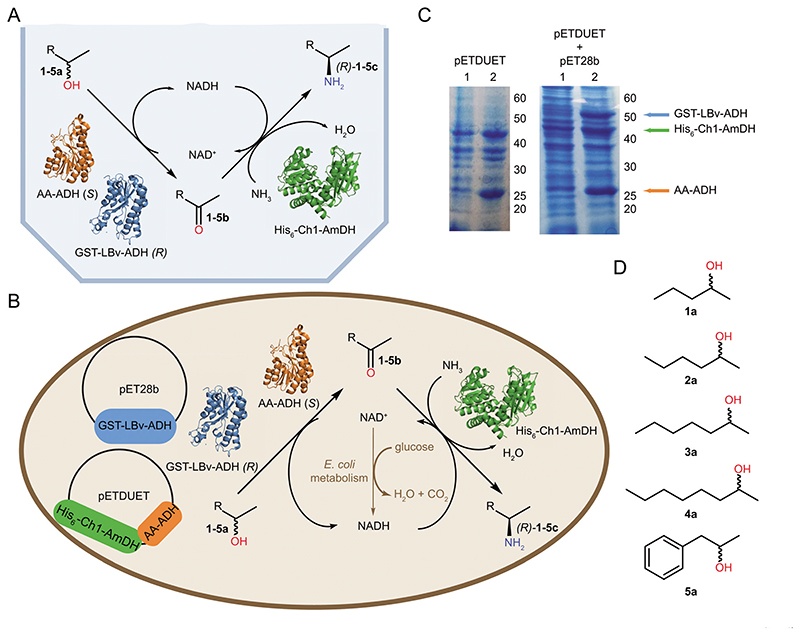
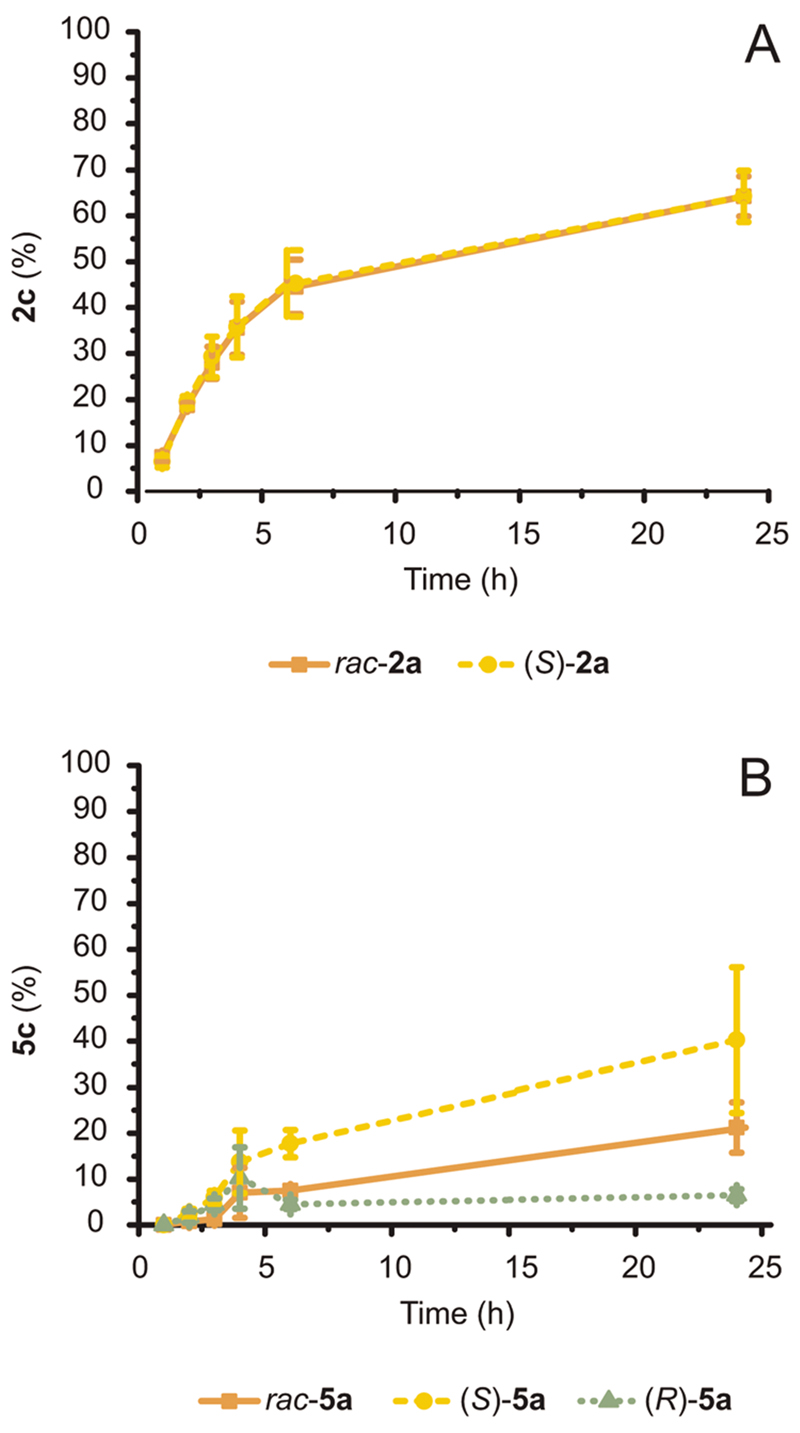
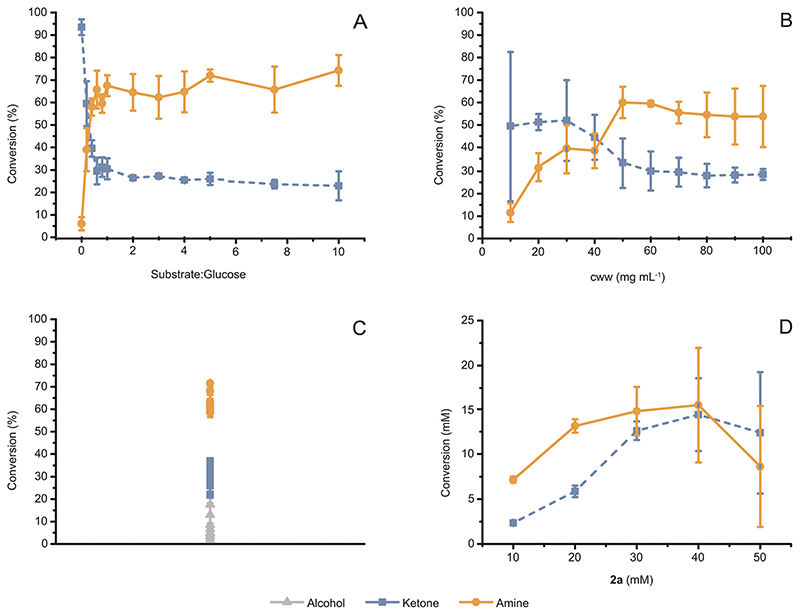
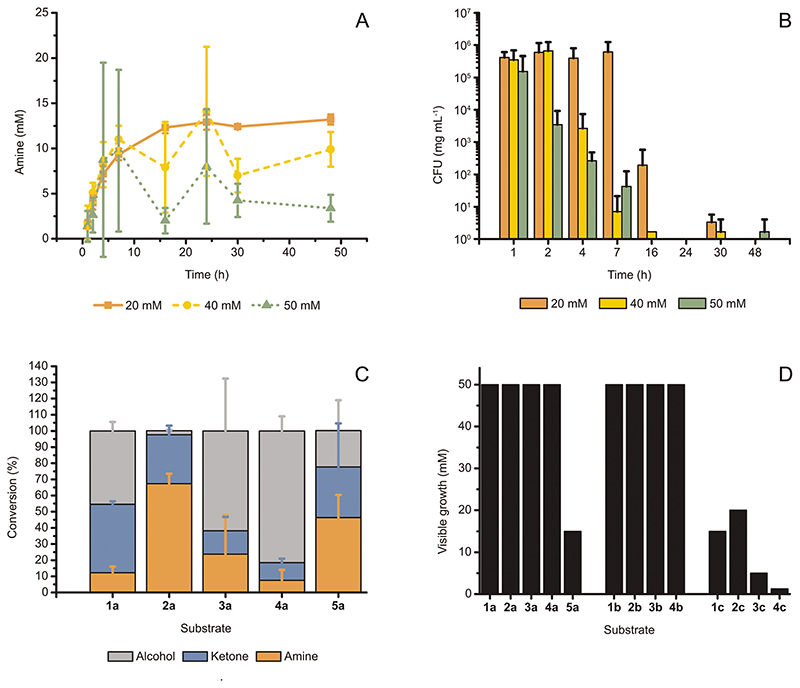
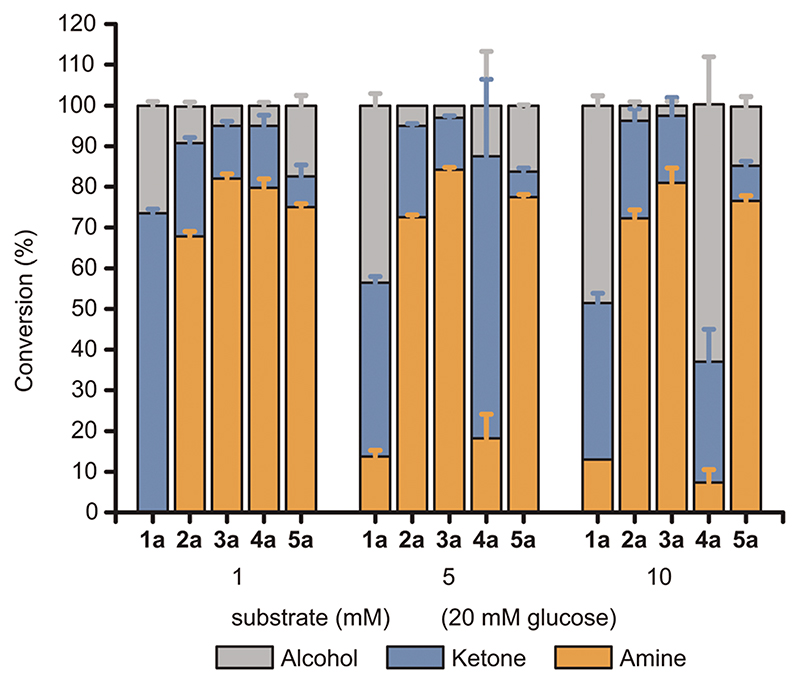
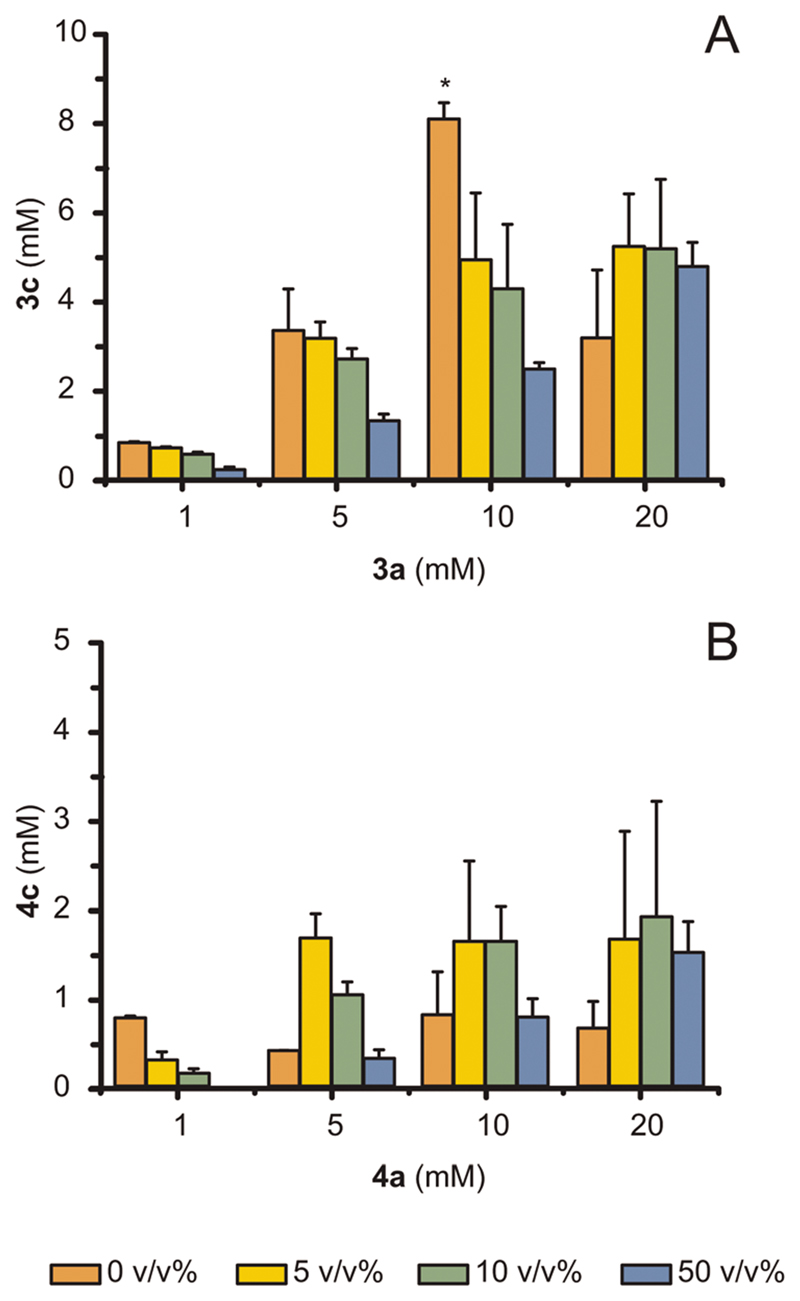
-Chiral amines are pivotal building blocks for chemical manufacturing. Stereoselective amination of alcohols is receiving increased interest due to its higher atom-efficiency and overall improved environmental footprint compared with other chemocatalytic and biocatalytic methods. We previously developed a hydrogen-borrowing amination by combining an alcohol dehydrogenase (ADH) with an amine dehydrogenase (AmDH) . Herein, we implemented the ADH-AmDH bioamination in resting cells for the first time. Different genetic constructs were created and tested in order to obtain balanced expression levels of the dehydrogenase enzymes in . Using the optimized constructs, the influence of several parameters towards the productivity of the system were investigated such as the intracellular NAD/NADH redox balance, the cell loading, the survival rate of recombinant cells, the possible toxicity of the components of the reaction at different concentrations and the influence of different substrates and cosolvents. In particular, the cofactor redox-balance for the bioamination was maintained by the addition of moderate and precise amounts of glucose. Higher concentrations of certain amine products resulted in toxicity and cell death, which could be alleviated by the addition of a co-solvent. Notably, amine formation was consistent using several independently grown batches. The optimized /ADH-AmDH strains produced enantiopure amines from the alcohols with up to 80% conversion and a molar productivity up to 15 mM. Practical applicability was demonstrated in a gram-scale biotransformation. In summary, the present -ADH-AmDH system represents an important advancement towards the development of 'green', efficient and selective biocatalytic processes for the amination of alcohols.
手性胺是化学制造的关键构建模块。与其他化学催化和生物催化方法相比,醇的立体选择性胺化因其更高的原子效率和整体改善的环境足迹而受到越来越多的关注。我们之前通过将醇脱氢酶(ADH)与胺脱氢酶(AmDH)结合开发了一种借氢胺化反应。在此,我们首次在静息细胞中实现了ADH-AmDH生物胺化反应。构建并测试了不同的基因构建体,以在[具体细胞名称]中获得脱氢酶的平衡表达水平。使用优化后的构建体,研究了几个参数对该系统生产力的影响,如细胞内NAD/NADH氧化还原平衡、细胞负载量、重组细胞的存活率、不同浓度下反应组分可能的毒性以及不同底物和助溶剂的影响。特别是,通过添加适量且精确的葡萄糖来维持生物胺化反应的辅因子氧化还原平衡。某些胺产物的高浓度会导致毒性和细胞死亡,添加助溶剂可缓解这种情况。值得注意的是,使用几个独立培养的批次进行胺的生成是一致的。优化后的[具体细胞名称]/ADH-AmDH菌株从醇中生产对映体纯的胺,转化率高达80%,摩尔生产力高达15 mM。在克级生物转化中证明了其实际适用性。总之,目前的[具体细胞名称]-ADH-AmDH系统代表了在开发用于醇胺化的“绿色”、高效和选择性生物催化过程方面的一项重要进展。