Yang Tiansong, Wang Qingyong, Qu Yuanyuan, Liu Yan, Feng Chuwen, Wang Yulin, Sun Weibo, Sun Zhongren, Zhu Yulan
First affiliated hospital, Heilongjiang University of Chinese Medicine, Harbin, China.
Heilongjiang University of Chinese Medicine, Harbin, China.
Evid Based Complement Alternat Med. 2021 Feb 12;2021:6671282. doi: 10.1155/2021/6671282. eCollection 2021.
The research aimed to identify the active component from L. to alleviate ischemia/reperfusion injury and clarify the underlying mechanism of the active component alleviating ischemia/reperfusion injury.
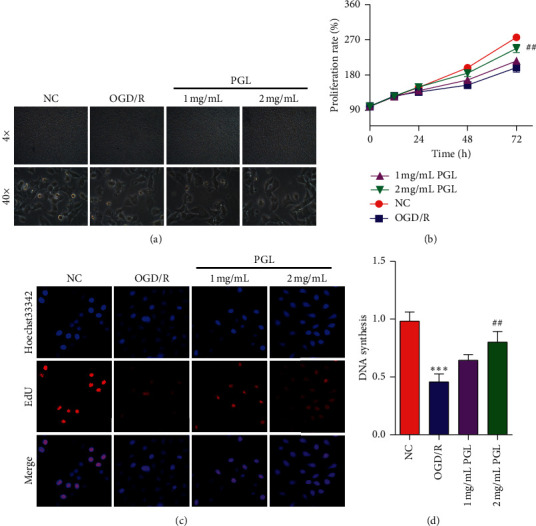
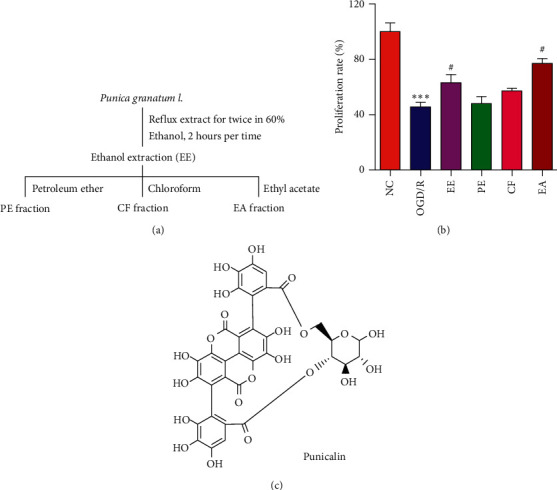
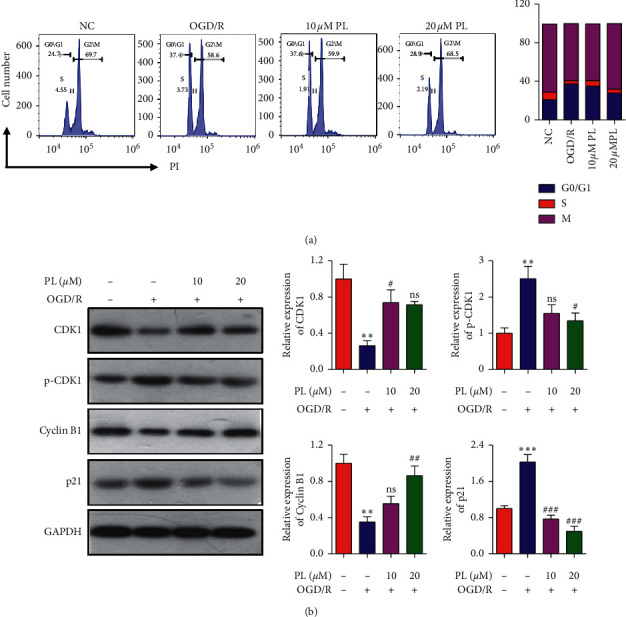
The SH-SY5Y cell model of oxygen-glucose deprivation/reoxygenation (OGD/R) was established to simulate the ischemia/reperfusion injury. According to the strategy of bioassay-guided isolation, the active component of punicalin from L. was identified. Flow cytometry and Western blotting were employed to evaluate the effects of OGD/R and/or punicalin on cell cycle arrest. Immunofluorescence assay was applied to assess the nucleus translocation. The relative content of ROS and GSH and the enzyme activities of CAT and SOD were examined using ELISA.
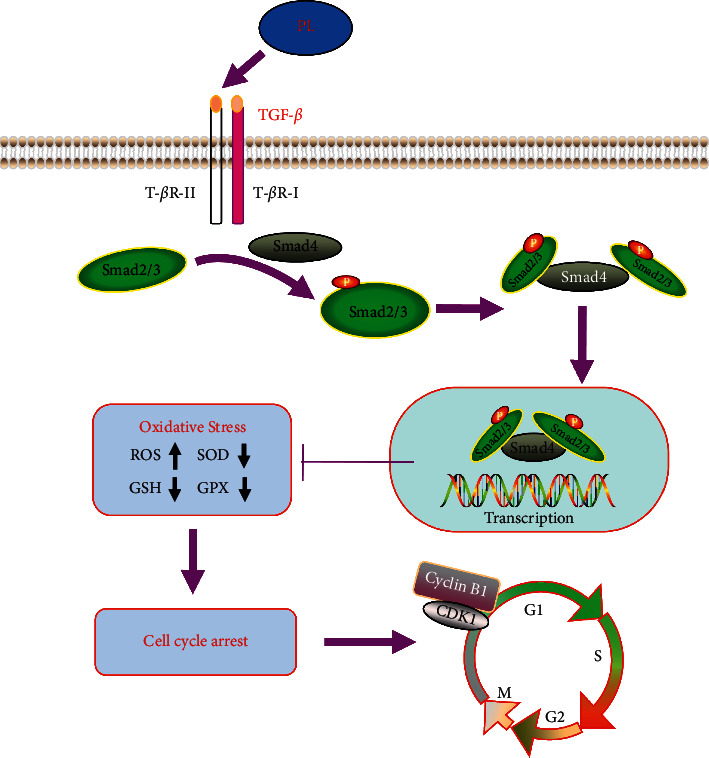
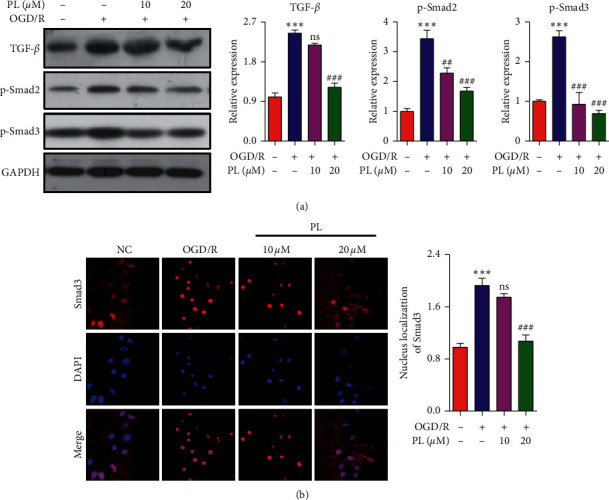
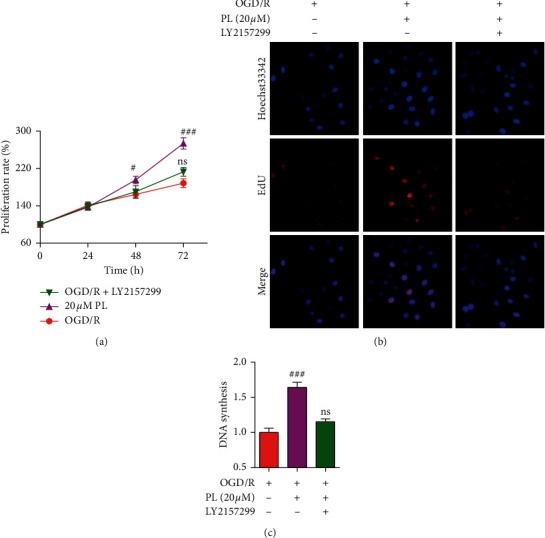
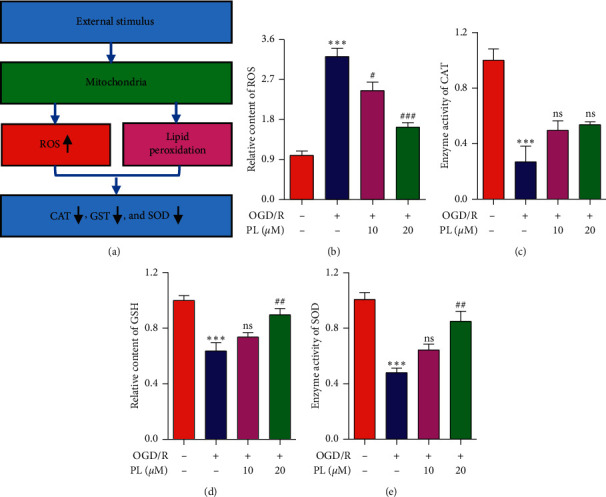
The data of bioassay-guided isolation showed that punicalin from L. could alleviate OGD/R-induced cell injury in SH-SY5Y cells. Flow cytometry analysis and Western blotting for probing the expression of CDK1, p-CDK1, cyclin B1, and p21 revealed that punicalin could relieve OGD/R-induced cell cycle G0/G1 arrest. Additionally, immunofluorescence assay and Western blotting for probing the expression of TGF- and p-Smad2/p-Smad3 showed that punicalin could relieve the OGD/R-induced TGF-/Smad pathway. Furthermore, the TGF-/Smad pathway inhibitor of LY2157299 was employed to confirm that the TGF-/Smad pathway is crucial to the effect of punicalin. At last, it was indicated that punicalin could relieve OGD/R-induced oxidative stress.
Punicalin, an active component from L., was identified as a protective agent to alleviate the OGD/R-induced cell injury, which could exert the protective effect via TGF-/Smad pathway-regulated oxidative stress and cell cycle arrest in SH-SY5Y cells.
本研究旨在从[植物名称]中鉴定出活性成分,以减轻缺血/再灌注损伤,并阐明该活性成分减轻缺血/再灌注损伤的潜在机制。
建立氧糖剥夺/复氧(OGD/R)的SH-SY5Y细胞模型以模拟缺血/再灌注损伤。根据生物活性导向分离策略,鉴定出[植物名称]中石榴皮苷的活性成分。采用流式细胞术和蛋白质免疫印迹法评估OGD/R和/或石榴皮苷对细胞周期阻滞的影响。应用免疫荧光分析法评估细胞核转位。使用酶联免疫吸附测定法检测活性氧(ROS)和谷胱甘肽(GSH)的相对含量以及过氧化氢酶(CAT)和超氧化物歧化酶(SOD)的酶活性。
生物活性导向分离数据表明,[植物名称]中的石榴皮苷可减轻OGD/R诱导的SH-SY5Y细胞损伤。流式细胞术分析和蛋白质免疫印迹法检测细胞周期蛋白依赖性激酶1(CDK1)、磷酸化CDK1(p-CDK1)、细胞周期蛋白B1(cyclin B1)和p21的表达,结果显示石榴皮苷可缓解OGD/R诱导的细胞周期G0/G1期阻滞。此外,免疫荧光分析法和蛋白质免疫印迹法检测转化生长因子β(TGF-β)和磷酸化Smad2/磷酸化Smad3(p-Smad2/p-Smad3)的表达,结果显示石榴皮苷可缓解OGD/R诱导的TGF-β/Smad信号通路。此外,使用LY2157299(一种TGF-β/Smad信号通路抑制剂)证实TGF-β/Smad信号通路对石榴皮苷的作用至关重要。最后,结果表明石榴皮苷可缓解OGD/R诱导的氧化应激。
从[植物名称]中鉴定出的活性成分石榴皮苷是一种减轻OGD/R诱导的细胞损伤的保护剂,其可通过TGF-β/Smad信号通路调节氧化应激和细胞周期阻滞在SH-SY5Y细胞中发挥保护作用。