State Key Laboratory of Oral Diseases, West China Hospital of Stomatology, Sichuan University, Chengdu, China.
West China School of Stomatology, Sichuan University, Chengdu, China.
Oxid Med Cell Longev. 2021 Feb 8;2021:6620306. doi: 10.1155/2021/6620306. eCollection 2021.
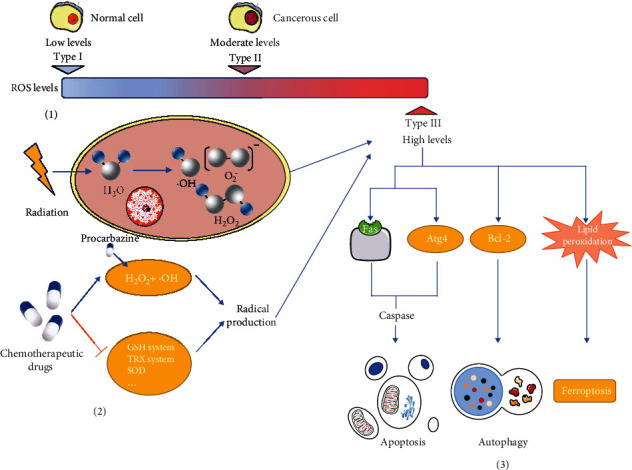
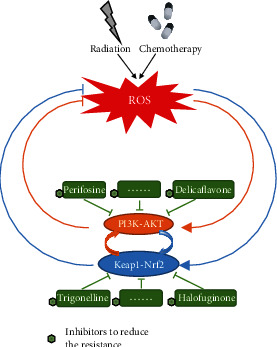
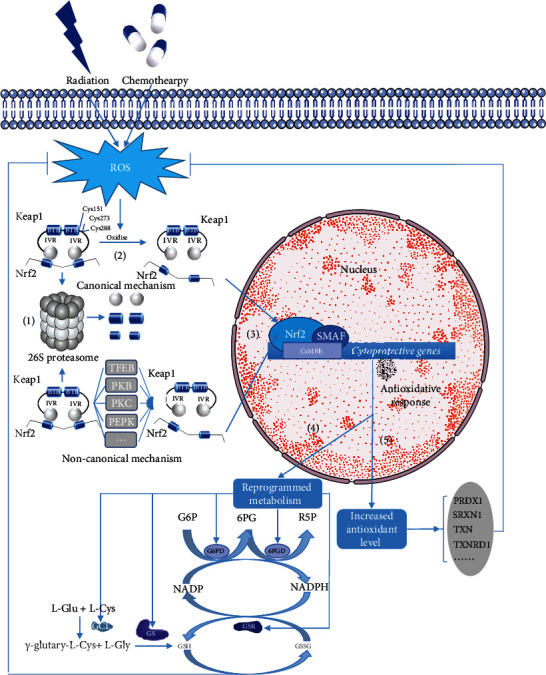
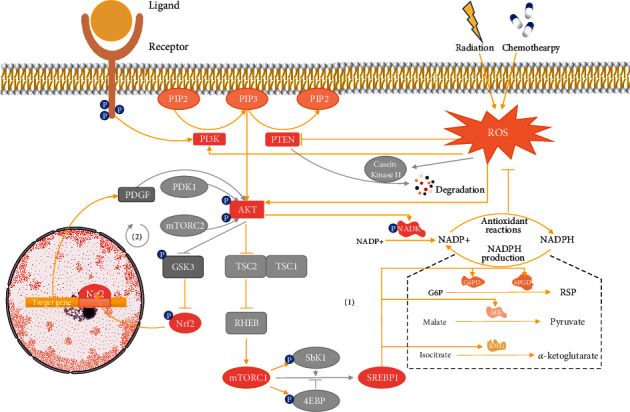
Radiotherapy and chemotherapy are the most effective nonsurgical treatments for cancer treatment. They usually induce regulated cell death by increasing the level of reactive oxygen species (ROS) in tumour cells. However, as intracellular ROS concentration increases, many antioxidant pathways are concurrently upregulated by cancer cells to inhibit ROS production, ultimately leading to drug resistance. Understanding the mechanism of antioxidant stress in tumour cells provides a new research direction for overcoming therapeutic resistance. In this review, we address (1) how radiotherapy and chemotherapy kill tumour cells by increasing the level of ROS, (2) the mechanism by which ROS activate antioxidant pathways and the subsequent cellular mitigation of ROS in radiotherapy and chemotherapy treatments, and (3) the potential research direction for targeted treatment to overcome therapeutic resistance.
放化疗是癌症治疗中最有效的非手术治疗方法。它们通常通过增加肿瘤细胞内活性氧(ROS)的水平来诱导细胞程序性死亡。然而,随着细胞内 ROS 浓度的增加,癌细胞会同时上调许多抗氧化途径来抑制 ROS 的产生,最终导致耐药性。了解肿瘤细胞抗氧化应激的机制为克服治疗抵抗提供了一个新的研究方向。在这篇综述中,我们探讨了(1)放化疗如何通过增加 ROS 水平来杀死肿瘤细胞,(2)ROS 激活抗氧化途径的机制以及随后在放化疗治疗中细胞对 ROS 的缓解,以及(3)靶向治疗以克服治疗抵抗的潜在研究方向。