Department of Clinical Microbiology, Hospital Universitario 12 de Octubre, Madrid, Spain; Research Institute Hospital 12 de Octubre, imas12, Madrid, Spain; Department of Medicine, Complutense University of Madrid, School of Medicine, Madrid, Spain.
Research Institute Hospital 12 de Octubre, imas12, Madrid, Spain.
Clin Microbiol Infect. 2021 Jun;27(6):886-891. doi: 10.1016/j.cmi.2021.02.014. Epub 2021 Feb 22.
This study compares the infectivity of SARS-CoV-2 in respiratory samples from patients with mild COVID-19 with those from hospitalized patients with severe bilateral pneumonia. In severe COVID-19, we also analysed the presence of neutralizing activity in paired sera.
We performed cell cultures on 193 real-time reverse transcription polymerase chain reaction respiratory samples, positive for SARS-CoV-2, obtained from 189 patients at various times, from clinical diagnosis to follow-up. Eleven samples were obtained from asymptomatic individuals, 91 samples from 91 outpatients with mild forms of COVID-19 and 91 samples from 87 inpatients with severe pneumonia. In these patients, neutralizing activity was analysed in 30 paired sera collected after symptom onset >10 days.
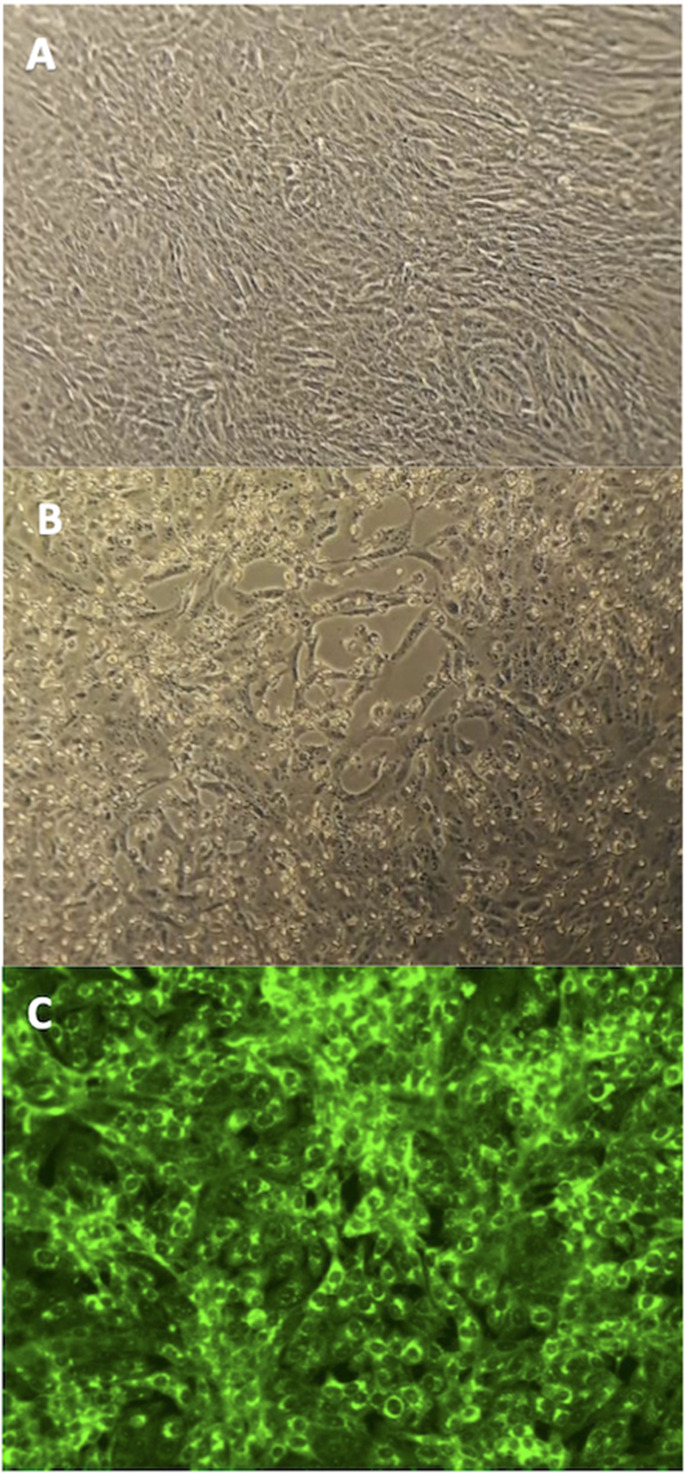
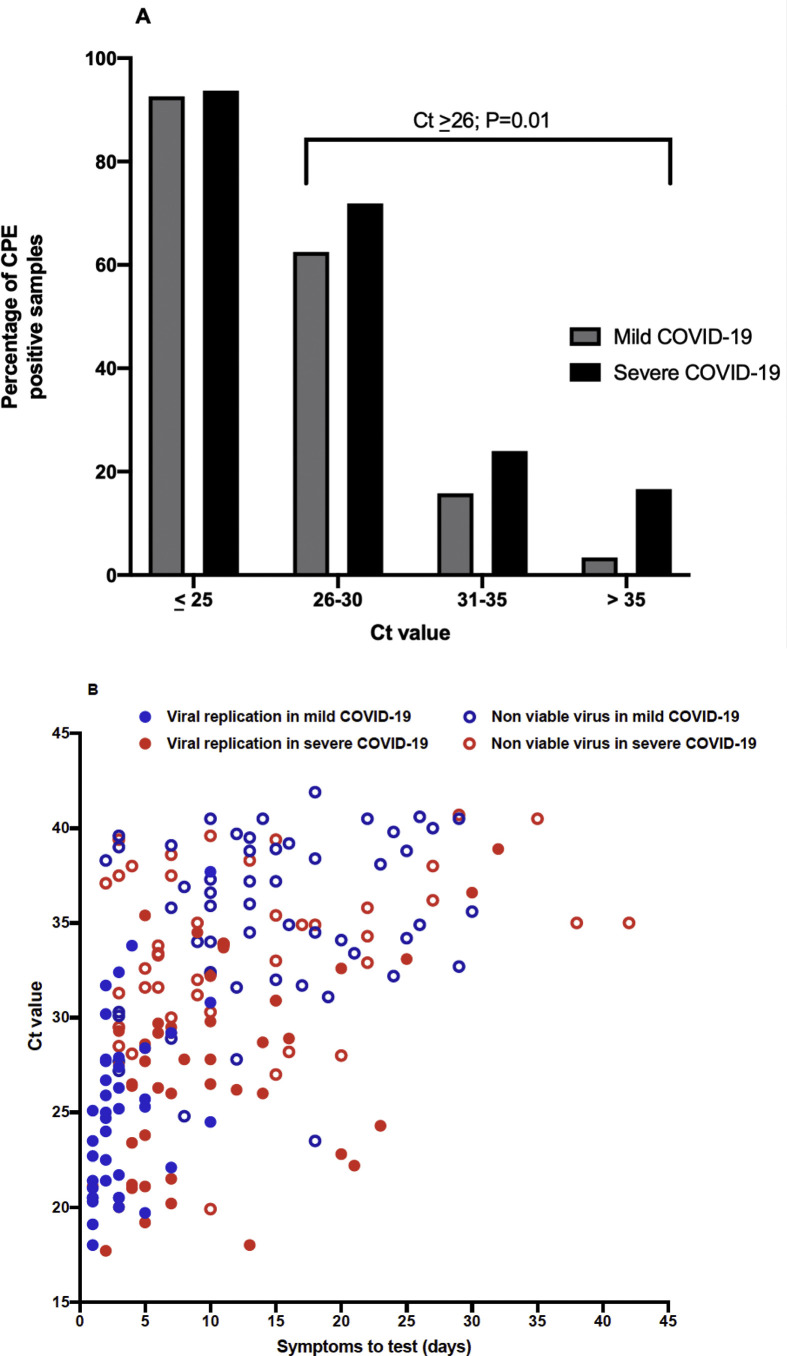
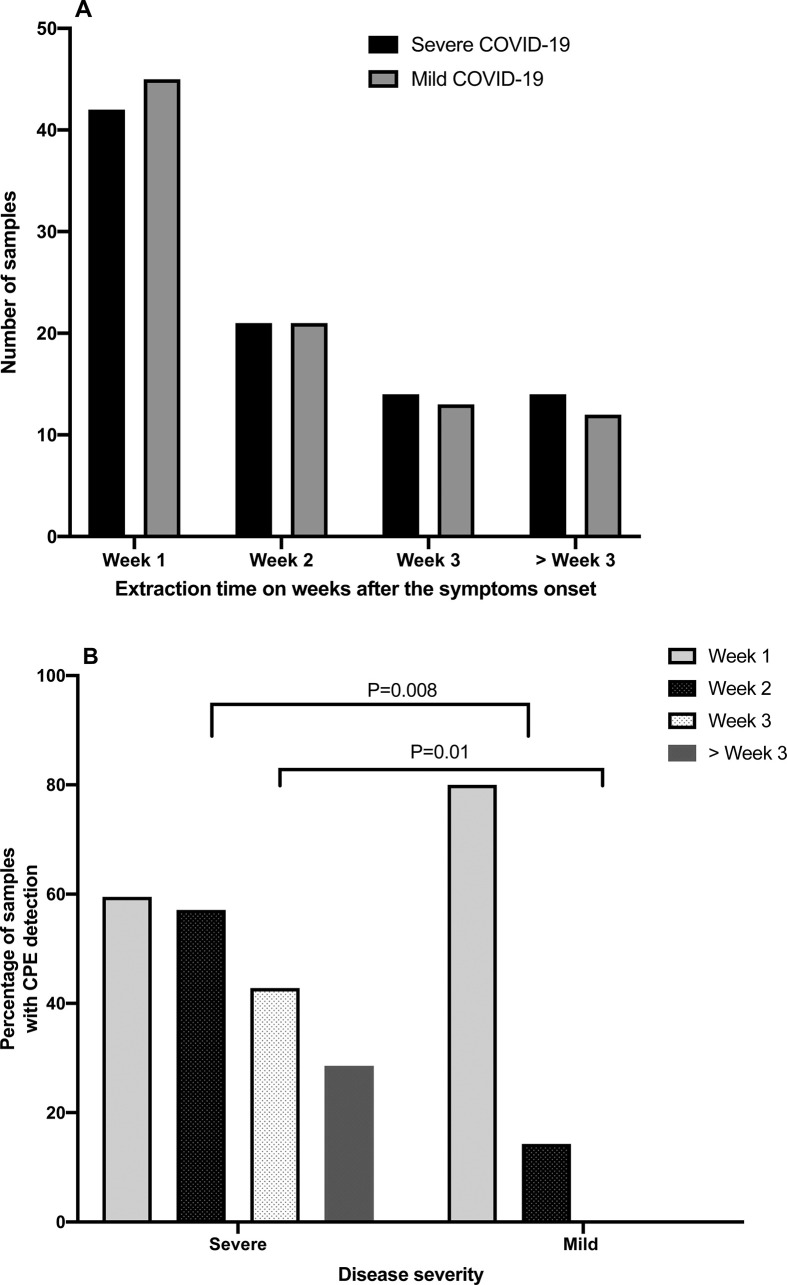
We detected a cytopathic effect (CPE) in 91/193 (47%) samples. Viral viability was maintained for up to 10 days in patients with mild COVID-19. In patients with severe COVID-19, the virus remained viable for up to 32 days after the onset of symptoms. Patients with severe COVID-19 presented infectious virus at a significantly higher rate in the samples with moderate to low viral load (cycle threshold value ≥ 26): 32/75 (43%) versus 14/63 (22%) for mild cases (p < 0.01). We observed a positive CPE despite the presence of clear neutralizing activity (NT50 > 1:1024 in 10% (3/30) of samples.
Patients with severe COVID-19 might shed viable virus during prolonged periods of up to 4 weeks after symptom onset, even when presenting high cycle threshold values in their respiratory samples and despite having developed high neutralizing antibody titres.
本研究比较了轻症 COVID-19 患者和住院的双侧严重肺炎患者呼吸道样本中 SARS-CoV-2 的传染性。在严重 COVID-19 中,我们还分析了配对血清中的中和活性。
我们对 193 份实时逆转录聚合酶链反应呼吸道样本进行了细胞培养,这些样本均来自不同时间点的 189 名患者,从临床诊断到随访。11 份样本来自无症状个体,91 份样本来自 91 名轻症 COVID-19 门诊患者,91 份样本来自 87 名严重肺炎住院患者。在这些患者中,分析了发病后>10 天采集的 30 份配对血清中的中和活性。
我们在 91/193(47%)份样本中检测到细胞病变效应(CPE)。轻症 COVID-19 患者的病毒存活能力最长可达 10 天。在严重 COVID-19 患者中,病毒在症状出现后最多可持续 32 天存活。严重 COVID-19 患者的中度至低病毒载量(循环阈值≥26)样本中,具有更高的传染性病毒检出率:32/75(43%)对比轻度病例 14/63(22%)(p<0.01)。尽管存在明确的中和活性(NT50>1:1024 在 30%的样本中),我们仍观察到阳性的 CPE。
严重 COVID-19 患者在症状出现后长达 4 周的时间内可能会排出有活力的病毒,即使他们的呼吸道样本循环阈值较高,且已产生高中和抗体滴度。