Department of Pharmacology and Neuroscience, University of North Texas Health Science Center, Fort Worth, TX.
North Texas Eye Research Institute, University of North Texas Health Science Center, Fort Worth, TX.
Mol Vis. 2021 Jan 16;27:37-49. eCollection 2021.
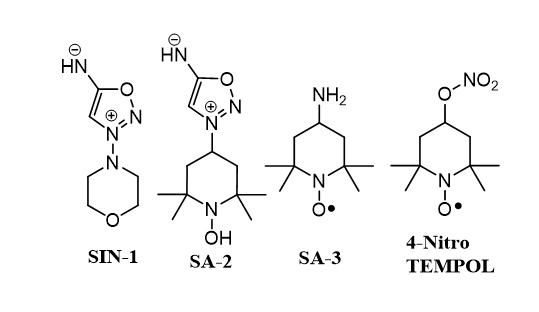
Glaucoma is a neurodegenerative disease of the eye with an estimated prevalence of more than 111.8 million patients worldwide by 2040, with at least 6 to 8 million projected to become bilaterally blind. Clinically, the current method of slowing glaucomatous vision loss is to reduce intraocular pressure (IOP). In this manuscript, we describe the in vitro cytoprotective and in vivo long lasting IOP-lowering activity of the poly D, L-lactic-co-glycolic acid (PLGA) nanoparticle-encapsulated hybrid compound SA-2, possessing nitric oxide (NO) donating and superoxide radical scavenging functionalities.
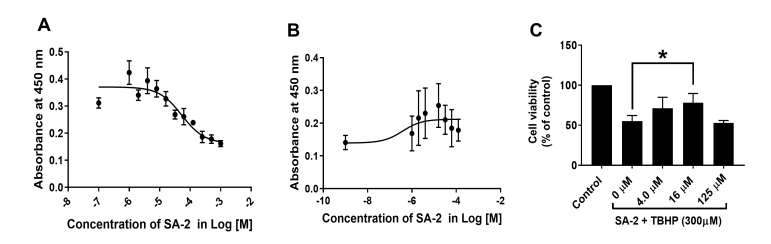
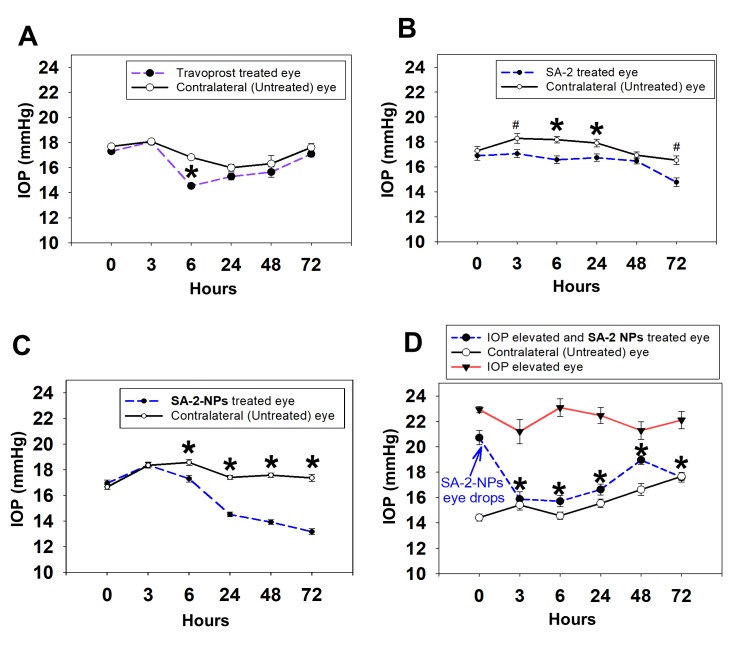
Previously characterized primary human trabecular meshwork (hTM) cells were used for the study. hTM cells were treated with SA-2 (100 µM, 200 µM, and 1,000 µM), SA-2 PLGA-loaded nanosuspension (SA-2 NPs, 0.1%), or vehicle for 30 min. Cyclic guanosine monophosphate (cGMP) and super oxide dismutase (SOD) levels were analyzed using commercial kits. In another experiment, hTM cells were pretreated with -butyl hydrogen peroxide (TBHP, 300 µM) for 30 min followed by treatment with escalating doses of SA-2 for 24 h, and CellTiter 96 cell proliferation assay was performed. For the biodistribution study, the cornea, aqueous humor, vitreous humor, retina, choroid, and sclera were collected after 1 h of administration of a single eye drop (30 μl) of SA-2 NPs (1% w/v) formulated in PBS to rat (n = 6) eyes. Compound SA-2 was quantified using high performance liquid chromatography /mass spectrometry (HPLC/MS). For the IOP-lowering activity study, a single SA-2 NPs (1%) eye drop was instilled in normotensive rats eyes and in the IOP-elevated rat eyes (n = 3/group, in the Morrison model of glaucoma), or Ad5TGFβ2-induced ocular hypertensive (OHT) mouse eyes (n = 5/group). IOP was measured at various time points up to 72 h, and the experiment was repeated in triplicate. Mouse aqueous humor outflow facility was determined with multiple flow-rate infusion and episcleral venous pressure estimated with manometry.
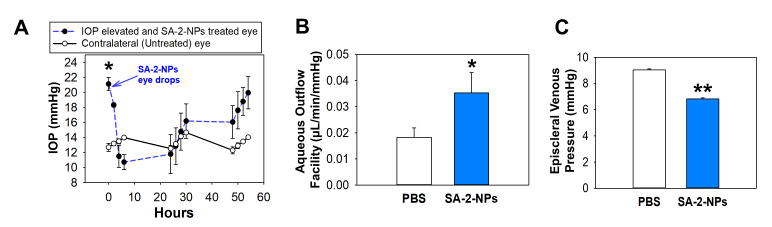
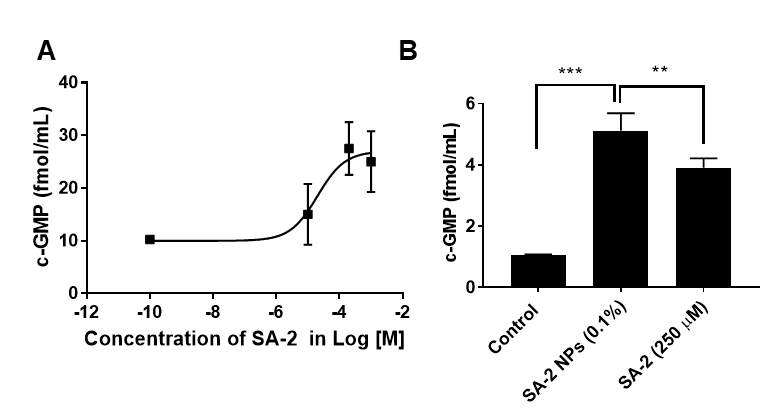
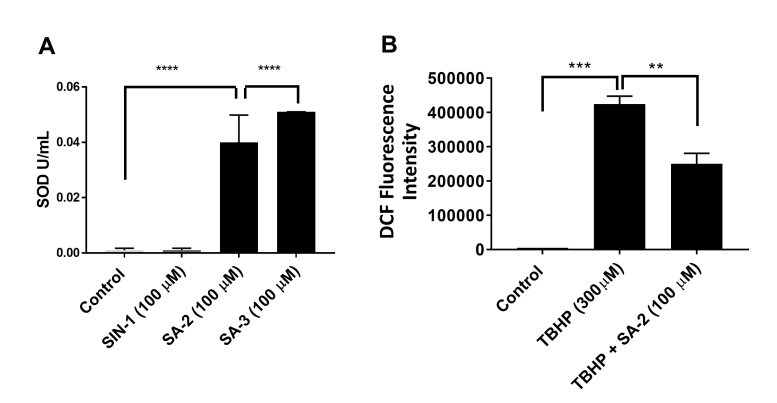
SA-2 upregulated cGMP levels (six- to ten-fold) with an half maximal effective concentration (EC) of 20.3 µM in the hTM cells and simultaneously upregulated (40-fold) the SOD enzyme when compared with the vehicle-treated hTM cells. SA-2 also protected hTM cells from TBHP-induced decrease in cell survival with an EC of 0.38 µM. A single dose of slow-release SA-2 NPs (1% w/v) delivered as an eye drop significantly lowered IOP (by 30%) in normotensive and OHT rodent eyes after 3 h post-dose, with the effect lasting up to 72 h. A statistically significant increase in aqueous outflow facility and a decrease in episcleral venous pressure was observed in rodents at this dose at 54 h.
Hybrid compound SA-2 upregulated cGMP in hTM cells, increased outflow facility and decreased IOP in rodent models of OHT. Compound SA-2 possessing an antioxidant moiety provided additive cytoprotective activity to oxidatively stressed hTM cells by scavenging reactive oxygen species (ROS) and increasing SOD enzyme activity. Additionally, the PLGA nanosuspension formulation (SA-2 NPs) provided longer duration of IOP-lowering activity (up to 3 days) in comparison with the free non-encapsulated SA-2 drug. The data have implications for developing novel, non-prostaglandin therapeutics for IOP-lowering and cytoprotective effects with the possibility of an eye drop dosing regimen of once every 3 days for patients with glaucoma.
青光眼是一种眼部神经退行性疾病,预计到 2040 年,全球将有超过 1.118 亿患者,至少有 600 万至 800 万人预计会双侧失明。临床上,减缓青光眼视力丧失的当前方法是降低眼内压(IOP)。在本文中,我们描述了聚 D,L-乳酸-共-乙醇酸(PLGA)纳米颗粒包封的杂合化合物 SA-2 的体外细胞保护和体内持久降低 IOP 的活性,该化合物具有一氧化氮(NO)供体和超氧化物自由基清除功能。
使用先前表征的原代人眼小梁网(hTM)细胞进行研究。将 hTM 细胞用 SA-2(100 μM、200 μM 和 1000 μM)、SA-2 PLGA 载纳米混悬液(SA-2 NPs,0.1%)或载体处理 30 分钟。使用商业试剂盒分析环鸟苷单磷酸(cGMP)和超氧化物歧化酶(SOD)水平。在另一个实验中,先用 -丁基过氧化氢(TBHP,300 μM)处理 hTM 细胞 30 分钟,然后用递增剂量的 SA-2 处理 24 小时,进行 CellTiter 96 细胞增殖测定。为了进行生物分布研究,在大鼠(n=6)眼中滴注(30 μl)SA-2 NPs(1%w/v)的单眼滴 1 小时后,收集角膜、房水、玻璃体、视网膜、脉络膜和巩膜。使用高效液相色谱/质谱(HPLC/MS)测定化合物 SA-2 的含量。为了研究降低 IOP 的活性,将 SA-2 NPs(1%)单滴眼滴入正常眼压大鼠眼和 Morrison 型青光眼升高眼压大鼠眼(n=3/组),或 Ad5TGFβ2 诱导的高眼压(OHT)小鼠眼(n=5/组)。在高达 72 小时的不同时间点测量 IOP,并重复三次实验。用多次流速输注法测定小鼠房水流出率,并通过眼压计估计巩膜静脉压。
SA-2 使 hTM 细胞中的 cGMP 水平升高了六到十倍(EC50 为 20.3 μM),同时与 vehicle 处理的 hTM 细胞相比,SOD 酶增加了 40 倍。SA-2 还能使 hTM 细胞免受 TBHP 诱导的细胞存活率下降的影响,EC50 为 0.38 μM。单剂量的慢释放 SA-2 NPs(1%w/v)以滴眼剂形式给药,可使正常眼压和 OHT 啮齿动物眼的 IOP 在给药后 3 小时降低 30%,效果可持续长达 72 小时。在该剂量下,在 54 小时时观察到啮齿动物房水流出率增加和巩膜静脉压降低。
杂合化合物 SA-2 使 hTM 细胞中的 cGMP 升高,增加了 OHT 啮齿动物模型中的房水流出率并降低了 IOP。具有抗氧化剂部分的化合物 SA-2 通过清除活性氧(ROS)和增加 SOD 酶活性,为氧化应激的 hTM 细胞提供了额外的细胞保护活性。此外,PLGA 纳米混悬剂制剂(SA-2 NPs)与游离非包封的 SA-2 药物相比,提供了更长时间的 IOP 降低活性(长达 3 天)。该数据为开发新型非前列腺素降眼压和细胞保护治疗药物提供了依据,对于青光眼患者,可能每 3 天滴眼一次。