Department of Dermatology, Quincke Research Center, University Hospital Schleswig-Holstein, Kiel, Germany.
Institute of Clinical Molecular Biology, Christian-Albrechts University of Kiel and University Hospital Schleswig-Holstein, Kiel, Germany.
Front Immunol. 2021 Jan 29;11:577677. doi: 10.3389/fimmu.2020.577677. eCollection 2020.
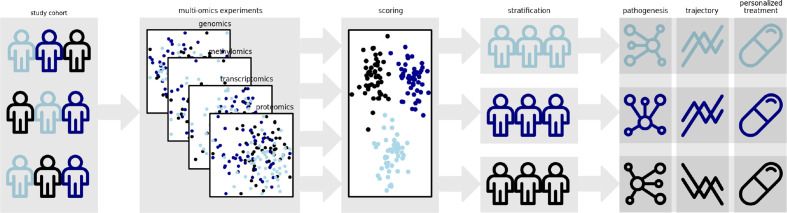
In this mini-review, we highlight selected research by the Deutsche Forschungsgemeinschaft (DFG) Cluster of Excellence "Precision Medicine in Chronic Inflammation" focusing on clinical sequencing and the clinical utility of polygenic risk scores as well as its implication on precision medicine in the field of the inflammatory diseases inflammatory bowel disease, atopic dermatitis and coronary artery disease. Additionally, we highlight current developments and discuss challenges to be faced in the future. Exemplary, we point to residual challenges in detecting disease-relevant variants resulting from difficulties in the interpretation of candidate variants and their potential interactions. While polygenic risk scores represent promising tools for the stratification of patient groups, currently, polygenic risk scores are not accurate enough for clinical setting. Precision medicine, incorporating additional data from genomics, transcriptomics and proteomics experiments, may enable the identification of distinct disease pathogeneses. In the future, data-intensive biomedical innovation will hopefully lead to improved patient stratification for personalized medicine.
在这篇迷你综述中,我们重点介绍了德国研究联合会(DFG)卓越集群“慢性炎症精准医学”的部分研究成果,这些研究聚焦于临床测序和多基因风险评分的临床实用性,以及它们在炎症性疾病(炎症性肠病、特应性皮炎和冠心病)精准医学领域的应用。此外,我们还介绍了当前的发展,并讨论了未来需要面对的挑战。例如,我们指出在检测与疾病相关的变异方面仍然存在挑战,这是由于候选变异及其潜在相互作用的解释存在困难。虽然多基因风险评分是对患者群体进行分层的有前途的工具,但目前多基因风险评分还不够准确,无法用于临床环境。结合基因组学、转录组学和蛋白质组学实验的额外数据的精准医学可能能够识别不同的疾病发病机制。在未来,数据密集型的生物医学创新有望实现个性化医疗的患者分层的改善。