Department of Clinical Pharmacy, School of Pharmacy, Second Military Medical University, Shanghai, China.
Key Laboratory of Molecular Pharmacology and Drug Evaluation (Yantai University), Ministry of Education, Yantai University, Yantai, China.
Front Immunol. 2021 Feb 8;11:595342. doi: 10.3389/fimmu.2020.595342. eCollection 2020.
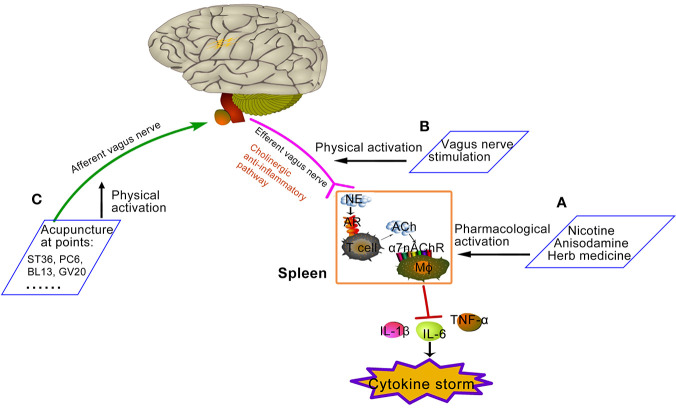
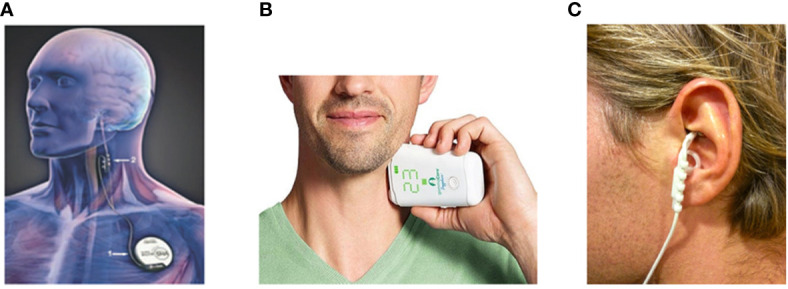
The outbreak of coronavirus disease 2019 (COVID-19) underlined the urgent need for alleviating cytokine storm. We propose here that activating the cholinergic anti-inflammatory pathway (CAP) is a potential therapeutic strategy. However, there is currently no approved drugs targeting the regulatory pathway. It is evident that nicotine, anisodamine and some herb medicine, activate the CAP and exert anti-inflammation action and . As the vagus nerve affects both inflammation and specific immune response, we propose that vagus nerve stimulation by invasive or non-invasive devices and acupuncture at ST36, PC6, or GV20, are also feasible approaches to activate the CAP and control COVID-19. It is worth to investigate the efficacy and safety of the strategy in patients with COVID-19.
2019 年冠状病毒病(COVID-19)的爆发凸显了缓解细胞因子风暴的迫切需要。我们在这里提出,激活胆碱能抗炎途径(CAP)是一种潜在的治疗策略。然而,目前没有针对该调节途径的批准药物。显然,尼古丁、山莨菪碱和一些草药通过激活 CAP 发挥抗炎作用。由于迷走神经既影响炎症又影响特定的免疫反应,我们提出通过有创或无创设备刺激迷走神经和针刺 ST36、PC6 或 GV20 也是激活 CAP 和控制 COVID-19 的可行方法。值得研究该策略在 COVID-19 患者中的疗效和安全性。