Swamy Krishna B S, Schuyler Scott C, Leu Jun-Yi
Division of Biological and Life Sciences, School of Arts and Sciences, Ahmedabad University, Ahmedabad, India.
Department of Biomedical Sciences, College of Medicine, Chang Gung University, Taoyuan, Taiwan.
Front Genet. 2021 Feb 9;12:609766. doi: 10.3389/fgene.2021.609766. eCollection 2021.
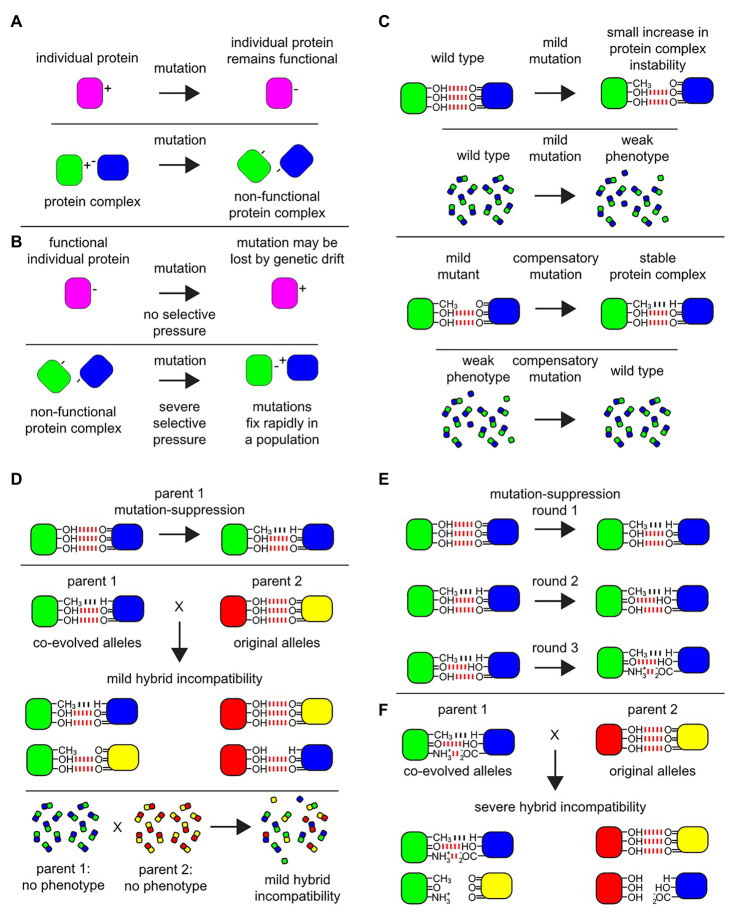
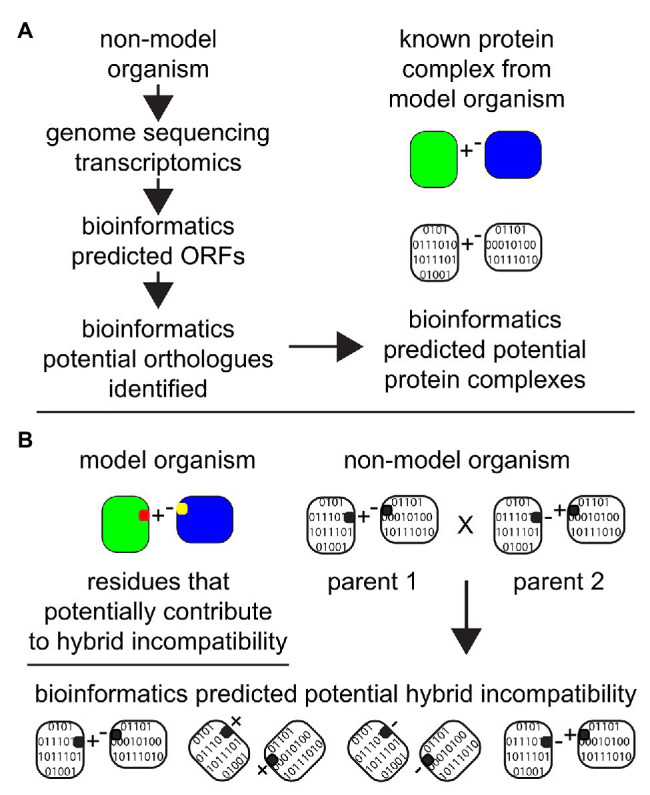
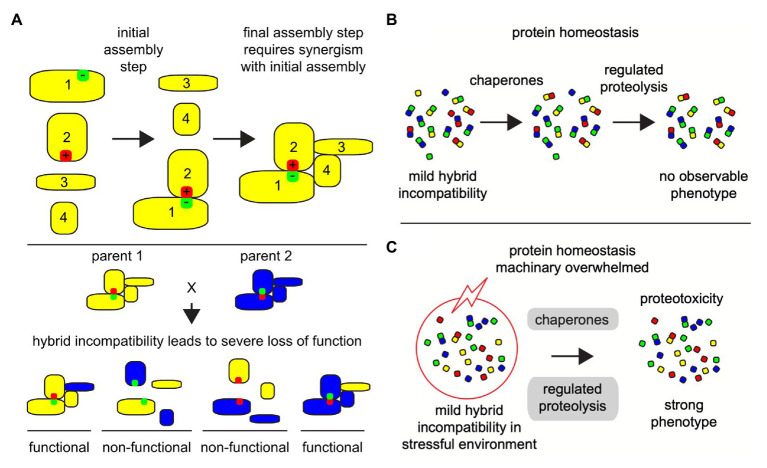
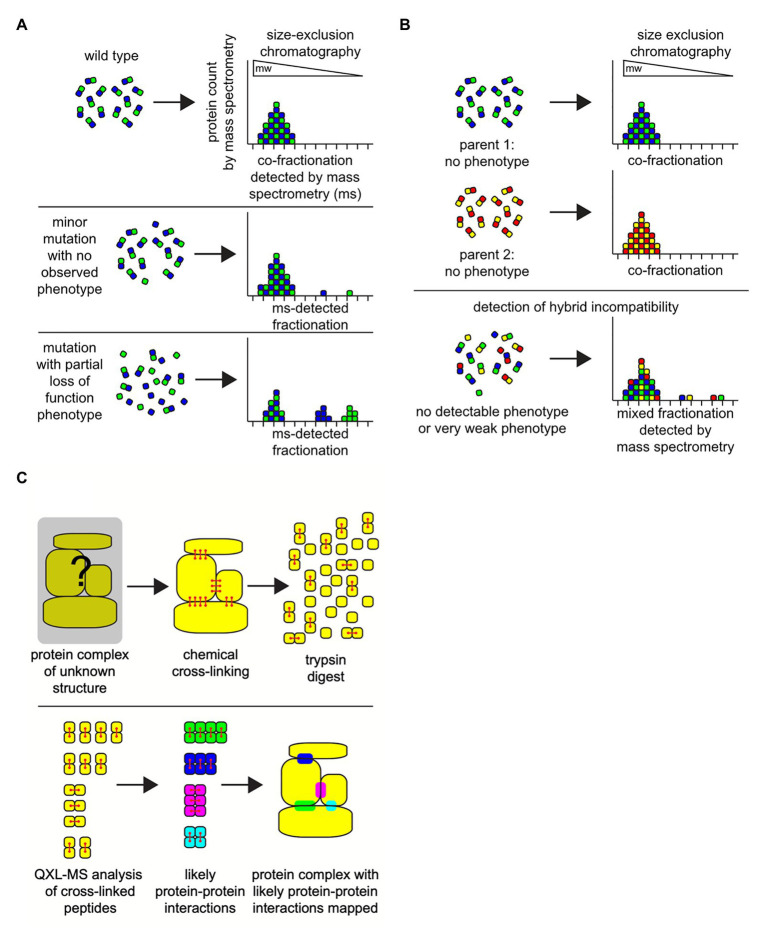
Proteins are the workhorses of the cell and execute many of their functions by interacting with other proteins forming protein complexes. Multi-protein complexes are an admixture of subunits, change their interaction partners, and modulate their functions and cellular physiology in response to environmental changes. When two species mate, the hybrid offspring are usually inviable or sterile because of large-scale differences in the genetic makeup between the two parents causing incompatible genetic interactions. Such reciprocal-sign epistasis between inter-specific alleles is not limited to incompatible interactions between just one gene pair; and, usually involves multiple genes. Many of these multi-locus incompatibilities show visible defects, only in the presence of all the interactions, making it hard to characterize. Understanding the dynamics of protein-protein interactions (PPIs) leading to multi-protein complexes is better suited to characterize multi-locus incompatibilities, compared to studying them with traditional approaches of genetics and molecular biology. The advances in omics technologies, which includes genomics, transcriptomics, and proteomics can help achieve this end. This is especially relevant when studying non-model organisms. Here, we discuss the recent progress in the understanding of hybrid genetic incompatibility; omics technologies, and how together they have helped in characterizing protein complexes and in turn multi-locus incompatibilities. We also review advances in bioinformatic techniques suitable for this purpose and propose directions for leveraging the knowledge gained from model-organisms to identify genetic incompatibilities in non-model organisms.
蛋白质是细胞的“主力军”,通过与其他蛋白质相互作用形成蛋白质复合物来执行许多功能。多蛋白复合物是亚基的混合物,会改变其相互作用伙伴,并根据环境变化调节其功能和细胞生理。当两个物种交配时,杂种后代通常无法存活或不育,因为两个亲本之间的基因组成存在大规模差异,导致基因相互作用不兼容。种间等位基因之间的这种相互作用上位性不仅限于一对基因之间的不兼容相互作用;而且通常涉及多个基因。许多这些多位点不兼容性只有在所有相互作用都存在时才会表现出明显的缺陷,这使得表征它们变得困难。与用传统的遗传学和分子生物学方法研究多基因座不兼容性相比,了解导致多蛋白复合物的蛋白质-蛋白质相互作用(PPI)动态更适合表征多基因座不兼容性。组学技术的进步,包括基因组学、转录组学和蛋白质组学,有助于实现这一目标。在研究非模式生物时,这一点尤为重要。在这里,我们讨论了在理解杂种遗传不兼容性方面的最新进展;组学技术,以及它们如何共同帮助表征蛋白质复合物,进而表征多基因座不兼容性。我们还回顾了适用于此目的的生物信息学技术的进展,并提出了利用从模式生物中获得的知识来识别非模式生物中遗传不兼容性的方向。