Department of Psychology, Centre for Cognitive Neuroscience, Paris-Lodron-University of Salzburg, Salzburg, Austria.
Front Public Health. 2021 Feb 2;8:623205. doi: 10.3389/fpubh.2020.623205. eCollection 2020.
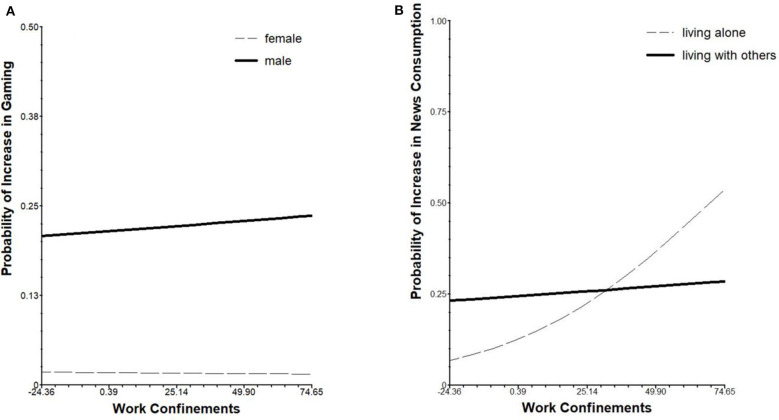
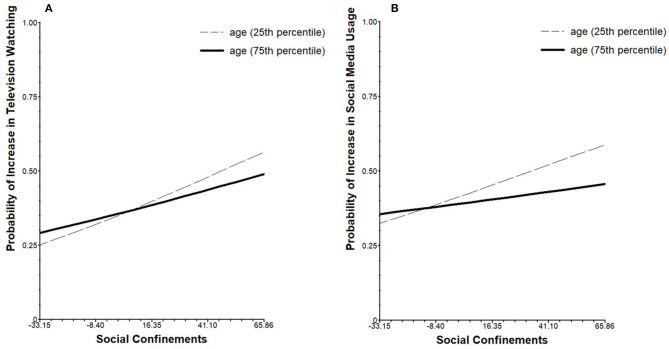
Coronavirus 2019 (COVID-19) quickly evolved into a global pandemic in early 2020, and most countries enforced social confinements to reduce transmission. This seems to dovetail with increasing, potentially problematic, screen use habits, such as gaming and "binge-watching." Yet, the subjective experience of the common confinements may vary not only between individuals depending on age, sex, and living conditions (i.e., living alone) but also within individuals from day to day: confinements might interfere with habitual activity schedules more strongly on some days than on others. Such dynamic confinement experience has not been studied in relation to screen use yet but might guide targeted intervention. In total, 102 participants ( = 83 female, = 80 university students) completed 14 days of ecological momentary assessment during a COVID-19-related lockdown in Germany and Austria. Each evening, they indicated the extent to which they felt restricted by confinements in their social and work lives and whether they engaged in unusually high and intense levels of television watching, social media use, news consumption, internet surfing, and gaming. They also reported on how much they experienced their day to be structured. Experienced work confinements were positively associated with social media usage. Further, work confinements were positively associated with gaming in males and with news consumption, especially in individuals living alone. Social confinements were positively associated with watching television especially in younger participants and with social media consumption in younger participants. Higher experienced day structure was related to less television watching, gaming, and internet surfing but more news consumption. Screen use behaviors increased with higher confinements within person, dependent on sex, age, and living situation. Such knowledge allows tailoring on the person level (who should be addressed?) and the time level (when should interventions be scheduled?) as the negative consequences of excessive screen use behaviors on mental and physical health are well-documented. One potential low-threshold intervention might be day-structuring.
2020 年初,冠状病毒 2019(COVID-19)迅速演变成全球大流行,大多数国家实施社会隔离以减少传播。这似乎与不断增加的、潜在有问题的屏幕使用习惯相吻合,例如游戏和“ binge-watching”。然而,共同禁闭的主观体验不仅因个体的年龄、性别和生活条件(例如,独居)而异,而且在个体内部也会因每天的情况而异:禁闭可能会在某些日子比其他日子更强烈地干扰习惯性活动时间表。这种动态禁闭体验尚未与屏幕使用相关研究,但可能会指导有针对性的干预。总共有 102 名参与者(= 83 名女性,= 80 名大学生)在德国和奥地利的 COVID-19 相关封锁期间完成了 14 天的生态瞬间评估。每天晚上,他们都会表明自己在社会和工作生活中受到限制的程度,以及是否从事异常高且强烈的电视观看、社交媒体使用、新闻消费、上网和游戏活动。他们还报告了他们的一天有多少是有组织的。工作限制与社交媒体使用呈正相关。此外,工作限制与男性的游戏以及独居者的新闻消费呈正相关。社会限制与看电视呈正相关,尤其是在年轻参与者中,与社交媒体消费在年轻参与者中呈正相关。更高的体验日结构与更少的电视观看、游戏和上网时间但更多的新闻消费有关。屏幕使用行为随着个体内部更高的限制而增加,取决于性别、年龄和生活状况。这种知识允许在个人层面(应该针对谁?)和时间层面(应该何时安排干预?)进行定制,因为过度的屏幕使用行为对身心健康的负面影响有充分的记录。一种潜在的低门槛干预可能是日程安排。