Lin En, Li Zhiling, Huang Yue, Ru Gaizhen, He Pei
Department of Reproductive Center, The First Affiliated Hospital of Shantou University Medical College, Shantou University, Shantou, China.
Front Cell Dev Biol. 2021 Feb 9;8:609290. doi: 10.3389/fcell.2020.609290. eCollection 2020.
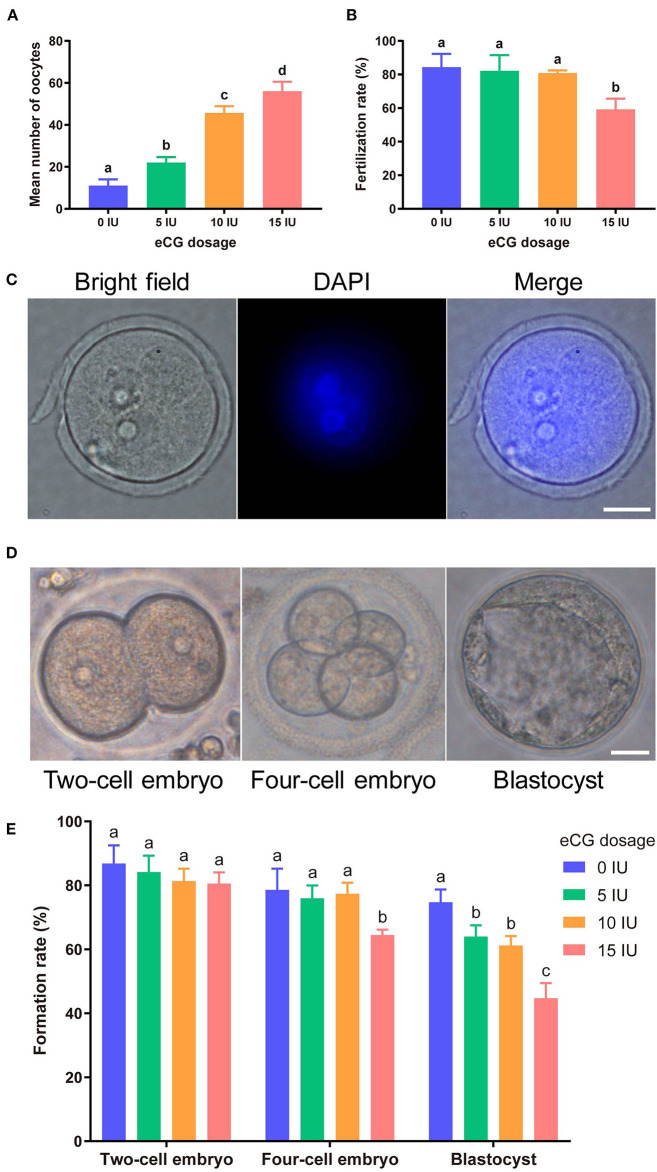
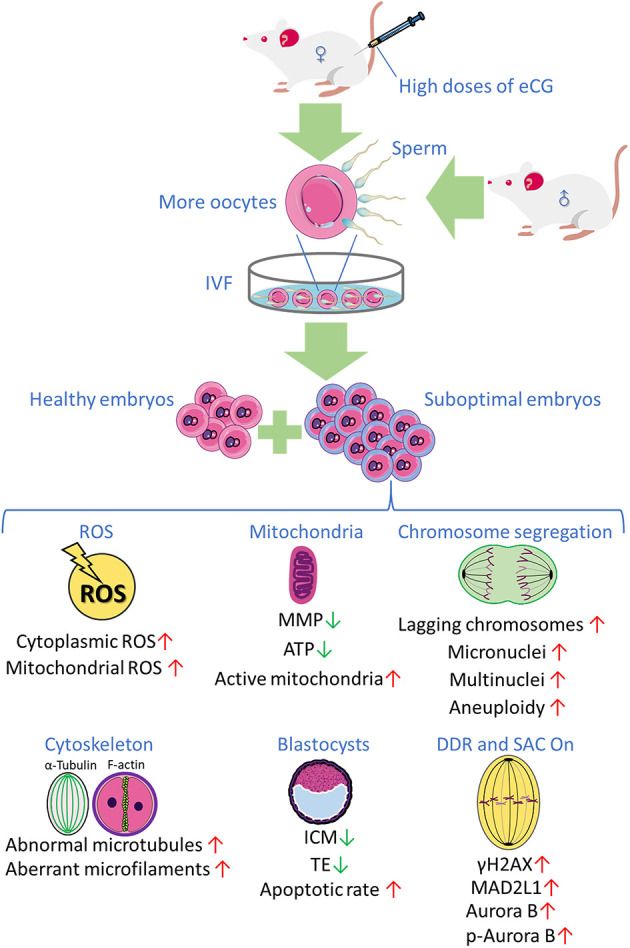
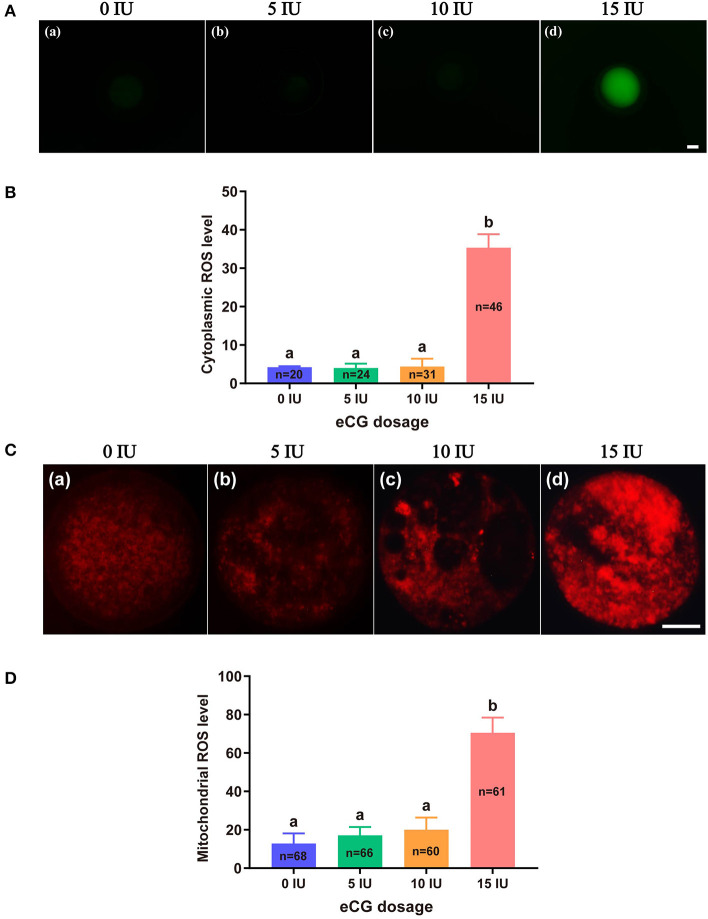
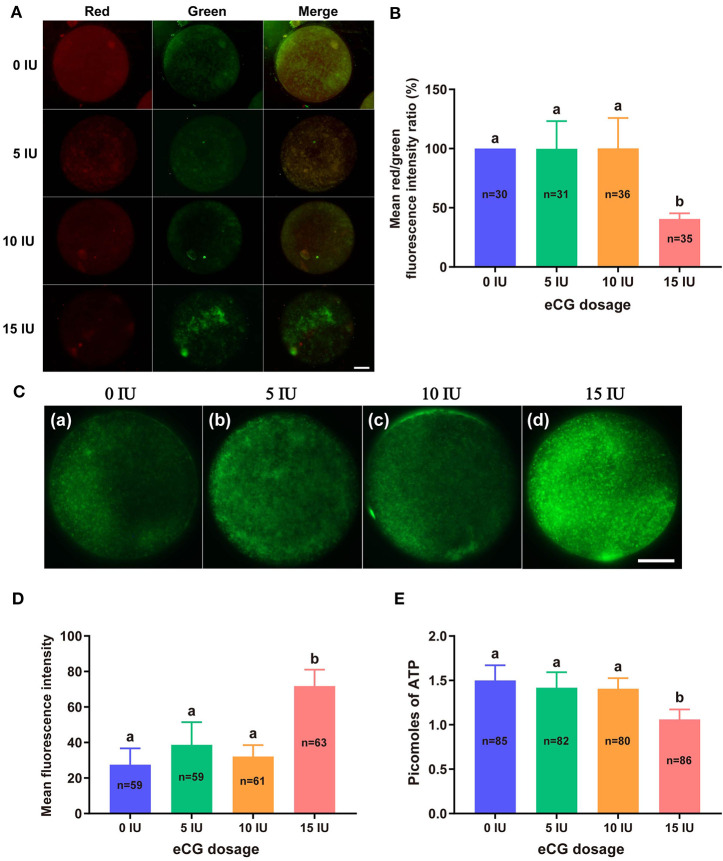
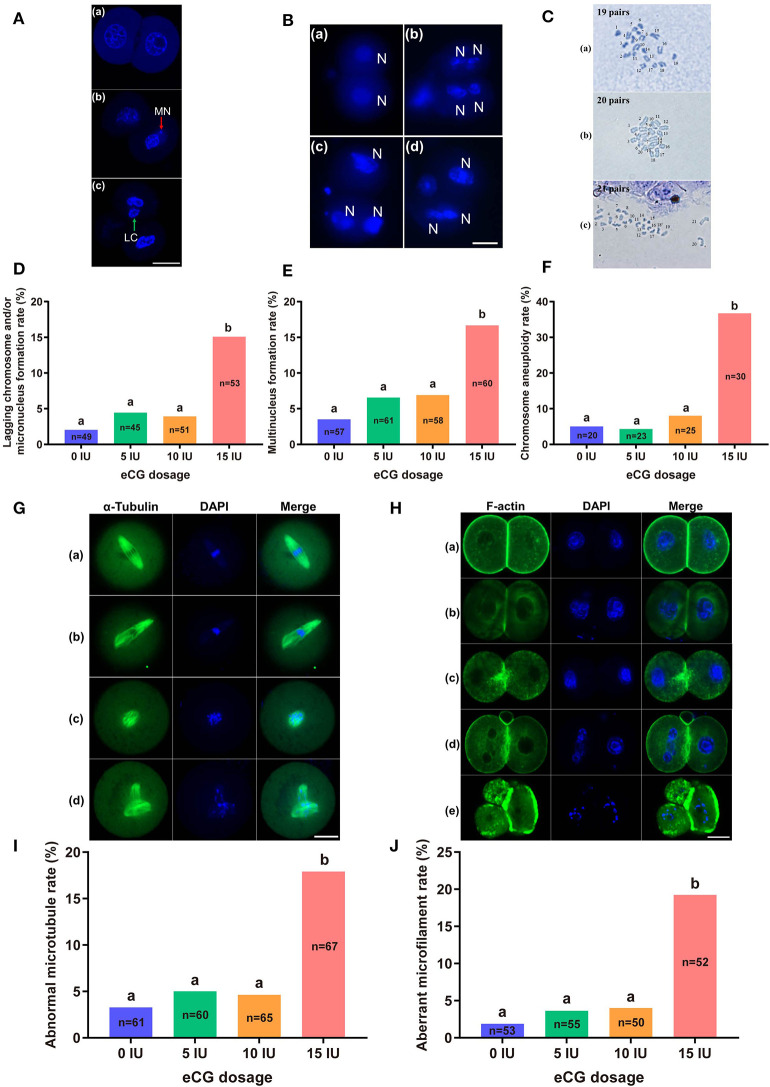
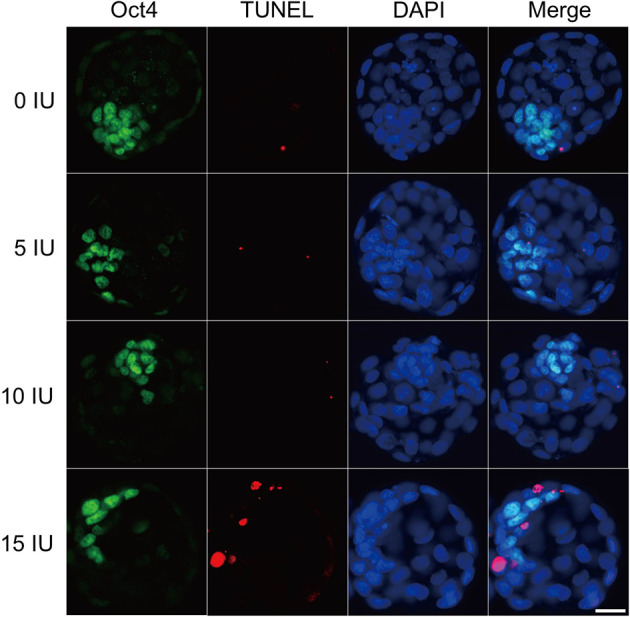
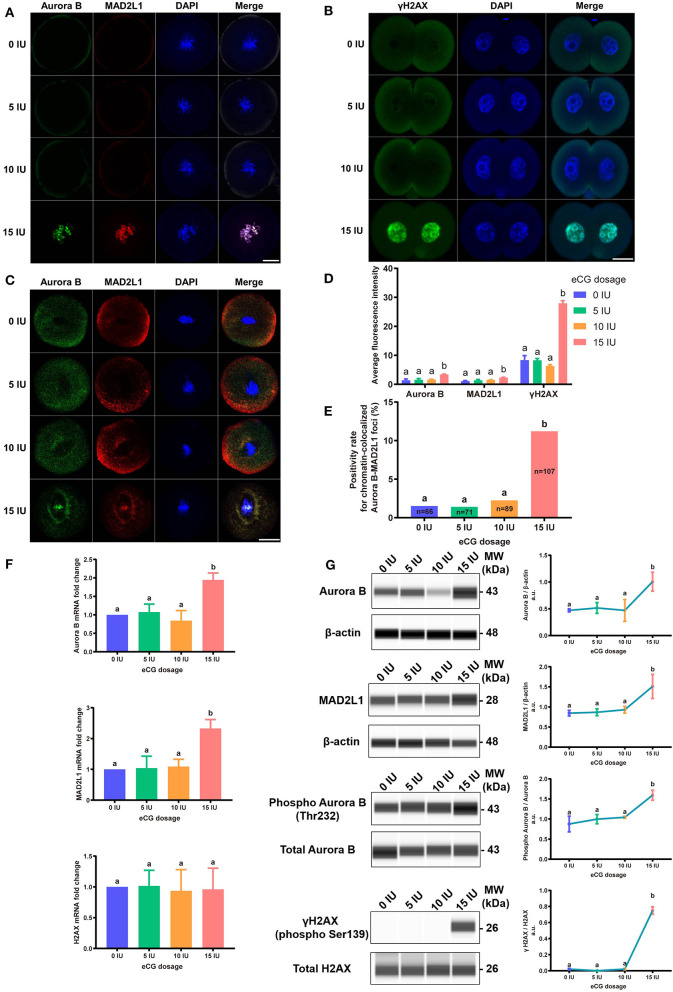
Gonadotropins play vital roles in the regulation of female reproductive ability and fertility. Our study aimed to determine the effects of superovulation induced by increasing doses of equine chorionic gonadotropin [eCG; also referred to as pregnant mare serum gonadotropin (PMSG)] on the developmental competence of mouse embryos and on aneuploidy formation during fertilization (IVF). eCG dose-dependently enhanced the oocyte yield from each mouse. Administration of 15 IU eCG significantly reduced the fertilization rate and the formation of four-cell embryos and blastocysts and increased the risk of chromosome aneuploidy. The IVF-derived blastocysts in the 15 IU eCG treatment group had the fewest total cells, inner cell mass (ICM) cells and trophectoderm (TE) cells. Moreover, more blastocysts and fewer apoptotic cells were observed in the 0, 5, and 10 IU eCG treatment groups than in the 15 IU eCG treatment group. We also investigated reactive oxygen species (ROS) levels and variations in several variables: mitochondrial membrane potential (MMP); active mitochondria; mitochondrial superoxide production; adenosine triphosphate (ATP) content; spindle structures; chromosome karyotypes; microfilament distribution; and the expression of Aurora B [an important component of the chromosomal passenger complex (CPC)], the spindle assembly checkpoint (SAC) protein mitotic arrest deficient 2 like 1 (MAD2L1), and the DNA damage response (DDR) protein γH2AX. Injection of 15 IU eCG increased ROS levels, rapidly reduced MMP, increased active mitochondria numbers and mitochondrial superoxide production, reduced ATP content, increased abnormal spindle formation rates, and induced abnormalities in chromosome number and microfilament distribution, suggesting that a high dose of eCG might alter developmental competence and exert negative effects on IVF-obtained mouse embryos. Additionally, the appearance of γH2AX and the significantly increased expression of Aurora B and MAD2L1 suggested that administration of relatively high doses of eCG caused Aurora B-mediated SAC activation triggered by ROS-induced DNA damage in early mouse IVF-derived embryos for self-correction of aneuploidy formation. These findings improve our understanding of the application of gonadotropins and provide a theoretical basis for gonadotropin treatment.
促性腺激素在调节雌性生殖能力和生育力方面发挥着至关重要的作用。我们的研究旨在确定增加剂量的马绒毛膜促性腺激素 [eCG;也称为孕马血清促性腺激素 (PMSG)] 诱导的超排卵对小鼠胚胎发育能力以及体外受精 (IVF) 过程中非整倍体形成的影响。eCG 剂量依赖性地提高了每只小鼠的卵母细胞产量。注射 15 IU eCG 显著降低了受精率、四细胞胚胎和囊胚的形成率,并增加了染色体非整倍体的风险。15 IU eCG 处理组中 IVF 衍生的囊胚总细胞数、内细胞团 (ICM) 细胞数和滋养外胚层 (TE) 细胞数最少。此外,与 15 IU eCG 处理组相比,0、5 和 10 IU eCG 处理组中观察到更多的囊胚和更少凋亡细胞。我们还研究了活性氧 (ROS) 水平以及几个变量的变化:线粒体膜电位 (MMP)、活性线粒体、线粒体超氧化物产生、三磷酸腺苷 (ATP) 含量、纺锤体结构、染色体核型、微丝分布以及染色体乘客复合体 (CPC) 的重要组成部分极光激酶 B (Aurora B)、纺锤体组装检查点 (SAC) 蛋白有丝分裂阻滞缺陷蛋白 2 样 1 (MAD2L1) 和 DNA 损伤反应 (DDR) 蛋白 γH2AX 的表达。注射 15 IU eCG 会增加 ROS 水平,迅速降低 MMP,增加活性线粒体数量和线粒体超氧化物产生,降低 ATP 含量,增加异常纺锤体形成率,并诱导染色体数目和微丝分布异常,这表明高剂量的 eCG 可能会改变发育能力并对 IVF 获得的小鼠胚胎产生负面影响。此外,γH2AX 的出现以及 Aurora B 和 MAD2L1 表达的显著增加表明,给予相对高剂量的 eCG 会导致早期小鼠 IVF 衍生胚胎中由 ROS 诱导的 DNA 损伤触发的 Aurora B 介导的 SAC 激活,以自我纠正非整倍体形成。这些发现增进了我们对促性腺激素应用的理解,并为促性腺激素治疗提供了理论依据。