Murdoch Children's Research Institute, Melbourne, Victoria, Australia.
Department of Paediatrics, The University of Melbourne, Melbourne, Victoria, Australia.
Health Expect. 2021 Apr;24(2):670-686. doi: 10.1111/hex.13216. Epub 2021 Feb 26.
Consumer genomic testing for nutrition and wellness, (nutritional genomics), is becoming increasingly popular. Concurrently, health-care practitioners (HPs) working in private practice (including doctors interested in integrative medicine, private genetic counsellors, pharmacists, dieticians, naturopaths and nutritionists) are involved as test facilitators or interpreters.
To explore Australian consumers' and HPs' experiences with nutrigenomic testing.
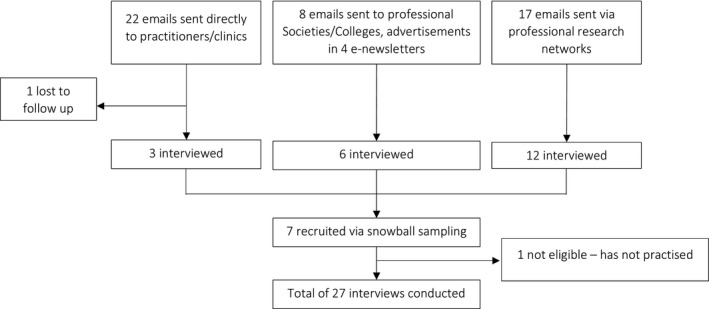
Semi-structured in-depth interviews were conducted using predominantly purposive sampling. The two data sets were analysed individually, then combined, using a constant comparative, thematic approach.
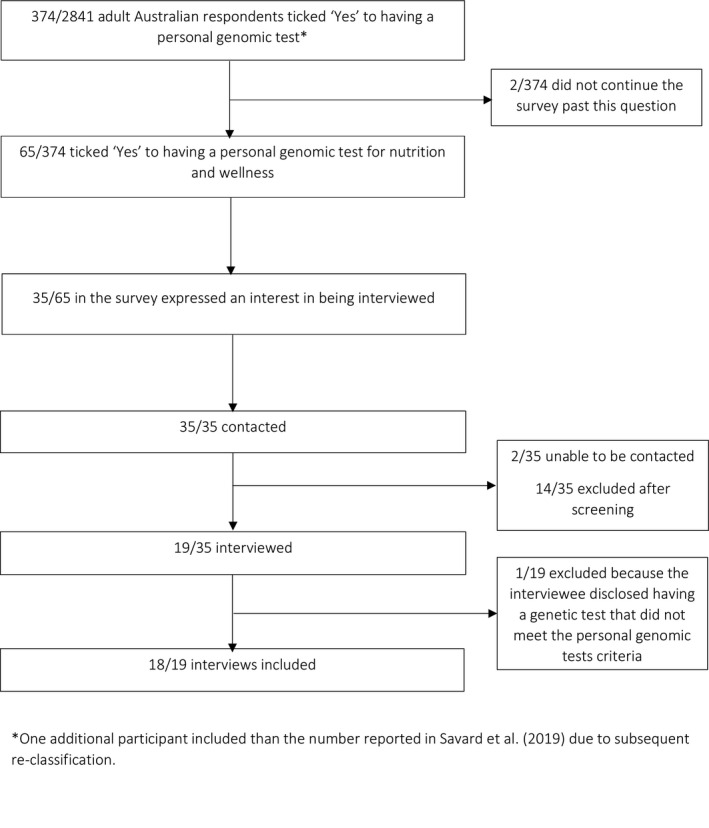
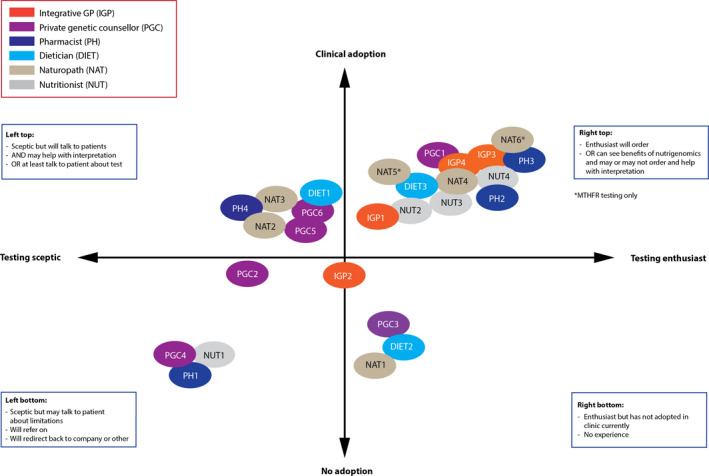
Overall, 45 interviews were conducted with consumers (n = 18) and HPs (n = 27). Many of the consumer interviewees experienced chronic ill-health. Nutrigenomic testing was perceived as empowering and a source of hope for answers. While most made changes to their diet/supplements post-test, self-reported health improvements were small. A positive relationship with their HP appeared to minimize disappointment. HPs' adoption and views of nutrigenomic testing varied. Those enthusiastic about testing saw the possibilities it could offer. However, many felt nutrigenomic testing was not the only 'tool' to utilize when offering health care.
This research highlights the important role HPs play in consumers' experiences of nutrigenomics. The varied practice suggests relevant HPs require upskilling in this area to at least support their patients/clients, even if nutrigenomic testing is not part of their practice.
Advisory group included patient/public group representatives who informed study design; focus group participants gave feedback on the survey from which consumer interviewees were sourced. This informed the HP data set design. Interviewees from HP data set assisted with snowball sampling.
消费者营养与健康的基因组检测(营养基因组学)越来越受欢迎。与此同时,从事私人执业的医疗保健从业者(包括对综合医学感兴趣的医生、私人遗传咨询师、药剂师、营养师、自然疗法医师和营养学家)也作为测试促进者或解释者参与其中。
探索澳大利亚消费者和医疗保健从业者对营养基因组检测的体验。
使用主要目的抽样进行半结构式深入访谈。两个数据集分别进行分析,然后使用恒定比较、主题方法进行组合。
总共对消费者(n=18)和医疗保健从业者(n=27)进行了 45 次访谈。许多消费者受访者都患有慢性疾病。营养基因组检测被视为赋予权力和寻找答案的希望之源。尽管大多数人在测试后改变了饮食/补充剂,但自我报告的健康改善很小。与他们的医疗保健从业者保持良好关系似乎可以最小化失望。医疗保健从业者对营养基因组检测的采用和看法各不相同。那些热衷于测试的人看到了它可能带来的可能性。然而,许多人认为营养基因组检测不是提供医疗保健时唯一使用的“工具”。
这项研究强调了医疗保健从业者在消费者营养基因组学体验中所扮演的重要角色。不同的实践表明,相关的医疗保健从业者需要在这方面进行技能提升,即使营养基因组检测不是他们实践的一部分,也至少可以支持他们的患者/客户。
顾问小组包括患者/公众代表,他们为研究设计提供信息;焦点小组参与者对用于招募消费者受访者的调查提供反馈。这为医疗保健从业者数据集的设计提供了信息。医疗保健从业者数据集的受访者协助了滚雪球抽样。