Department of Neurosurgery, University of Maryland School of Medicine, Baltimore, Maryland, USA.
Marlene and Stewart Greenebaum Comprehensive Cancer Center, University of Maryland School of Medicine, Baltimore, Maryland, USA.
Glia. 2021 Sep;69(9):2059-2076. doi: 10.1002/glia.23984. Epub 2021 Feb 27.
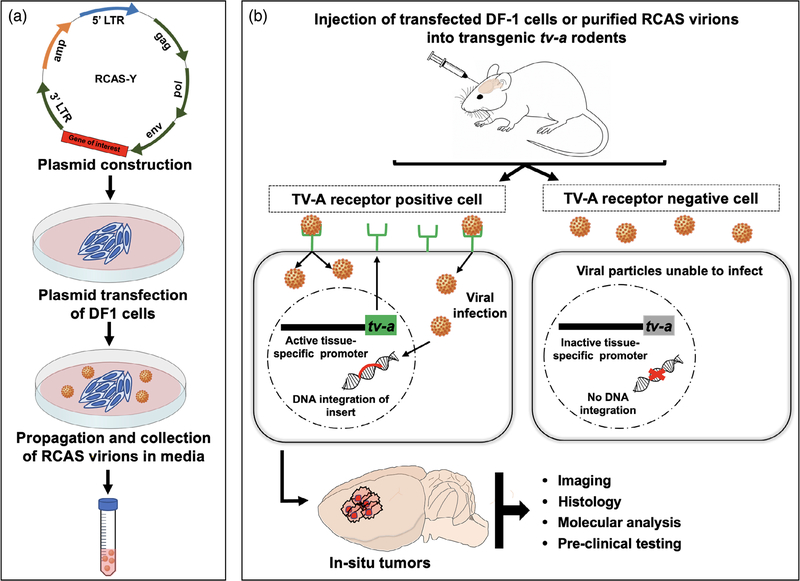
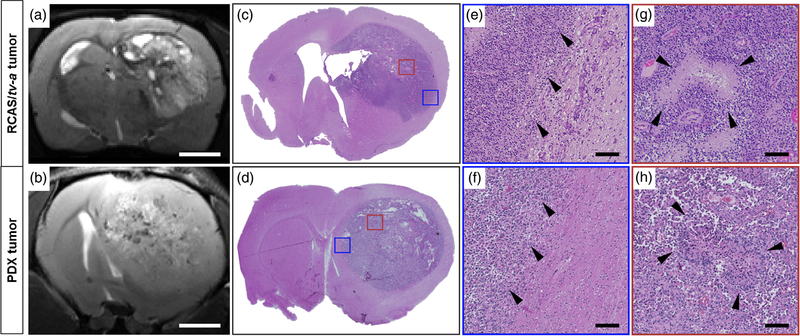
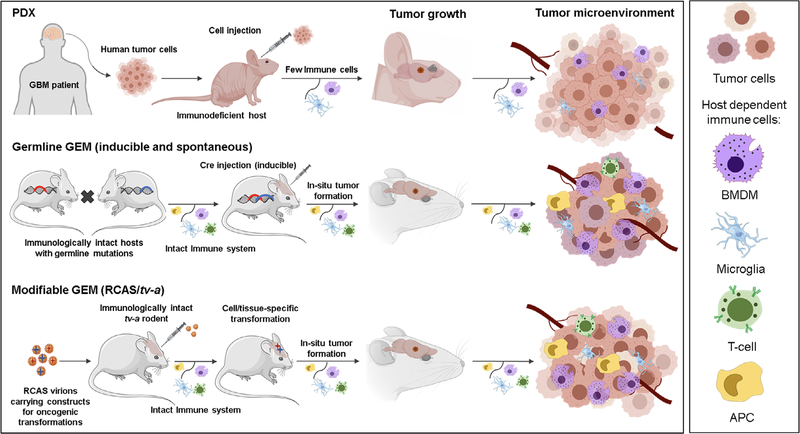
Gliomas are the most common primary intrinsic brain tumors occurring in adults. Of all malignant gliomas, glioblastoma (GBM) is considered the deadliest tumor type due to diffuse brain invasion, immune evasion, cellular, and molecular heterogeneity, and resistance to treatments resulting in high rates of recurrence. An extensive understanding of the genomic and microenvironmental landscape of gliomas gathered over the past decade has renewed interest in pursuing novel therapeutics, including immune checkpoint inhibitors, glioma-associated macrophage/microglia (GAMs) modulators, and others. In light of this, predictive animal models that closely recreate the conditions and findings found in human gliomas will serve an increasingly important role in identifying new, effective therapeutic strategies. Although numerous syngeneic, xenograft, and transgenic rodent models have been developed, few include the full complement of pathobiological features found in human tumors, and therefore few accurately predict bench-to-bedside success. This review provides an update on how genetically engineered rodent models based on the replication-competent avian-like sarcoma (RCAS) virus/tumor virus receptor-A (tv-a) system have been used to recapitulate key elements of human gliomas in an immunologically intact host microenvironment and highlights new approaches using this model system as a predictive tool for advancing translational glioma research.
神经胶质瘤是成年人中最常见的原发性内在脑肿瘤。在所有恶性神经胶质瘤中,胶质母细胞瘤(GBM)由于弥漫性脑浸润、免疫逃逸、细胞和分子异质性以及对治疗的耐药性,被认为是最致命的肿瘤类型,导致高复发率。过去十年中对神经胶质瘤的基因组和微环境景观的广泛了解,重新激发了人们对探索新疗法的兴趣,包括免疫检查点抑制剂、神经胶质瘤相关巨噬细胞/小胶质细胞(GAMs)调节剂等。有鉴于此,能够密切再现人类神经胶质瘤中发现的条件和发现的预测性动物模型将在确定新的、有效的治疗策略方面发挥越来越重要的作用。尽管已经开发了许多同种异体、异种移植和转基因啮齿动物模型,但很少有模型包含人类肿瘤中发现的所有病理生物学特征,因此很少能准确预测从实验室到临床的成功。这篇综述介绍了基于复制型禽样肉瘤(RCAS)病毒/肿瘤病毒受体-A(tv-a)系统的基因工程啮齿动物模型如何被用来在免疫完整的宿主微环境中重现人类神经胶质瘤的关键特征,并强调了使用该模型系统作为推进转化神经胶质瘤研究的预测工具的新方法。