Division of Allergy and Immunology, Department of Medicine, Washington University School of Medicine in St Louis, St Louis, Missouri.
Division of Pulmonary and Critical Care Medicine, Department of Medicine, Washington University School of Medicine in St Louis, St Louis, Missouri.
Ann Allergy Asthma Immunol. 2021 May;126(5):535-541.e2. doi: 10.1016/j.anai.2021.02.020. Epub 2021 Feb 25.
Patients with asthma are comparatively susceptible to respiratory viral infections and more likely to develop severe symptoms than people without asthma. During the coronavirus disease 2019 (COVID-19) pandemic, it is necessary to adequately evaluate the characteristics and outcomes of the population with asthma in the population tested for and diagnosed as having COVID-19.
To perform a study to assess the impact of asthma on COVID-19 diagnosis, presenting symptoms, disease severity, and cytokine profiles.
This was an analysis of a prospectively collected cohort of patients suspected of having COVID-19 who presented for COVID-19 testing at a tertiary medical center in Missouri between March 2020 and September 2020. We classified and analyzed patients according to their pre-existing asthma diagnosis and subsequent COVID-19 testing results.
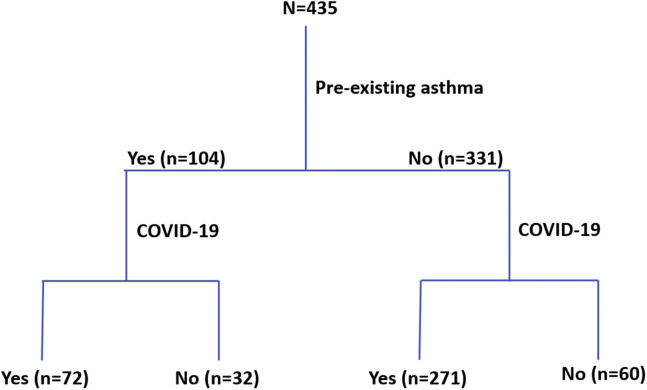
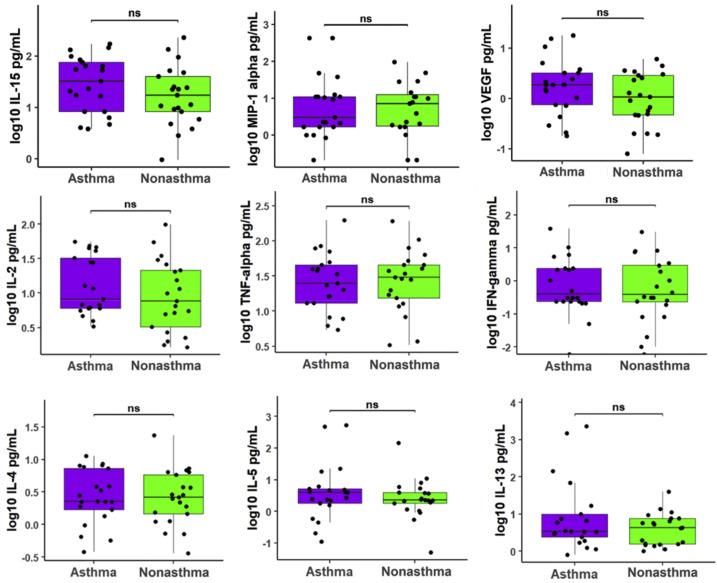
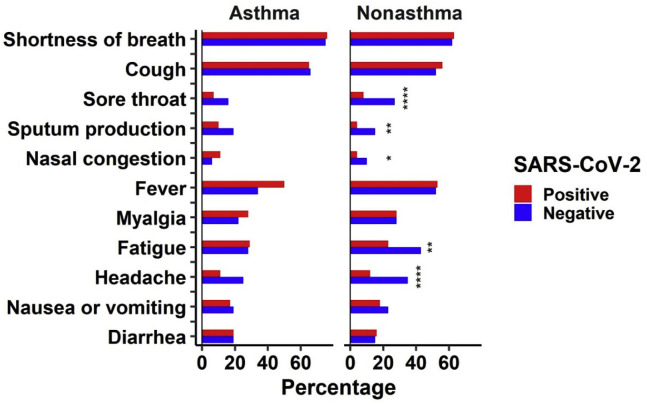
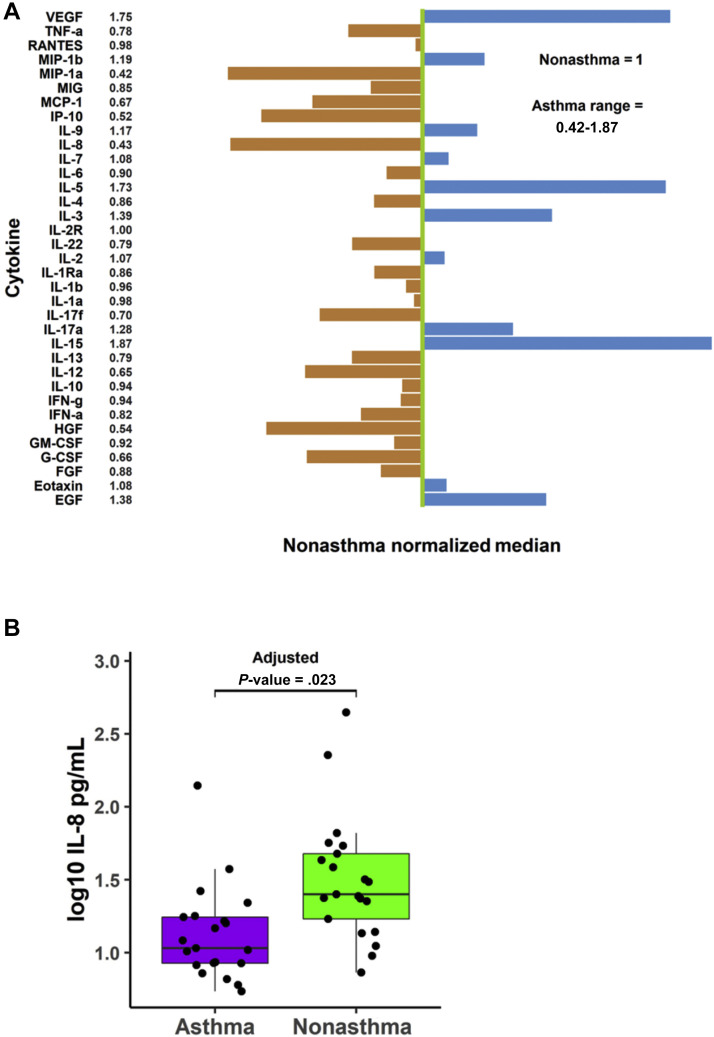
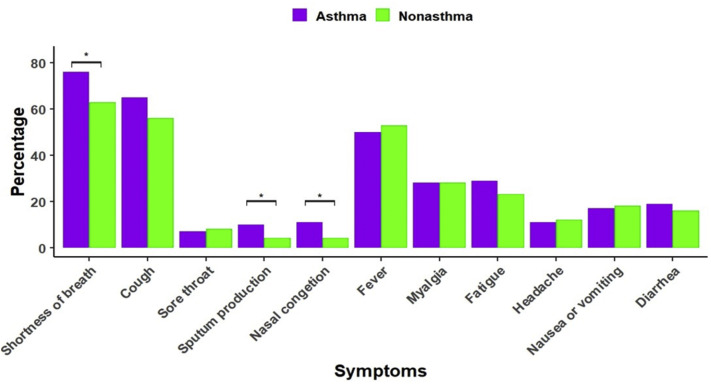
Patients suspected of having COVID-19 (N = 435) were enrolled in this study. The proportions of patients testing positive for COVID-19 were 69.2% and 81.9% in the groups with asthma and without asthma, respectively. The frequencies of relevant symptoms were similar between the groups with asthma with positive and negative COVID-19 test results. In the population diagnosed as having COVID-19 (n = 343), asthma was not associated with several indicators of COVID-19 severity, including hospitalization, admission to an intensive care unit, mechanical ventilation, death due to COVID-19, and in-hospital mortality after multivariate adjustment. Patients with COVID-19 with asthma exhibited significantly lower levels of plasma interleukin-8 than patients without asthma (adjusted P = .02).
The population with asthma is facing a challenge in preliminary COVID-19 evaluation owing to an overlap in the symptoms of COVID-19 and asthma. However, asthma does not increase the risk of COVID-19 severity if infected.
哮喘患者相较之下更容易受到呼吸道病毒感染,且更有可能发展出严重症状,甚于非哮喘患者。在 2019 年冠状病毒病(COVID-19)大流行期间,有必要充分评估 COVID-19 检测和诊断人群中哮喘患者的特征和结局。
评估哮喘对 COVID-19 诊断、表现症状、疾病严重程度和细胞因子谱的影响。
这是一项对 2020 年 3 月至 9 月在密苏里州一家三级医疗中心进行 COVID-19 检测的疑似 COVID-19 患者前瞻性收集队列进行的研究。我们根据患者的既往哮喘诊断和随后的 COVID-19 检测结果对其进行分类和分析。
本研究纳入了 435 例疑似 COVID-19 的患者。哮喘组和非哮喘组的 COVID-19 检测阳性率分别为 69.2%和 81.9%。哮喘阳性和阴性 COVID-19 检测结果组患者的相关症状频率相似。在确诊为 COVID-19 的人群(n=343)中,哮喘与 COVID-19 严重程度的多个指标均无相关性,包括住院、入住重症监护病房、机械通气、COVID-19 死亡和 COVID-19 住院死亡率等,经多变量调整后仍如此。COVID-19 伴哮喘患者的血浆白细胞介素-8 水平明显低于非哮喘患者(校正 P=0.02)。
由于 COVID-19 与哮喘症状存在重叠,哮喘患者在 COVID-19 初步评估中面临挑战。然而,如果感染 COVID-19,哮喘并不会增加疾病严重程度的风险。