Future of Humanity Institute, University of Oxford, Trajan House, Mill St, Oxford, OX2 0AN, UK; Medical Sciences Division, University of Oxford, Medical Sciences Office, John Radcliffe Hospital, Headley Way, Oxford OX3 9DU, UK.
Schar School of Policy and Government, George Mason University, Van Metre Hall, 678 3351 Fairfax Drive Arlington, VA 22201, USA.
Vaccine. 2022 Apr 14;40(17):2514-2523. doi: 10.1016/j.vaccine.2021.02.023. Epub 2021 Feb 25.
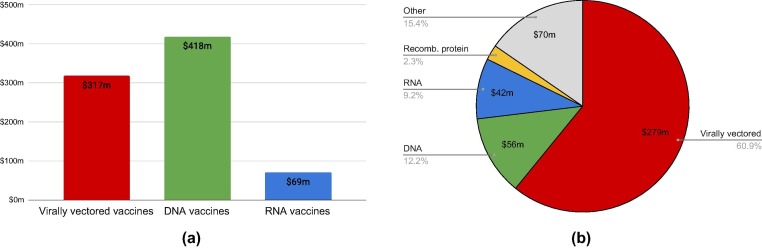
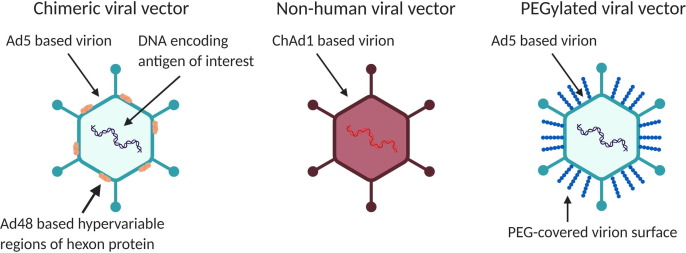
Vaccine platforms have been critical for accelerating the timeline of COVID-19 vaccine development. Faster vaccine timelines demand further development of these technologies. Currently investigated platform approaches include virally vectored and RNA-based vaccines, as well as DNA vaccines and recombinant protein expression system platforms, each featuring different advantages and challenges. Viral vector-based and DNA vaccines in particular have received a large share of research funding to date. Platform vaccine technologies may feature dual-use potential through informing or enabling pathogen engineering, which may raise the risk for the occurrence of deliberate, anthropogenic biological events. Research on virally vectored vaccines exhibits relatively high dual-use potential for two reasons. First, development of virally vectored vaccines may generate insights of particular dual-use concern such as techniques for circumventing pre-existing anti-vector immunity. Second, while the amount of work on viral vectors for gene therapy exceeds that for vaccine research, work on virally vectored vaccines may increase the number of individuals capable of engineering viruses of particular concern, such as ones closely related to smallpox. Other platform vaccine approaches, such as RNA vaccines, feature relatively little dual-use potential. The biosecurity risk associated with platform advancement may be minimised by focusing preferentially on circumventing anti-vector immunity with non-genetic rather than genetic modifications, using vectors that are not based on viruses pathogenic to humans, or preferential investment into promising RNA-based vaccine approaches. To reduce the risk of anthropogenic pandemics, structures for the governance of biotechnology and life science research with dual-use potential need to be reworked. Scientists outside of the pathogen research community, for instance those who work on viral vectors or oncolytic viruses, need to become more aware of the dual-use risks associated with their research. Both public and private research-funding bodies need to prioritise the evaluation and reduction of biosecurity risks.
疫苗平台对于加快 COVID-19 疫苗开发的时间表至关重要。更快的疫苗时间表需要进一步开发这些技术。目前正在研究的平台方法包括病毒载体和基于 RNA 的疫苗,以及 DNA 疫苗和重组蛋白表达系统平台,每种方法都具有不同的优势和挑战。到目前为止,基于病毒载体和 DNA 的疫苗尤其获得了大量的研究资金。平台疫苗技术可能具有双重用途的潜力,通过为病原体工程提供信息或使之成为可能,这可能会增加故意人为生物事件发生的风险。病毒载体疫苗的研究由于两个原因表现出相对较高的两用潜力。首先,开发病毒载体疫苗可能会产生特别值得关注的两用技术,例如规避预先存在的抗载体免疫的技术。其次,虽然用于基因治疗的病毒载体工作超过疫苗研究,但用于病毒载体疫苗的工作可能会增加能够工程特定关注病毒的个体数量,例如与天花密切相关的病毒。其他平台疫苗方法,如 RNA 疫苗,具有相对较低的两用潜力。通过优先关注使用非遗传而非遗传修饰来规避抗载体免疫,使用对人类无致病性的载体,或优先投资有前途的 RNA 疫苗方法,可以将与平台进步相关的生物安全风险降至最低。为了减少人为大流行的风险,需要重新制定具有两用潜力的生物技术和生命科学研究的治理结构。例如,那些从事病毒载体或溶瘤病毒研究的病原体研究界以外的科学家,需要更加意识到他们研究的两用风险。公共和私人研究资助机构都需要优先评估和降低生物安全风险。