Tsuchiya Haruka, Ota Mineto, Fujio Keishi
Department of Allergy and Rheumatology, Graduate School of Medicine, The University of Tokyo, Tokyo, 113-0033, Japan.
Department of Functional Genomics and Immunological Diseases, Graduate School of Medicine, The University of Tokyo, Tokyo, 113-0033, Japan.
Inflamm Regen. 2021 Mar 1;41(1):7. doi: 10.1186/s41232-021-00157-8.
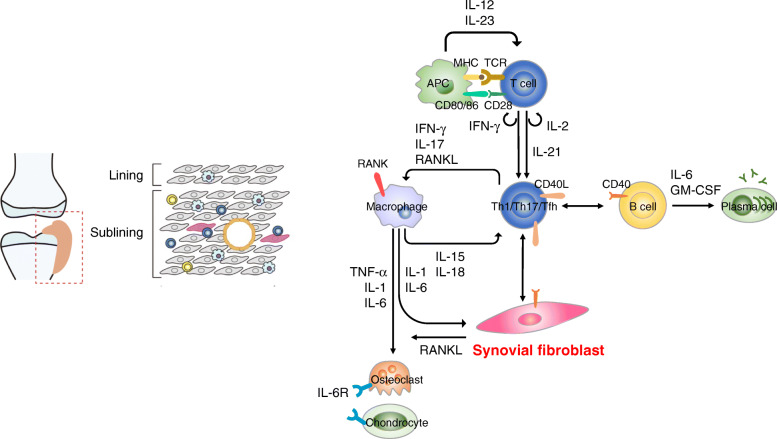
Rheumatoid arthritis (RA) is an autoimmune disease characterized by tumor-like hyperplasia and inflammation of the synovium, which causes synovial cell invasion into the bone and cartilage. In RA pathogenesis, various molecules in effector cells (i.e., immune cells and mesenchymal cells) are dysregulated by genetic and environmental factors. Synovial fibroblasts (SFs), the most abundant resident mesenchymal cells in the synovium, are the major local effectors of the destructive joint inflammation and exert their effects through the pathogenic production of molecules such as interleukin-6.
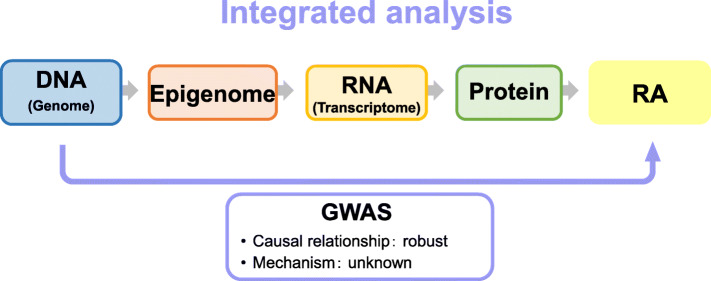
To date, more than 100 RA susceptibility loci have been identified in genome-wide association studies (GWASs), and finding novel therapeutic targets utilizing genome analysis is considered a promising approach because some candidate causal genes identified by GWASs have previously been established as therapeutic targets. For further exploration of RA-responsible cells and cell type-specific therapeutic targets, integrated analysis (or functional genome analysis) of the genome and intermediate traits (e.g., transcriptome and epigenome) is crucial.
This review builds on the existing knowledge regarding the epigenomic abnormalities in RASFs and discusses the recent advances in single-cell analysis, highlighting the prospects of SFs as targets for safer and more effective therapies against RA.
类风湿关节炎(RA)是一种自身免疫性疾病,其特征为滑膜出现肿瘤样增生和炎症,导致滑膜细胞侵入骨骼和软骨。在RA发病机制中,效应细胞(即免疫细胞和间充质细胞)中的各种分子受到遗传和环境因素的失调影响。滑膜成纤维细胞(SFs)是滑膜中最丰富的常驻间充质细胞,是破坏性关节炎症的主要局部效应细胞,并通过白细胞介素-6等分子的致病性产生发挥作用。
迄今为止,在全基因组关联研究(GWASs)中已鉴定出100多个RA易感位点,利用基因组分析寻找新的治疗靶点被认为是一种有前景的方法,因为GWASs鉴定出的一些候选因果基因先前已被确立为治疗靶点。为了进一步探索RA相关细胞和细胞类型特异性治疗靶点,对基因组和中间性状(如转录组和表观基因组)进行综合分析(或功能基因组分析)至关重要。
本综述基于关于类风湿关节炎滑膜成纤维细胞(RASFs)表观基因组异常的现有知识,讨论了单细胞分析的最新进展,强调了SFs作为针对RA的更安全、更有效治疗靶点的前景。